




New York: US President Donald Trump has unilaterally extended the ceasefire with Iran indefinitely, hours before it was to expire, even though Tehran refused to attend a second round of talks that Trump had said were imminent.
After making several threats to Iran if it did not accept his terms for a settlement, he announced on Truth Social on Tuesday (local time) that because “Iran is seriously fractured”, he was extending the ceasefire till Tehran can come up with a unified approach.
He had threatened earlier Tuesday in an interview with CNBC that he wouldn’t extend the ceasefire and said, “I expect to be bombing Iran” if there is no deal.
While announcing the extension of the ceasefire, the President said that he was continuing the Naval blockade of Iranian ports, which was one of the factors behind Tehran staying away from the talks he had said would take place this week in Islamabad.
While the ceasefire announcement kept a ray of hope for a world reeling under the blockade of the Strait of Hormuz that shuts out 20 per cent of the global supply of oil and gas, a lifting of the restrictions by either side was not on the horizon for now.
Iran’s government-owned PressTV said Tehran “unequivocally insisted on the removal of the blockade” and said that it “would not rejoin negotiations under pressure”.
Iran’s Tasnim news agency said that according to its sources, “the Iranian negotiating team has informed the American side through a Pakistani mediator that it will not be in Islamabad, Pakistan, on Wednesday” and “there is currently no prospect for participating in the negotiations”.
Pakistan’s Information Minister Attaullah Tarar confirmed on Tuesday that Iran was not coming to Islamabad for the second round of talks.
US Vice President J.D. Vance, who is leading the negotiations with Iran, was expected to leave for Pakistan on Tuesday morning, but delayed the trip under the threat of Iranians standing him up.
Trump again took cover behind Pakistan’s leaders for extending the ceasefire, asserting that it was because military chief Asim Munir and Prime Minister Shehbaz Sharif had asked him to “hold our attack on the country of Iran until such time as their leaders and representatives can come up with a unified proposal”.
Earlier, when he announced the 14-day ceasefire on April 7 after the 21 hours of talks in Islamabad ended in a stalemate, he made it seem he was doing so at Pakistan’s request.
In a stage-managed face-saving manoeuvre for Trump, Shehbaz Sharif at that time posted on X a request to Trump for a ceasefire, and it turned out the White House had seen and approved the post.
Iran’s Tasnim news agency said that according to its sources, Tehran did not ask for an extension of the ceasefire.
“A continued naval blockade means the continuation of hostilities. Iran will not open the Strait of Hormuz at least as long as the naval blockade remains in place, and will break the blockade by force if necessary,” it said.
Trump had repeatedly said over the last few days that a deal was at hand and asserted on Monday that he was offering Iran a better deal than they had received under an international agreement that he had denounced as too conciliatory towards Tehran and scrapped it in his first term.
If they took it, “they can make themselves into a strong nation again, a wonderful nation again”, he said.
But his deal would require Iran to completely abjure nuclear ambitions, hand over the remnants of the enriched uranium in the rubble of the facilities Trump said had been obliterated in last year’s bombing, and end its missile capability.
Iran is unlikely to agree to them after surviving the punishing attacks by Israel and the US.
Its prime objective is to retain control of the Strait of Hormuz, which Tehran has found is the source of power in the region, as 20 per cent of the global oil and gas supplies pass through it.
Trump at one time offered to share control of the Strait with Iran.
As Trump said, Iran’s leadership is indeed “seriously fractured”, with the hardliners in control of the military seeming dominant at the moment.
On Friday, after a ceasefire between Israel and Lebanon was brokered by Trump, Iran’s Foreign Minister Abbas Araghchi said on X that the Strait of Hormuz was completely open.
But the Islamic Revolutionary Guard Corps (IRGC), which represents the military and Tehran’s hardline faction, asserted its power on Saturday, reimposing restrictions on the Strait, going to the extent of firing on two Indian ships that had received Iran’s permission to go through the waterway.
Trump had expected that when Israel, which initiated the war, killed the top leadership, including Supreme Leader Ali Khamenei, in the February 28 bombing, a new leadership amenable to making a deal would emerge.
But he acknowledged that the next tier of leaders he had hoped to do business with were wiped out in another Israeli attack. He claimed it had resulted in a regime change — but it did not turn out the way he wanted it to be.
Washington, according to reports, stopped Israel from killing Araghchi and Parliament Speaker Mohammad Bagher Ghalibaf, with whom it wanted to negotiate.
The IRGC and Ghalibaf have been issuing a steady stream of counter-threats to Trump’s warning.
Ghalibaf warned on X, “Over the past two weeks, we have been preparing to unveil new cards on the battlefield”.
In the midst of the policy tussle in Iran, Ayatollah Mojtaba Khamenei, who succeeded his father as the Supreme Leader, has been absent from public view and has not been heard of.
In the standoff, it’s a matter of which side has greater staying power.
In the democratic US, Trump faces popular discontent with the war – a Reuters/Ipsos poll released on Monday showed only 36 per cent of Americans supported it – and a consequential midterm election is coming up in November amid rising prices attributed to the war.
Iran, though, is a totalitarian state with dissent suppressed and the currently dominant section of the leadership willing to take on more punishment.
IANS
Taiwan President cancels Africa trip, says China’s ‘coercive actions’ undermining status quo
Taipei: Taiwan’s President, Lai Ching-te's visit to the African nation of Eswatini has been cancelled as overflight clearances were revoked for his flight by multiple nations. Presidential Office...
Iran talks falter as Trump hardens stance
Washington: US-Iran peace talks appeared to be on shaky footing as Tehran signalled reluctance to join negotiations in Pakistan and President Donald Trump adopted a hard public line, raising...
US seizes Iran ship, Tehran vows retaliation
Washington: The United States has seized an Iran-flagged cargo vessel after opening fire on it in the Arabian Sea. Tehran condemned the move as “armed piracy” and warn of retaliation,...

First tranche of India-US trade deal almost finalised: Piyush Goyal
New Delhi: Commerce and Industry Minister Piyush Goyal said on Monday that the first tranche of the India-US bilateral trade agreement has almost been finalised, and a team of his...
Iran says to respond to ‘armed maritime piracy’ by US: Report
Tehran: Iran's top joint military command said on Monday that Iran will soon respond to "armed maritime piracy" by the US military, according to media reports. Iran's Khatam al-Anbiya Central...
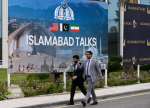
Uncertainty remains ahead of expected US-Iran talks
Islamabad: As US forces have intercepted and taken custody of an Iranian-flagged cargo ship, and Iran said it has currently no decision to send a negotiating delegation for peace talks,...
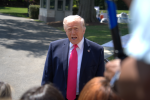
Trump warns Iran, sends team for talks
Washington: US President Donald Trump on Sunday accused Iran of breaching a ceasefire in the Strait of Hormuz and warned of sweeping retaliation, even as he announced fresh negotiations in...
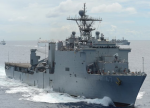
USS Rushmore conducts blockade operations in Arabian Sea: Central Command
Washington: The US Central Command has said that the dock landing ship USS Rushmore is conducting blockade operations in the Arabian Sea. Earlier Saturday (local time), it was said on...
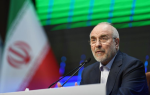
Iran says ‘progress’ in US talks, but ‘far from final discussion’
Tehran: Iran has indicated that there has been "progress" in its ongoing discussions with the United States, though it stressed that a final agreement is still a long way off,...
Lebanese president announces shift to negotiating permanent agreements after ceasefire phase
Beirut: Lebanese President Joseph Aoun said that Lebanon has entered a new phase focused on negotiating permanent agreements to safeguard the rights of its people, the unity of its territory,...
Iran says transferring enriched uranium to US never an option
Tehran: Iran will not transfer its enriched uranium to a foreign country, and sending it to the United States has never been under consideration, Iranian Foreign Ministry spokesman Esmaeil Baghaei...
US President made 7 claims, all false: Iran warns of closing Hormuz amid naval blockade
Tehran: Iran’s Parliament Speaker Mohammed Bagher Ghalibaf has warned US President Donald Trump that Tehran could shut down the Strait of Hormuz if the United States continues its naval blockade....


