




New Delhi: India and South Korea have taken a major step toward strengthening their bilateral relationship, with Prime Minister Narendra Modi and South Korean President Lee Jae Myung announcing a comprehensive roadmap to deepen cooperation across trade, technology, and strategic sectors. The announcements came during President Lee’s first visit to India since assuming office, following delegation-level talks in New Delhi.
During a joint press statement, the two leaders oversaw the exchange of multiple Memorandums of Understanding (MoUs). The agreements signal a broad-based effort to expand economic engagement and reinforce cooperation in emerging and traditional industries.
Prime Minister Modi welcomed President Lee, describing his life as “an inspiring example of struggle, service, and dedication,” and noted that the visit marks an important step in further strengthening the strategic partnership between the two democracies. Highlighting shared democratic values, PM Modi emphasised that the relationship is evolving from a trusted partnership into a futuristic strategic alliance.
A key outcome of the summit was the decision to significantly scale up bilateral trade. Both countries have set a target to increase trade to $50 billion by 2030, nearly doubling the current volume of around $25–27 billion. To achieve this goal, the leaders agreed to upgrade the Comprehensive Economic Partnership Agreement (CEPA) within the next year to align it with evolving global trade dynamics.
To further strengthen industrial collaboration, Prime Minister Modi announced the development of dedicated Korean industrial townships in India. These townships are aimed at facilitating the entry and expansion of South Korean companies, particularly small and medium enterprises, by providing improved infrastructure and regulatory support.
An Industrial Cooperation Committee will also be established as a ministerial platform to enhance business engagement and promote trade and investment between the two countries.
To support growing economic ties, both sides announced the creation of new institutional frameworks. The India-Korea Financial Forum will facilitate smoother capital flows and strengthen investment collaboration, while an Economic Security Dialogue will focus on critical technologies and supply chain resilience.
In addition, measures were discussed to ease regulatory frameworks for micro, small, and medium enterprises (MSMEs), enabling more seamless industrial cooperation and business operations.
A major highlight of the summit was the launch of the ‘India-Korea Digital Bridge’, a long-term initiative aimed at deepening collaboration in high-technology sectors such as artificial intelligence, semiconductors, and information technology.
The initiative reflects the shared vision of both nations to build resilient supply chains and future-ready industries. Cooperation in areas such as chip manufacturing, advanced technologies, and innovation ecosystems is expected to play a crucial role in shaping the partnership.
Beyond economic and technological cooperation, both leaders highlighted the importance of cultural and people-to-people connections. They noted the growing popularity of Korean culture in India and identified films, animation, gaming, and entertainment as emerging areas of collaboration.
On cultural ties, the Prime Minister remarked, “India and Korea share cultural ties dating back thousands of years. The story of Princess Suriratna of Ayodhya and King Kim Suro of Korea from 2,000 years ago is our shared heritage.” He added, “Today, K-Pop and K-Dramas are becoming very popular in India. Similarly, the recognition of Indian cinema and culture is growing in Korea. We are delighted that President Lee himself is a fan of Indian cinema. To strengthen this cultural connect, we will organise the India-Korea Friendship Festival in 2028.”
Quoting Rabindranath Tagore, the Prime Minister concluded, “Nearly 100 years ago, India’s great poet, Gurudev Rabindranath Tagore, called Korea the ‘Lamp of the East.’ Today, Korea is a vital partner in realizing our resolve for a ‘Viksit Bharat 2047’ (Developed India 2047). Let us, through our partnership, pave the way for the progress and prosperity of both our countries and the entire world.”
The leaders also discussed regional and global issues, emphasising the importance of stability and cooperation in the Indo-Pacific region. They agreed to strengthen collaboration in areas such as green energy, critical technologies, and supply chain security.
Prime Minister Modi welcomed South Korea’s participation in global initiatives such as the International Solar Alliance and the Indo-Pacific Oceans Initiative, underlining the shared commitment to sustainable development and environmental responsibility.
President Lee praised India’s development trajectory and its vision for long-term growth, while both leaders reiterated their commitment to building a forward-looking partnership. The visit, the first by a South Korean president to India in over eight years, is being seen as a significant milestone in bilateral relations.
The summit concluded with Prime Minister Modi accepting an invitation to visit South Korea in the near future, signalling continued high-level engagement between the two nations.
With expanded cooperation across economic, technological, cultural, and strategic domains, India and South Korea have set the stage for a deeper and more comprehensive partnership in the years ahead.
(The author has served as Professor of International Affairs at a Korean university. Views expressed are personal)
–IANS
India monitoring West Asia developments, in touch with Iran for safe passage of ships: MEA
New Delhi: The Ministry of External Affairs (MEA) said on Tuesday that India continues to follow developments in the West Asia region and remains in touch with countries of the...
South Korea voices deep regret over Japan PM’s offering, lawmakers’ visit to war shrine
Seoul: South Korea expressed deep regret on Tuesday after Japanese Prime Minister Sanae Takaichi sent a ritual offering to a war shrine seen as symbolising, if not whitewashing, Japan's militaristic...
SEBI slashes minimum investment in social impact funds to Rs 1,000
Mumbai: The Securities and Exchange Board of India (SEBI) has drastically slashed the minimum investment requirement for individual investors in social impact funds to Rs 1,000 in order to lower...
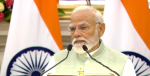
India, South Korea will continue to contribute towards peaceful and inclusive Indo-Pacific: PM Modi
New Delhi: Prime Minister Narendra Modi said on Monday that India and South Korea share a common outlook for the Indo-Pacific and will continue to contribute towards a peaceful, progressive,...
Bengal polls: Mamata Banerjee accuses PM Modi of misusing government machinery
Kolkata: Claiming that Bharatiya Janata Party's (BJP) downfall has started, West Bengal Chief Minister Mamata Banerjee on Sunday accused Prime Minister Narendra Modi of misusing government machinery for political campaigns....
Nepal govt’s move to control purchases from bordering Indian towns draws flak
Kathmandu: The Nepal government’s decision to levy customs duty on goods valued above NPR 100 brought from bordering Indian towns has drawn criticism from stakeholders in Nepal’s border areas, where...
India voices concern over Hormuz shipping attacks, takes neutral stance on UNSC resolution veto
United Nations: While expressing concern over the attacks on commercial shipping in the Hormuz Strait, India has taken a neutral stance on the veto by Russia and China of a...

India, Austria to strengthen partnership in defence, semiconductors and quantum: PM Modi
New Delhi: Prime Minister Narendra Modi on Thursday announced that India and Austria will strengthen their partnership in defence, semiconductors, quantum, and biotechnology. Addressing a joint press meet with...
India opposes two-tier UNSC permanent membership, agrees with G4 proposal for 15-year deferral
United Nations: While opposing a discriminatory, two-tier permanent membership level in the Security Council, India has agreed to a G4 proposal that would defer veto powers for 15 years in...
In call with Trump, PM Modi stresses on keeping Strait of Hormuz ‘open and secure’
New Delhi: Prime Minister Narendra Modi on Tuesday received a call from US President Donald Trump with both leaders discussing the current situation in West Asia as well as ways...
EAM Jaishankar and Israeli counterpart discuss West Asia situation, Strait of Hormuz
Tel Aviv/New Delhi: External Affairs Minister (EAM) S Jaishankar held a telephonic conversation with his Israeli counterpart Gideon Sa'ar on Tuesday, discussing West Asia situation and the Strait of Hormuz....
India rejects China’s attempt to rename places, reaffirms Arunachal Pradesh an ‘integral and inalienable part’
New Delhi: India on Sunday rejected China's "mischievous attempts" to assign "fictitious names" to places which are part of the country, reiterating that territories, including Arunachal Pradesh, remain an "integral...


