




Beirut: Lebanese President Joseph Aoun said that Lebanon has entered a new phase focused on negotiating permanent agreements to safeguard the rights of its people, the unity of its territory, and the sovereignty of the state.
In an address to the Lebanese, Aoun said the country is moving from ceasefire implementation efforts toward a broader stage aimed at securing long-term stability. He voiced confidence that, as in the previous phase, these efforts would help “save Lebanon.”
He attributed the ceasefire to collective efforts and sacrifices by the Lebanese people, including those who remain in frontline areas, as well as sustained diplomatic engagement with international and regional partners, Xinhua news agency reported.
Aoun said negotiations are not a sign of weakness or retreat, but rather a sovereign decision to protect Lebanon’s interests, prevent further loss of life, and end displacement.
Highlighting the conflict’s heavy toll, Aoun said thousands of Lebanese have been killed, pledging that no more lives should be lost for foreign interests or political calculations.
“I am ready to take full responsibility for these choices,” he said.
Aoun outlined the main objectives for the upcoming phase, including halting Israeli attacks on Lebanese territory, ensuring the withdrawal of Israeli forces, securing the return of prisoners, enabling the safe return of displaced citizens, and restoring the state’s full authority across all Lebanese territories.
He also called for national unity under a single state authority, constitution, and armed force, warning against internal divisions and external agendas.
Meanwhile, Wafiq Safa, a high-ranking member of Hezbollah’s political council, told BBC Arabic in Beirut that the group’s arsenal is non-negotiable at this stage.
“Hezbollah will never ever disarm. Before the halt of attacks, the withdrawal of Israel, the return of prisoners, the return of the displaced to their homelands, and reconstruction, we cannot talk about Hezbollah’s weapons,” Safa said, warning that Hezbollah will reject any ceasefire resembling the one that had been in place since November 2024.
The 2024 Israel-Hezbollah ceasefire was characterized by near-daily Israeli strikes in Lebanon. The fragile truce collapsed on March 2, when Hezbollah launched rockets toward Israel in support of Iran, triggering intensified Israeli airstrikes across Lebanon.
A 10-day ceasefire between Israel and Lebanon took effect at midnight between Thursday and Friday local time (2100 GMT), with an aim to end the deadly escalation between Israel and Hezbollah, which Lebanon’s Public Health Ministry said Friday has killed 2,294 in Lebanon, including 100 paramedics and healthcare workers.
Earlier on Friday, Hezbollah’s Loyalty to the Resistance bloc told Al Jadeed TV that it is committed to the new ceasefire with caution, stressing that its adherence is conditional on the truce covering all Lebanese territories.
Meanwhile, Israeli Prime Minister Benjamin Netanyahu said Friday that although Israel will provide an opportunity to advance an integrated diplomatic and military solution with the Lebanese government, Israel has not finished its job against Hezbollah.
Despite the new ceasefire, Lebanon’s Al-Manar TV reported that Israel launched a drone strike in southern Lebanon on Friday, killing one person.
IANS
Iran says transferring enriched uranium to US never an option
Tehran: Iran will not transfer its enriched uranium to a foreign country, and sending it to the United States has never been under consideration, Iranian Foreign Ministry spokesman Esmaeil Baghaei...
US President made 7 claims, all false: Iran warns of closing Hormuz amid naval blockade
Tehran: Iran’s Parliament Speaker Mohammed Bagher Ghalibaf has warned US President Donald Trump that Tehran could shut down the Strait of Hormuz if the United States continues its naval blockade....
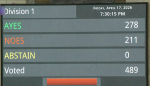
Women’s reservation bid falters as Constitutional Amendment bill falls short in Lok Sabha
New Delhi: The Lok Sabha on Friday witnessed a dramatic defeat of the Constitution (131st Amendment) Bill, which had sought to expand the number of seats in the house and...
Trump announces ceasefire between Israel and Lebanon
New York: US President Donald Trump on Thursday announced a ceasefire between Israel and Lebanon aimed at bringing a temporary cooling-off along another front linked to the Iran conflict. He...
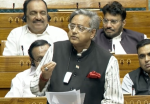
Delimitation will turn out to be political demonetisation, don’t do it: Shashi Tharoor
New Delhi: Congress leader Shashi Tharoor on Friday warned in the Lok Sabha that the proposed delimitation exercise could amount to "political demonetisation," cautioning against linking it with women’s reservation...
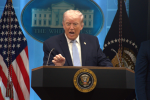
US warns strikes on Iran energy infrastructure if deal is not reached
Washington: The United States on Thursday warned Iran that its energy infrastructure could be targetted if it fails to reach a deal, with Defence Secretary Pete Hegseth saying American forces...
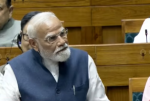
Women Reservation Bill will help to change ‘disha and dasha’ of nation: PM Modi
New Delhi: Prime Minister Narendra Modi said on Thursday that the Women Reservation Bill will help change the “disha and dasha” (direction and condition) of the country’s politics by involving...
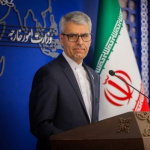
Iran rules out compromise on nuclear enrichment rights, slams US ‘warmongering’ in Hormuz
Tehran: Iran will not compromise on its nuclear enrichment rights, said the country’s Foreign Ministry spokesperson, Esmaeil Baqaei, adding that its entitlement to nuclear energy is firmly grounded in international...

Oppn united on delimitation amendment, will oppose it in Parliament: Kharge
New Delhi: All Opposition parties are united against the ‘contentious’ Delimitation amendment bill and will take a position in Parliament to vote against it, Congress President Mallikarjun Kharge said on...
Trump says Iran conflict nearing end
Washington: US President Donald Trump has said the conflict with Iran is “close to being over”, asserting that a blockade of Iranian ports is now fully in place and that...
Trump says second round of Iran talks possible in days
Washington: US President Donald Trump said a second round of direct talks with Iran could take place “over the next two days,” signalling a possible diplomatic opening even as the...
In call with Trump, PM Modi stresses on keeping Strait of Hormuz ‘open and secure’
New Delhi: Prime Minister Narendra Modi on Tuesday received a call from US President Donald Trump with both leaders discussing the current situation in West Asia as well as ways...


