



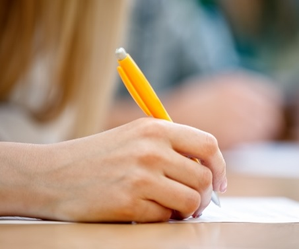
London: Want to boost brain connectivity? Then write by hand instead of typing on a keyboard, suggests a study.
Using a keyboard is recommended because it’s often faster than writing by hand. However, the latter has been found to improve spelling accuracy and memory recall.
To find out if the process of forming letters by hand resulted in greater brain connectivity, researchers in Norway now investigated the underlying neural networks involved in both modes of writing.
“We show that when writing by hand, brain connectivity patterns are far more elaborate than when typewriting on a keyboard,” said Prof Audrey van der Meer, a brain researcher at the Norwegian University of Science and Technology.
“Such widespread brain connectivity is known to be crucial for memory formation and for encoding new information and, therefore, is beneficial for learning,” van der Meer said.
In the study, published in the journal Frontiers in Psychology, the team collected EEG data from 36 university students who were repeatedly prompted to either write or type a word that appeared on a screen.
When writing, they used a digital pen to write in cursive directly on a touchscreen. When typing they used a single finger to press keys on a keyboard.
High-density EEGs, which measure electrical activity in the brain using 256 small sensors sewn in a net and placed over the head, were recorded for five seconds for every prompt.
Connectivity of different brain regions increased when participants wrote by hand, but not when they typed, showed the results, published in the journal Frontiers in Psychology.
Since it is the movement of the fingers carried out when forming letters that promotes brain connectivity, writing in print is also expected to have similar benefits for learning as cursive writing.
On the contrary, the simple movement of hitting a key with the same finger repeatedly is less stimulating for the brain.
“This also explains why children who have learned to write and read on a tablet, can have difficulty differentiating between letters that are mirror images of each other, such as ‘b’ and ‘d.’ They literally haven’t felt with their bodies what it feels like to produce those letters,” van der Meer said.
IANS
AI data centres’ consumption of electricity unsustainable
New Delhi: While AI may be transforming lives of millions across the world, its data centres are straining natural resources by way of intensive electricity consumption. Use of data-intensive technologies...
India’s AI dividend must reach everyone: Microsoft CEO
Seattle: Microsoft Chairman and CEO Satya Nadella has urged technology leaders to ensure artificial intelligence reaches farmers, businesses and communities across India, saying its promise will depend on how...
ISRO says remains at centre of India’s space programme, refutes media reports as ‘baseless’
New Delhi: The Indian Space Research Organisation (ISRO) on Sunday issued a clarification regarding media reports on its role amid space sector reforms, saying it remains at the centre of...
ISRO alone cannot meet needs of country: Dr Narayanan on criticism over privatisation of space sector ecosystem
Sriharikota: ISRO Chairman, Dr V Narayanan, on Friday responded to criticism over the increasing role of private players in the country’s space sector, saying that ISRO alone cannot meet India’s...

Widespread devastation following Nepal flood triggers Himalayan debate on AI use
New Delhi:The devastating floods that struck Nepal last month and left a trail of destruction across the Himalayan nation have reignited a broader debate over climate change, ecological vulnerability, and...
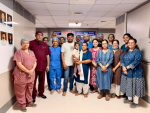
Child born without oesophagus begins eating after surgery at Ahmedabad Civil Hospital
Ahmedabad: A two-and-a-half-year-old child born with a rare congenital condition that left him without a functional oesophagus has begun eating through his mouth after undergoing a complex reconstructive procedure at...
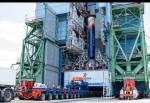
Vikram-1 success showcases India’s innovation strength: TDB-DST
New Delhi: The Technology Development Board (TDB) under the Department of Science and Technology (DST) on Sunday congratulated Skyroot Aerospace on the successful Vikram-1 mission, describing it as a watershed...
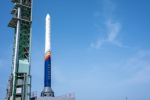
Skyroot launches India’s 1st private orbital rocket Vikram-1
New Delhi: India scripted a historic chapter in its space journey on Saturday as Hyderabad-based Skyroot Aerospace successfully launched Vikram-1, the country's first privately developed orbital rocket, under Mission Aagaman,...
Indian-origin NASA astronaut Anil Menon reaches space station
Washington: Indian-origin NASA astronaut Anil Menon arrived safely at the International Space Station (ISS) after launching aboard Russia's Soyuz MS-29 spacecraft, beginning his first spaceflight on an eight-month mission focused...
First astronaut of Kerala descent Dr Anil Menon gears up for NASA mission
Thiruvananthapuram: Kerala will have another moment of pride on Tuesday evening when NASA astronaut Dr Anil Menon, whose family traces its roots to Ottapalam in Palakkad district, blasts off to...
ISRO successfully conducts hot test of 175 tonne semi-cryogenic engine
Chennai: The Indian Space Research Organisation (ISRO) has successfully completed a crucial hot test of its semi-cryogenic engine power head test article (PHTA) at a thrust level of 175 tonnes,...

OpenAI limits new GPT-5.6 models for select partners over US govt request
New Delhi: US-based AI company OpenAI has announced that new GPT‑5.6 models, such as Sol, Terra and Luna, will be rolled out with a limited preview for trusted partners, with...


