




Sriharikota: ISRO Chairman, Dr V Narayanan, on Friday responded to criticism over the increasing role of private players in the country’s space sector, saying that ISRO alone cannot meet India’s growing requirements and that the overall space ecosystem needs to expand.
Speaking to IANS, Narayanan said India’s space economy and ecosystem must grow to meet the country’s rising demand for satellites and related services.
“Please understand, our country’s space economy has to grow and the space ecosystem has to grow because ISRO alone cannot meet the needs of the country. Right now, we have 56 satellites, but the requirement is for hundreds of satellites,” he said.
He said the government’s space sector reforms were aimed at enabling greater participation and expansion of the industry, with ISRO providing the necessary support.
“Therefore, the government has announced space sector reforms, and ISRO is hand-holding these activities. We have to really ensure that the space ecosystem in our country grows. Therefore, we will have a lot of job opportunities, the economy will grow and more satellites will be produced,” Narayanan said.
Commenting on the successful launch of the GSLV-F17 carrying the EOS-05 Earth observation satellite, he described the mission as an important achievement and a moment of pride for the country.
“This mission is a very important mission and a proud moment for every Indian because, for the first time, the heaviest satellite has been lifted by the GSLV Mark II vehicle. The GSLV Mark II vehicle’s capability, when we started, was only 1,536 kg. Today, we have improved the capability by almost 40 per cent, and this is the heaviest satellite lifted by this vehicle,” he said.
Giving an update on the Kulasekarapattinam spaceport project, Narayanan said construction work was progressing well and remained on schedule. He said the project was expected to be completed by March.
He also said the Gaganyaan programme was progressing as planned, with the first uncrewed mission targeted for this year.
Meanwhile, the GSLV-F17 rocket carrying EOS-05 successfully lifted off from the Satish Dhawan Space Centre in Sriharikota at 2:55 a.m. on Friday. The pre-dawn mission marked another significant milestone in India’s space programme.
IANS

Widespread devastation following Nepal flood triggers Himalayan debate on AI use
New Delhi:The devastating floods that struck Nepal last month and left a trail of destruction across the Himalayan nation have reignited a broader debate over climate change, ecological vulnerability, and...
Child born without oesophagus begins eating after surgery at Ahmedabad Civil Hospital
Ahmedabad: A two-and-a-half-year-old child born with a rare congenital condition that left him without a functional oesophagus has begun eating through his mouth after undergoing a complex reconstructive procedure at...
Vikram-1 success showcases India’s innovation strength: TDB-DST
New Delhi: The Technology Development Board (TDB) under the Department of Science and Technology (DST) on Sunday congratulated Skyroot Aerospace on the successful Vikram-1 mission, describing it as a watershed...
Skyroot launches India’s 1st private orbital rocket Vikram-1
New Delhi: India scripted a historic chapter in its space journey on Saturday as Hyderabad-based Skyroot Aerospace successfully launched Vikram-1, the country's first privately developed orbital rocket, under Mission Aagaman,...
Indian-origin NASA astronaut Anil Menon reaches space station
Washington: Indian-origin NASA astronaut Anil Menon arrived safely at the International Space Station (ISS) after launching aboard Russia's Soyuz MS-29 spacecraft, beginning his first spaceflight on an eight-month mission focused...
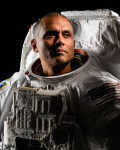
First astronaut of Kerala descent Dr Anil Menon gears up for NASA mission
Thiruvananthapuram: Kerala will have another moment of pride on Tuesday evening when NASA astronaut Dr Anil Menon, whose family traces its roots to Ottapalam in Palakkad district, blasts off to...
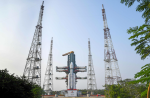
ISRO successfully conducts hot test of 175 tonne semi-cryogenic engine
Chennai: The Indian Space Research Organisation (ISRO) has successfully completed a crucial hot test of its semi-cryogenic engine power head test article (PHTA) at a thrust level of 175 tonnes,...

OpenAI limits new GPT-5.6 models for select partners over US govt request
New Delhi: US-based AI company OpenAI has announced that new GPT‑5.6 models, such as Sol, Terra and Luna, will be rolled out with a limited preview for trusted partners, with...
AI will not replace IT firms, it will amplify them: Infosys Chairman Nilekani
Bengaluru: Infosys Chairman Nandan Nilekani said on Tuesday that artificial intelligence (AI) will not replace IT software companies but, instead, will help in the expansion of firms that adapt quickly...
Microsoft CEO Satya Nadella warns against AI concentration
Washington: Microsoft Chief Executive Satya Nadella has issued a sharp warning against the growing concentration of power in the artificial intelligence industry, arguing that a handful of companies should not...

AI can help India leapfrog without building its own models: Rubrik executive
Washington: Artificial intelligence can help India emerge as a global leader in the next phase of technological innovation even without developing frontier AI models of its own, according to Dev...
NASA outlines vision for lunar ‘city’ amid renewed moon race
Washington: NASA’s vision for returning humans to the Moon no longer resembles the brief Apollo-era visits of flags, footprints and hurried science experiments. Instead, the US space agency now talks...


