



 by Gautam Lahiri

New Delhi: In a surprise move, the newly elected Prime Minister of Bangladesh Tareq Rahman appointed a technocrat, Khalilur Rahman, as the country’s new Foreign Minister.Khalilur Rahman was National Security Advisor in the previous Interim Government led by Mohammad Yunus.
Another unexpected inductee is the controversial Nasimul Ghani, brought in as the Cabinet Secretary shortly before the swearing in ceremony. Ghani was Secretary of Home Affairs in the Yunus interim government. In Bangladesh, Ghani is widely regarded as an ideologue and founding member of the banned militant group Hizbut Tahir.
Contrary to popular expectations, Humayun Kabir, international affairs advisor and secretary of Tareq Rahman, was not appointed either as a cabinet or deputy
minister in the Ministry of Foreign Affairs. Shama Obayed Islam has been given the minister of state portfolio in the foreign ministry.
These appointments clearly indicate that the shadow of Prof Yunus looms large over the formation of new cabinet, and leaders viewed as having close linkages
with the USA have been nominated carefully. A total of 56 members were sworn in as members of the Tareq Rahman ministerial council in the South Plaza of Parliament on February 17, a departure from theearlier tradition of swearing in the cabinet at Banga Bhavan, the Presidential residence.
The council of ministers includes a Hindu member, Nitai Ray Chowdhury, who has been given the cultural affairs portfolio. A senior leader of the Bangladesh
Nationalist Party (BNP) widely viewed as the representative of the minority Hindu community, Gayeswar Ray, has not found a place in the new Tareq Rahman
cabinet.
Senior leader Mirza Fakrul Islam Alamgir will be the minister of an important department in Bangladesh – Local government, Rural development and
Cooperatives — while Amir Khasru Mahmud Chowdhury will be the Finance minister. The Home or internal affairs portfolio has gone to another senior BNP
leader, Salauddin Ahmed, who spent 9 years in India during the tenure of ousted
Premier Sheikh Hasina.
The nature of the council of ministers was among the surprises which became apparent as the day of Tareq Rahman’s swearing in unfolded.
The morning indicated that severe fault lines exist in Bangladesh, which would likely bring political instability for the new government. This election was intended not only for people to vote for their preferred candidates from various political parties of their choice, but also as a referendum for sweeping changes in
the country’s Constitution based on values of the 1971 Liberation struggle. Surprisingly, victors from the BNP decided not to take their oath on the basis of
the referendum, but as Members of Parliament, while members of the Jamaat-e- Islami and the student party, National Citizens Party (NCP) took their oath both as members of parliament as well as members of the Constituent Assembly, to seek change in the country’s Constitution.
After the elected BNP members were sworn in as MPs, the NCP members, who were at the forefront of the July movement which removed Sheikh Hasina from
power, boycotted the oath taking ceremony of Prime Minister Tareq Rahman, signaling that there would be greater instability in near future.
INDIA NEWS STREAM
‘Hug row’ opens INDIA bloc cracks as Pinarayi Vijayan takes on Rahul Gandhi
Thiruvananthapuram: The simmering differences within the Opposition INDIA bloc have burst into the open as Leader of Opposition in Kerala, Pinarayi Vijayan, on Saturday launched a sharp attack on Congress...

‘Old method of BJP’: Trinamool’s Kirti Azad on raids against Madan Mitra, Abhishek Banerjee
New Delhi: Trinamool Congress MP Kirti Azad on Saturday launched a scathing attack on the BJP following raids conducted by the Enforcement Directorate (ED) against party leader Madan Mitra and...
‘Political vendetta’: Trinamool’s Sagarika Ghose on early morning raid at Abhishek Banerjee’s residence
Kolkata: Trinamool Rajya Sabha member Sagarika Ghose expressed scathing criticism of the early morning police raid at the residence of party General Secretary Abhishek Banerjee to track his absconding aide....

Whatever happening is immoral, unethical, says Saugata Roy amid growing crisis in Trinamool
Kolkata: Amid the growing rift in the Trinamool Congress, party MP Saugata Roy on Friday said that some of his fellow lawmakers are claiming they did not sign any document,...
AI race with China takes centre stage in US Senate hearing
Washington: US lawmakers from both parties warned that America risks losing its technological edge to China unless it strengthens safeguards around artificial intelligence, as a Senate hearing highlighted growing concerns...

Trump signals political shift in Iran
Washington: US President Donald Trump suggested that recent US military action had reshaped Iran's leadership structure, saying a new group of leaders had emerged in Tehran and was proving more...

Gulf war hitting South Asia through oil shock: World Bank
Washington: The conflict in the Middle East is emerging as a major economic threat to South Asia through rising oil, gas and fertiliser prices, with the World Bank warning that...
Won’t beg anyone to join our statehood movement: Dr Farooq Abdullah
Srinagar: National Conference (NC) President and former J&K Chief Minister Dr Farooq Abdullah said on Thursday that his party won’t beg anyone to join its protest in New Delhi for...
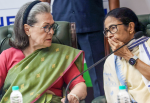
‘No political, alliance-related talks’: Cong says Sonia-Mamata meeting was cordial, personal
New Delhi: Senior Congress leader Sonia Gandhi and Trinamool Congress chief Mamata Banerjee have strongly refuted media speculation surrounding their recent private meeting, describing some news reports as inaccurate and...
South Korea: Lee says Iran war makes North Korea less likely to give up nukes
Seoul: The US-Iran war has made North Korea even less likely to give up its nuclear weapons program, South Korean President Lee Jae Myung said in an interview published on...

‘Political and personal reasons’ : Sushmita Dev on quitting Trinamool and Rajya Sabha
New Delhi: Sushmita Dev, who announced her resignation from the Trinamool Congress as well as from the Rajya Sabha on Wednesday, cited "political and personal" reasons for her decision, while...
A century and a half on, the Ishavasya Upanishad returns to Oxford, this time in Acharya Prashant’s voice
Oxford (UK): In 1879, Professor Max Muller carried the Ishavasya Upanishad to the West, publishing its first English translation through Oxford University Press as the opening volume of the ‘Sacred...


