



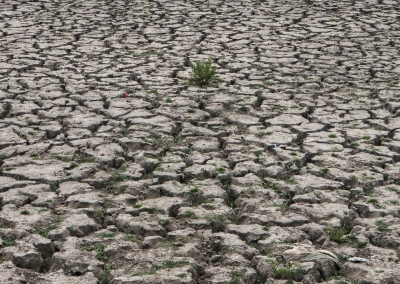
New Delhi: Over the past 12 weeks, record-breaking rainfall in India has caused unprecedented flooding in several parts, while eastern states have been reporting deficits by a big margin.
The result: Bihar, West Bengal and east Uttar Pradesh, the eastern region with the highest intensity of paddy cultivation, have been highly deficit rains despite an active monsoon current in July and August.
The reason: Ineffective low-pressure systems over the Bay of Bengal and a southward shift of the east-west monsoon trough.
Agricultural experts told IANS one of the notable impacts of changes in track of monsoon systems can be seen on kharif crops, particularly the rice growing eastern region, where the rice is grown on the basins of Ganga and Mahanadi rivers.
According to the India Meteorological Department (IMD) data on the monsoon performance in major rice-producing states, Uttar Pradesh’s rainfall deficiency from June 1 to August 30 was as high as 44 per cent.
Against the normal cumulative rainfall of 588.1 mm, the actual cumulative rainfall in Uttar Pradesh during this period was 330.9 mm.
The IMD says only 11 of the 75 Uttar Pradesh districts have received normal rainfall.
While in Bihar the rainfall deficiency from June 1 to August 30 was 39 per cent, it was minus 27 per cent in Jharkhand and minus 18 per cent in West Bengal.
“Arrival of the monsoon and whether onset would be strong or weak will always continue to dodge us. However, changes in track of the system would have a more deadly impact on the crop which would be in the growing stage at the moment. Due to southward movement of all main monsoon low pressure areas and depressions, rice producing states like West Bengal, Bihar, Jharkhand and East Uttar Pradesh have been deficit by large margins. This would have an impact on the quantity as well as the quality of the crop,” said Skymet Weather Vice President (Meteorology and Climate Change) Mahesh Palawat.
The uneven distribution rains along with increasing temperatures and humidity give rise to pest attacks and diseases. This will in turn impact the quality of the grain as well as the nutrition value may vary, say experts.
Researches indicate the monsoon rainfall became less frequent but more intense in India during the latter half of the 20th century.
An increase of either severe floods or droughts can cause rice production loss, but the drought effect on rice production is more prominent.
India is the world’s second largest producer of rice, of which a substantial amount is grown under rainfed conditions during the kharif season.
Any detrimental impacts of climate would have major consequences for food security from local to global levels.
Moreover, the majority of farmers cultivating rainfed rice are smallholders, whose local livelihoods are highly vulnerable to climate changes and since 1980, the number of smallholder farmers in India increased by 77 per cent to almost 66 million in 2010-11.
In addition, the agricultural sector employs almost half of the labour force of the country, so any changes in rice cultivation are likely to have considerable social impacts.
Saying the entire South Asia has been reporting a series of extreme weather events in the past six months, Anjal Prakash, Research Director, Bharti Institute of Public Policy, Indian School of Business and IPCC Lead Author, said while Bangladesh, Pakistan and India have battled severe floods, China is reeling under massive drought conditions.
“All these events call for climate justice as climate change is not the creation of people of South Asian countries. Some of these countries are either carbon neutral or carbon negative. Our carbon footprint is 1.9 tonnes, one of the lowest as compared to the global average which is four tonnes.
“South Asian countries must come up with coordinated voices and make the climate noise for funds which is not happening right now. As a result, the region will continue to face the wrath of extreme weather events. All these problems bring focus back on loss and damage that is not supported politically and shoved off as per the convenience.”
In India, states like Madhya Pradesh, Gujarat, Rajasthan and parts of Maharashtra have been recording excess rainfall this season.
Most of these regions are not used to heavy rainfall as in a normal scenario. Monsoon systems move across Northwest India giving rains over the region.
In fact, places Marathwada and Vidarbha are prone to deficit rainfall.
Skymet Weather President (Meteorology and Climate Change) G.P. Sharma sees climate change behind these changes and calls for more research on the changes in the behavioural pattern of the systems.
The IMD says this monsoon has seen the second highest ‘extreme’ rainfall events since 1901.
While incidents of floods and droughts have increased, there is more evidence to show how global warming has been impacting the Indian monsoon.
Meteorologists are citing concerns over changes in the track of monsoon weather systems across the country.
The trend has become more and more visible in the last four-five years, with the 2022 season being the latest one.
In fact, Pakistan floods have also been a result of this change.
-IANS
Notice: Undefined variable: current_post_type in /home/indiavfh/public_html/wp-content/themes/vinkmag/template-parts/blogs/contents/content-single.php on line 25

Farmers urge President to ‘Save Agriculture & Democracy’
June 24, 2021 Mumbai: The Samyukta Kisan Morcha (SKM) has sought President Ram Nath Kovind's intervention to 'Save Agriculture and Save Democracy' on the occasion of the 47th anniversary of...

One mango tree with 121 varieties of the fruit
Saharanpur (Uttar Pradesh): Saharanpur, a district mainly known for its hand carved furniture, has now become famous for something else -- a unique mango tree that has 121 varieties of fruits...

Uttar Pradesh ‘Jamun’ now exported to UK
Lucknow: A new variety of 'jamun' (black plum) developed by the Central Institute of Sub-tropical Horticulture (CISH) in Lucknow is now being exported to London. Jamwant, a special variety of black...


Mizoram Will Be A Sports Powerhouse : Minister Royte
Tiny Mizoram aims to be India's sports powerhouse and its giving industry status to sports will help this happen, says the state's sports minister Robert Romawia Royte.Royte,54, is no ordinary...

Haryana farmers block highways to protest police action
Chandigarh, Aug 28 (IANS) Violence between police and protesting farmers in Haryana broke out on Saturday with the former trying to reach Karnal city to protest against a state-level BJP meeting...

2% MSP hike of wheat is a cruel joke, says Congress
New Delhi: A day after the central government hiked MSP of wheat and other agricultural produce, the Congress has said it is nothing but a cruel joke. Congress spokesperson Jaiveer...

Half of rural agricultural households indebted: NSS data
New Delhi: Almost half of the rural agricultural households are indebted across India with an average outstanding loan amount per agricultural household being way more than the below poverty line...

Farm subsidies distort prices, degrade environment: UN
New Delhi: Global support to producers in the agricultural sector amounts to $540 billion per year, making up 15 per cent of total agricultural production value. By 2030, this is...

Delhi govt moves Supreme Court over amendments to GNCTD Act
New Delhi: The Delhi government has moved the Supreme Court, challenging the Centre's amendments to the Government of National Capital Territory of Delhi (GNCTD) Act, contending that the new changes...

Modi announces repeal of 3 farm laws, Oppn hails ‘victory of farmers’
New Delhi: A little more than a year after they were passed followed by widespread agitation by farmers declining to accept them, Prime Minister Narendra Modi on Friday announced that...

Natural farming is solution for food security: PM Modi
)New Delhi: Prime Minister Narendra Modi on Thursday appealed to farmers across India, especially 80 per cent who are small land holding farmers, to adopt natural farming and look for...


