




New Delhi: The Indian Space Research Organisation (ISRO) on Sunday issued a clarification regarding media reports on its role amid space sector reforms, saying it remains at the centre of India’s space programme, leading national efforts in advanced research, strategic capabilities, human space-flight, next-generation launch technologies, the Bharatiya Antariksh Station and lunar and planetary exploration, while a wider Indian ecosystem provides the scale needed to realise India’s ‘Space Vision 2047’.
In a detailed post on X, the space agency said there has been considerable reporting in parts of the media around the future role of ISRO including speculations and misinformation that there is an attempt to privatise ISRO or reduce its role.
“These assertions are completely baseless and incorrect. We wish to categorically state that ISRO will neither be privatised nor will its importance be diminished. ISRO will continue to remain India’s principal institution for advanced space research and technology development, national and strategic missions, space science and exploration, and critical and frontier space capabilities,” said the space agency.
The participation of private sector in space is not about reducing ISRO’s role.
“It is about enabling ISRO to focus even more strongly on the next generation of India’s space programme, while industry scales mature technologies and capabilities. What is changing is not the importance of ISRO, but the scale and structure of India’s space ecosystem,” it noted.
The space-sector reforms initiated since 2020 and institutionalised through the Indian Space Policy 2023, along with progressive liberalisation of FDI policy, aim to create a larger, stronger and globally competitive Indian space ecosystem.
ISRO said that industry, start-ups and academia are being enabled to participate across the space value chain, complementing and multiplying ISRO’s capabilities. The reforms should therefore be seen as ecosystem expansion and capability multiplication, not privatisation.
“As India’s industrial and technological capabilities have grown, mature and scalable activities can increasingly be undertaken by Indian industry. ISRO has already transferred around multiple technologies to industry. Transferring a mature technology does not mean ISRO is withdrawing from that domain,” said the space agency.
It enables large-scale production, commercialisation, innovation and access to global markets while allowing ISRO’s scientific and technical manpower to concentrate on advanced research, next-generation technologies and complex national missions.
The transition is, therefore, towards an “ISRO-led national space ecosystem.”
“ISRO’s role will progressively strengthen in areas where its scientific expertise matters most: frontier R&D, advanced technologies, human spaceflight, next-generation launch systems, deep-space and planetary missions and strategic national capabilities. It will continue developing cutting-edge technologies, including advanced payloads for communication, navigation and Earth observation, sensors, propulsion systems and other critical technologies,” the X post elaborated.
Meanwhile, mature and routinely manufactured systems can increasingly be scaled through industry. Production of mature launch vehicles, routine satellites and other established systems can increasingly be undertaken by industry or PSUs through appropriate competitive processes.
“This allows ISRO to devote more resources and scientific manpower to the next generation of technologies and missions, while the wider ecosystem provides the investment, manufacturing capacity and scale required by an expanding national space programme,” it said.
India’s ambitions include establishing the Bharatiya Antariksh Station by 2035, undertaking an Indian crewed mission to the Moon by 2040, developing next-generation and reusable launch systems, pursuing sustained lunar and planetary exploration, and establishing India as a major global space power.
“These are technologically demanding missions that require ISRO to remain focused on advanced research and capabilities that cannot simply be substituted by commercial activity. The objective is, therefore. to enable industry to scale mature capabilities while ISRO pushes India towards the next technological frontier,” said ISRO.
The emergence of a vibrant private space ecosystem is already one of the major outcomes of 2020 space reforms.
From only a handful of Indian space startups in 2020, India today has more than 450 startups, working across launch vehicles, satellites, propulsion, ground systems, Earth observation, communications and space applications.
“India’s space economy is presently estimated at around $8.4 billion, still a relatively small share of the rapidly expanding global space economy. India aims to increase its share of the global space market to $44 billion by 2033. That scale cannot be achieved through government resources and ISRO’s manpower alone. It requires private capital, industrial capacity, entrepreneurship and global market access,” explained ISRO.
IANS

ISRO alone cannot meet needs of country: Dr Narayanan on criticism over privatisation of space sector ecosystem
Sriharikota: ISRO Chairman, Dr V Narayanan, on Friday responded to criticism over the increasing role of private players in the country’s space sector, saying that ISRO alone cannot meet India’s...

Widespread devastation following Nepal flood triggers Himalayan debate on AI use
New Delhi:The devastating floods that struck Nepal last month and left a trail of destruction across the Himalayan nation have reignited a broader debate over climate change, ecological vulnerability, and...

Child born without oesophagus begins eating after surgery at Ahmedabad Civil Hospital
Ahmedabad: A two-and-a-half-year-old child born with a rare congenital condition that left him without a functional oesophagus has begun eating through his mouth after undergoing a complex reconstructive procedure at...

Vikram-1 success showcases India’s innovation strength: TDB-DST
New Delhi: The Technology Development Board (TDB) under the Department of Science and Technology (DST) on Sunday congratulated Skyroot Aerospace on the successful Vikram-1 mission, describing it as a watershed...
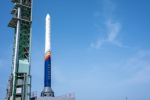
Skyroot launches India’s 1st private orbital rocket Vikram-1
New Delhi: India scripted a historic chapter in its space journey on Saturday as Hyderabad-based Skyroot Aerospace successfully launched Vikram-1, the country's first privately developed orbital rocket, under Mission Aagaman,...

Indian-origin NASA astronaut Anil Menon reaches space station
Washington: Indian-origin NASA astronaut Anil Menon arrived safely at the International Space Station (ISS) after launching aboard Russia's Soyuz MS-29 spacecraft, beginning his first spaceflight on an eight-month mission focused...

First astronaut of Kerala descent Dr Anil Menon gears up for NASA mission
Thiruvananthapuram: Kerala will have another moment of pride on Tuesday evening when NASA astronaut Dr Anil Menon, whose family traces its roots to Ottapalam in Palakkad district, blasts off to...
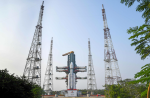
ISRO successfully conducts hot test of 175 tonne semi-cryogenic engine
Chennai: The Indian Space Research Organisation (ISRO) has successfully completed a crucial hot test of its semi-cryogenic engine power head test article (PHTA) at a thrust level of 175 tonnes,...

OpenAI limits new GPT-5.6 models for select partners over US govt request
New Delhi: US-based AI company OpenAI has announced that new GPT‑5.6 models, such as Sol, Terra and Luna, will be rolled out with a limited preview for trusted partners, with...

AI will not replace IT firms, it will amplify them: Infosys Chairman Nilekani
Bengaluru: Infosys Chairman Nandan Nilekani said on Tuesday that artificial intelligence (AI) will not replace IT software companies but, instead, will help in the expansion of firms that adapt quickly...
Microsoft CEO Satya Nadella warns against AI concentration
Washington: Microsoft Chief Executive Satya Nadella has issued a sharp warning against the growing concentration of power in the artificial intelligence industry, arguing that a handful of companies should not...

AI can help India leapfrog without building its own models: Rubrik executive
Washington: Artificial intelligence can help India emerge as a global leader in the next phase of technological innovation even without developing frontier AI models of its own, according to Dev...


