




Bamako: Assimi Goita, Mali’s transitional president, said that operations would continue until all groups involved in the April 25 attacks are neutralised and lasting security is restored across the country.
In a televised address to the nation at 8 p.m. local time on Tuesday, Goita said the April 25 attacks, which he described as “complex, coordinated and simultaneous,” targeted Bamako, Kati, Mopti, Gao and Kidal.
He said the assailants had been dealt a heavy blow thanks to the prompt response and professionalism of the defence and security forces, adding that the attackers had sought to create a climate of generalised violence in the localities concerned, reports Xinhua news agency.
The head of state added that the security deployment had been reinforced, the situation was under control, and sweeping, search, intelligence-gathering and security operations were continuing.
Goita also paid tribute to Mali’s Defence Minister Gen. Sadio Camara, saying his passing represented “an immense loss for the Malian nation.”
He expressed condolences to bereaved families and sympathy to the wounded, while instructing the government to take all necessary measures to strengthen assistance to victims, support affected families and care for the injured.
He said the attacks were part of “a vast destabilisation plan” devised and carried out by terrorist armed groups and their internal and external backers.
Goita also called on Malians to remain vigilant, trust the defence and security forces, and not give in to rumours, panic messages or manipulation, warning that disinformation could become a weapon in the service of terrorists.
Malian Prime Minister Abdoulaye Maiga said Monday that the terrorist attacks carried out on April 25 in several cities across the country were not merely isolated incidents, but were aimed at “seizing power, dismantling the country’s republican institutions, and ending the transition process.”
Speaking at a press briefing, Maiga said Mali was plunged into mourning by simultaneous attacks in several localities, which killed the Defence Minister, along with other civilian and military victims, and left others wounded.
The attackers sought to spread fear and doubt, undermine national cohesion and weaken Mali’s determination, he said, noting that these objectives have failed.
Maiga said that under the leadership of the transitional president and supreme commander of the armed forces, Mali’s military has delivered a “forceful response,” neutralising hundreds of terrorists across the country.
The asymmetric nature of terrorist threats requires Mali to continuously adapt its security arrangements, he said, adding that lessons must be drawn from the April 25 attacks, with effective measures reinforced and necessary adjustments made to enhance security.
IANS
Former FBI director James Comey indicted over alleged threat to Trump
Washington: A federal grand jury has indicted former FBI director James Comey on charges of threatening to harm US President Donald Trump, authorities said. The two-count indictment, returned in the...

Lone wolf attack? Radicalised Mumbai man held for stabbing 2 guards after asking them to recite ‘Kalma’
Mumbai: A 31-year-old man has been taken into custody in connection with a violent assault on two security guards in Mumbai’s Naya Nagar area, where he allegedly questioned their religious...

Saudi city Jazan gets a fashion makeover with R & B Roundabout
JAZAN: A growing value and lifestyle fashion brand R & B has transformed one of Jazan’s most prominent roundabouts near Kadi Mall with a striking new installation. “At the...

CERT-In warns of rising AI-driven cyber threats amid ‘Mythos’ concerns
New Delhi: India’s nodal cybersecurity agency, the Indian Computer Emergency Response Team (CERT-In), has issued a high-severity alert warning that rapid advances in frontier artificial intelligence are fundamentally reshaping the...
White House dinner shooting: Manifesto reveals gunman’s plan to target US President, top officials
Washington: A manifesto sent by the suspected gunman before the White House Correspondents’ Dinner shooting over the weekend outlined his intent to target the US President and senior administration officials,...
How gunman planned White House dinner attack
Washington: The suspected gunman in the White House Correspondents’ Dinner shooting meticulously planned his movements for weeks, travelling across the United States and positioning himself inside the hotel before launching...
False-flag claims spark backlash after White House Correspondents’ Dinner shooting
Washington: Prominent television hosts and journalists have pushed back against online claims that the White House Correspondents’ Dinner shooting was staged. They have called such assertions “disturbing” and reflective of...
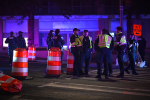
Gunman at White House event named Trump officials as ‘targets’ in manifesto
Washington: A gunman who breached security at the White House Correspondents’ Dinner had declared members of the Trump administration as “targets” in a manifesto sent minutes before the attack, raising...
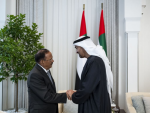
NSA Ajit Doval calls on UAE President; discusses bilateral ties, regional situation
Abu Dhabi: National Security Advisor (NSA) Ajit Doval called on UAE President Sheikh Mohamed bin Zayed Al Nahyan on Sunday, discussing measures to deepen Comprehensive Strategic Partnership, the regional situation,...
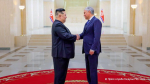
Russian Duma Speaker meets North Korean leader in Pyongyang
Moscow: North Korean leader Kim Jong-un met the visiting Speaker of Russia's lower house in Pyongyang, a media report said Sunday. Kim met Duma Speaker Vyacheslav Volodin, who visited the...
Telangana Governor nominates Azharuddin, Kodandaram as MLCs
Hyderabad: Telangana Governor Shiv Pratap Shukla on Sunday nominated state minister Mohammad Azharuddin and Prof. M. Kodandaram as members of the Telangana Legislative Council under the Governor’s quota. However, the...
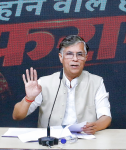
Pawan Khera moves SC against Gauhati High Court order denying anticipatory bail
New Delhi: Congress leader Pawan Khera has moved the Supreme Court challenging the Gauhati High Court’s order rejecting his anticipatory bail plea in connection with a criminal case registered by...


