




Dhaka: Bangladesh Awami League on Thursday warned that the country is witnessing a disturbing political trend, with Bangladesh Nationalist Party (BNP) Chairman Tarique Rahman being celebrated, rehabilitated, and projected as a future leader, raising concerns that the nation’s history has been erased and its collective memory failed.
“The crimes, corruption, and state capture of the 2001–2006 period are being deliberately forgotten, softened, or conveniently ignored. This amnesia is dangerous. Because what Tarique Rahman did during that time was not a footnote in history, it was one of the darkest chapters of institutional collapse in Bangladesh,” the Awami League stated.
According to the Awami League, the Hawa Bhaban, the political office of former BNP Chief Khaleda Zia, was an ordinary house turned into an extraordinary centre of unlawful power during the BNP tenure from 2001 to 2006 in Bangladesh.
“Hawa Bhaban did not merely influence governance; it overrode the Prime Minister’s Office itself. Policies, projects, postings, promotions, tenders, and business approvals were decided there. The elected government became secondary. The Constitution became irrelevant. The real state operated from behind closed doors, under the command of one unelected individual,” it stated.
The party stressed that what operated from Hawa Bhaban was not random corruption but a system — a “fixed, ruthless formula”. During the 2001–2006 BNP tenure, it said, a mandatory 10 per cent commission became the unofficial tax on every government development project.
“This was not a rumour or exception; it was widely documented, openly discussed, and fearfully enforced. No commission, no work,” the Awami League stressed.
At the centre of this alleged system, the Awami League said, was Tarique, whose sustained pattern of extortion earned him a nationwide identity — “Mr Ten Per cent”.
“A man who institutionalised bribery, monetised development, and turned governance into a commission-based enterprise is being rebranded as a leader. But history is stubborn. And the 10 per cent empire remains one of the clearest proofs that Tarique Rahman did not serve the state; he sold it,” the party mentioned.
According to the Awami League, Tarique’s identity is inseparable from multiple corruption and criminal cases rooted in the 2001–2006 period — cases that emerged from a system of “parallel governance, commission-based decision-making, and protected criminal networks”.
Asserting that these were not isolated accusations, the party said, the cases formed a pattern that defined an era.
“A nationally known corrupt figure cannot represent national morality. No rebranding can erase the legacy of Hawa Bhaban. Bangladesh needs leadership built on integrity, not the return of a culture that turned the state into a business,” the Awami League noted.
IANS
NEET-UG 2026 cancellation sparks political row; BJP backs Centre, Congress claims system failure
New Delhi: The cancellation of the NEET-UG 2026 examination over the question paper leak has triggered sharp political reactions, with BJP leaders defending the Centre’s decision as being in students'...
Petition urges SC to take suo motu cognisance of repeated NEET leaks, seeks overhaul of NTA
New Delhi: A letter petition has been submitted before the Supreme Court seeking suo motu intervention into the repeated NEET examination leaks, impersonation scams, and alleged systemic failures in the...
Trump hails ties with Xi Jinping ahead of China trip
Washington: President Donald Trump said he expected a “great meeting” with Chinese President Xi Jinping during his upcoming visit to China, as he projected confidence in US-China ties despite mounting...
Cracks in Kerala’s Left fortress as tussle spills into open over Opposition post
Thiruvananthapuram: Even before the dust settles on the Left Democratic Front’s (LDF) crushing electoral defeat in Kerala, fresh fault lines have begun surfacing within the alliance, with the simmering tensions...

Chinese cars face US ban over spying fears
Washington: A bipartisan group of US lawmakers has introduced legislation to ban Chinese-linked connected vehicles, software and hardware from American roads, citing national security risks, unfair trade practices and threats...

India has 60 days of crude oil and natural gas, 45 days of LPG rolling stock: Centre
New Delhi: The government on Monday said that there is no shortage of any petroleum product amid the West Asia crisis, as the country has 60 days stock of crude...
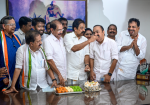
Kerala waits as Congress struggles to break Chief Minister deadlock
Thiruvananthapuram: A week after the Congress-led United Democratic Front (UDF) stormed to a spectacular victory in Kerala, the suspense over who will become the state’s next chief minister continues unabated,...
Father remembers ‘struggle for food’ after Vijay takes oath as Tamil Nadu CM
Chennai: As Tamilaga Vettri Kazhagam (TVK) President C. Joseph Vijay took the oath as Tamil Nadu Chief Minister, his father, S.A. Chandrasekhar, got emotional, remembering the struggles he once made...
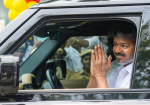
Vijay-led new TN govt faces crucial floor test after swearing in ceremony
Chennai: Tamilaga Vettri Kazhagam (TVK) chief C. Joseph Vijay will take oath as the Chief Minister of Tamil Nadu on Sunday, along with nine ministers, marking the beginning of a...
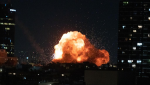
Egypt, Qatar urge US, Iran to show ‘responsibility, wisdom’ amid delicate regional situation
Cairo: Egyptian Foreign Minister Badr Abdelatty and Qatari Prime Minister and Minister of Foreign Affairs Sheikh Mohammed bin Abdulrahman Jassim Al-Thani urged the United States and Iran to adopt positions...
Senior Iranian lawmaker says bill to set up Hormuz’s legal regime ready
Tehran: A senior Iranian lawmaker has said that a parliamentary bill on the legal regime of the Strait of Hormuz is ready and will be passed as a "deterrent...
Russia fighting ‘aggressive’ NATO-backed force in Ukrain:Putin
Moscow: Russian President Vladimir Putin on Saturday said that the country's soldiers are currently fighting an "aggressive force" backed by all of NATO in Ukraine. Putin made the remarks...


