



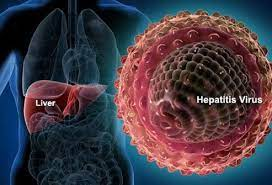
New Delhi: Contaminated food and water are increasing cases of hepatitis in the country, said experts on World Hepatitis Day, on Sunday.
World Hepatitis Day is observed every year on July 28, with this year’s theme being, “It is time for action”.
Viral hepatitis, as the name implies, refers to liver damage or inflammation caused by a viral infection. It is a systemic or generalised infection that primarily affects the liver, with the most common viruses being hepatitis A, B, C and E.
“We see about 4-5 cases of viral hepatitis per week,” Dr Lorance Peter, Director of Gastroenterology & Hepatology at Sakra World Hospital, Bengaluru, told IANS.
The most prevalent form of hepatitis is hepatitis E, closely followed by hepatitis A. While the B and C variants of Hepatitis are not uncommon either, they can be prevented by lifestyle and medication. Hospitalisation is only needed in severe cases which are visible by a high fever and other symptoms.
“The most common type of hepatitis in our country is hepatitis E, followed by hepatitis A. Nowadays, cases of hepatitis B and C are also seen very commonly,” Dr Peter said.
Hepatitis A and E typically result in full recovery without long-term consequences, providing lifelong immunity. In contrast, hepatitis B and C can lead to chronic infections, potentially causing chronic liver disease, liver cirrhosis, and even liver cancer.
“The main modes of transmission for hepatitis A and E are through contaminated water and food, while hepatitis B and C are transmitted via body fluids, infected needles, blood transfusions, unprotected sex, and sometimes from mother to child during delivery,” Dr Subhashish Mazumder, Director & Unit Head of Gastroenterology, Hepatology & Endoscopy at Max Hospital, Vaishali, told IANS.
Management of viral hepatitis typically involves supportive care, including a healthy diet and medications, when necessary.
“Hospitalisation is required only in severe cases, such as high fever, recurrent vomiting, abdominal pain, poor oral intake, or signs of liver failure like unconsciousness,” he added.
Preventive measures for viral hepatitis focus on avoiding contaminated food and water, practising safe sexual behaviours, maintaining proper hand hygiene, vaccinating against hepatitis B, and using disposable syringes and sterilised instruments.
“Vaccination and drug therapy are crucial when needed,” said Dr Mazumder.
IANS

Ghee made with bathroom cleaners used in Tirupati laddu, says Andhra CM
Amaravati: Andhra Pradesh Chief Minister N. Chandrababu Naidu, on Friday, claimed that Tirupati laddu was prepared with ghee made with chemicals used for cleaning bathrooms during the previous YSR Congress...

AIIMS Delhi doctors remove 19.9 kg tumour from 42-year-old colon cancer patient
New Delhi: Doctors at the All India Medical Sciences (AIIMS) Delhi on Friday announced a successful surgery where they removed a whopping 19.9 kg tumour from a 43-year-old colon cancer...

Nipah cases rise to 5 in Bengal: Experts warn against intruding animal habitats
New Delhi: The ongoing Nipah outbreak in West Bengal, with cases rising to five in just a week, acts as a warning against intruding into animal habitats, said health experts...

Two Nipah-infected nurses in Bengal critical, contact tracing and screening intensified
Kolkata: Two nurses from Barasat in North 24 Parganas district of West Bengal who have tested positive for the Nipah virus are in a coma and in extremely critical condition,...

Congress accuses govt of downplaying air pollution’s impact on health
New Delhi: The Congress on Sunday accused the government of attempts to downplay the air pollution's impact on health, claiming that it is trying to cover up the scale of...

Trump defends long-term aspirin use
Washington: US President Donald Trump has acknowledged taking more aspirin than doctors recommend but said he prefers to continue the routine he has followed for years for what his physician...

Japan reports avian influenza outbreak in Hokkaido
Tokyo: Japan's agriculture ministry said on Monday that genetic testing has confirmed an outbreak of highly pathogenic avian influenza at a farm in Hokkaido Prefecture, marking the 11th bird flu...

FSSAI cracks down on ‘herbal tea’, says only Camellia sinensis qualifies
New Delhi: India’s food safety regulator has tightened the rules on what can be officially called “tea”, making it clear that only products made from the plant Camellia sinensis can...

Punjab CM approves cashless treatment of Rs 10 lakh to every family
Chandigarh: In a New Year bonanza for residents, Punjab Chief Minister Bhagwant Mann on Thursday gave the green signal to the Health Department to launch Mukh Mantri Sehat Yojna from...

Eggs safe for consumption; cancer risk claims misleading, not scientific, says FSSAI
New Delhi: Amid the ongoing concerns of carcinogenic substances being found in eggs, the Food Safety and Standards Authority of India (FSSAI) on Saturday categorically stated that eggs available in...
Air pollution shortening life expectancy, reducing productivity and quality of life in Delhi: Experts
New Delhi: Air pollution is no longer just an environmental concern; it is steadily shortening life expectancy, reducing productivity and quality of life, said health experts here on Thursday, even...
No link between Covid-19 vaccines and sudden deaths in young adults: AIIMS
New Delhi: A year-long autopsy-based study conducted by the AIIMS, New Delhi, found no scientific evidence linking Covid-19 vaccination to sudden deaths among young adults, reaffirming that the vaccines are...


