



New Delh: Bangladesh is set to hold one of the most consequential, yet contentious elections since its 1971 independence, with the 13th general election to be held on February 12, to select the next government, and a Prime Minister.
This time, voters will also receive two ballots: one to elect Members of Parliament and another for the referendum question on the “July Charter”.
Citizens will vote “yes” or “no” on the implementation of the “July National Charter 2025”, according to Dhaka Tribune.
The Charter is a political and constitutional reform framework designed to institutionalise democratic governance and limit authoritarian power after the 2024 uprising.
Its aims to institutionalise democratic reforms and prevent the concentration of executive power.
It also proposed granting protections to participants in the uprising, called “July Fighters”; reform governance, judiciary, and electoral systems, including restoring a neutral caretaker government for elections; strengthen fundamental rights and ensure inclusivity in national governance.
According to the government, 47 of the 84 proposals require constitutional amendments, while the remaining 37 will be implemented through laws or executive orders, reported Bangladesh’s Business Standard.
“If ‘Yes’ wins, the Constitution Reform Council of the next Parliament must complete the required constitutional amendments within 270 days, or nine months,” it added.
In case the Council fails to do so in this period, a Constitution Amendment Bill from the interim government will automatically be considered passed.
The Charter is a draft of reforms packaged in the aftermath of political uprising that ousted the Shiekh Hasina-led Awami League government in August 2024, which was acknowledged by most political parties last year.
Among changes proposed include a term limit for Prime Ministers, introducing bicameral Legislature, providing stronger judicial independence, increasing powers for bodies involved in election oversight, among others.
If approved, the next Parliament will also serve as a Constitutional Reform Council tasked with enacting the approved constitutional amendments within 270 days, reported the Bengali daily Prothom Alo.
Approval ensures automatic enactment if the Council fails to complete reforms in time, it said.
Incidentally, this will be the third time in Bangladesh that a charter of reforms has been presented, reports added.
Earlier, the first one was presented after President Hussain Muhammad Ershad’s exit from power seized power through a bloodless coup by overthrowing President Abdus Sattar of the Bangladesh Nationalist Party (BNP) in 1990, the second in 2007 during the caretaker rule after the end of Khaleda Zia’s term as the Prime Minister.
According to a Daily Star report, there are 84 reform proposals now, half requiring constitutional amendments.
It said that the “Charter has ignited a national debate about the very mechanisms of popular sovereignty. Central to this discourse is the vital question: should Bangladesh hold a referendum to ratify these monumental changes?”
“The argument that a referendum is both legally feasible and constitutionally desirable offers a rare, momentous opportunity to re-anchor the state’s legitimacy in the direct will of the people, invoking the foundational principles of constitutionalism and democratic theory,” it opined.
Given the fractured political climate, it said that a referendum may be both legally feasible and constitutionally desirable, offering a direct channel for the people to sanction reforms and thereby immunise them against partisan contestation.
“A principal critique is that the Constitution of Bangladesh does not explicitly provide for referenda. Yet, critically, it does not prohibit them either. This silence is a space for constitutional imagination,” the report opined.
With Parliament dissolved and the interim authority constrained by Supreme Court rulings against the doctrine of necessity, traditional legal pathways for reform are unavailable.
A referendum thus emerges as the only legitimate mechanism to anchor the new constitutional order in the sovereign will of the people, it said.
IANS


PM Modi finds Banaras connection in Bratislava, says ‘art, culture bring people closer’
Bratislava: Prime Minister Narendra Modi on Tuesday highlighted a unique cultural connection between India and Slovakia after witnessing an exhibition on Varanasi at the Presidential Palace in Bratislava, saying...
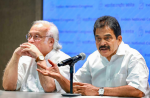
‘Undermines institutional neutrality’: K.C. Venugopal slams Kerala VCs who attended RSS event, demands resignation
Thiruvananthapuram: Congress General Secretary, Organisation, K.C. Venugopal, on Monday launched a strong political attack on three Kerala Vice Chancellors who attended an RSS centenary-related programme, describing their participation as contravening...

Foreign Secy Vikram Misri highlights indigenisation as key pillar for Rafale deal
Nice: Foreign Secretary Vikram Misri on Sunday highlighted indigenisation as a key pillar of the Rafale fighter jet deal with France, reaffirming India's commitment to defence self-reliance and strengthening domestic...

Trump approval slips as inflation climbs
Washington: US President Donald Trump's approval rating has fallen to its lowest level of his second term as inflation continues to weigh on voters and Democrats hold a modest advantage...

Actor Raghava Lawrence signals political entry in TN, says he has taken ‘positive decision’ after public backing
Chennai: Actor, choreographer and filmmaker Raghava Lawrence has strongly hinted at entering active politics in Tamil Nadu, stating that he has taken a “positive decision” after receiving overwhelming encouragement from...

El Nino likely to impact food prices, inflation projected to settle in 5.2–5.5 pc range in FY27
New Delhi: There is 80 per cent likelihood of an El Nino event during the June–August period and probabilities for this, to continue until at least November, are near or...
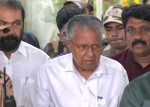
‘Hug row’ opens INDIA bloc cracks as Pinarayi Vijayan takes on Rahul Gandhi
Thiruvananthapuram: The simmering differences within the Opposition INDIA bloc have burst into the open as Leader of Opposition in Kerala, Pinarayi Vijayan, on Saturday launched a sharp attack on Congress...

‘Old method of BJP’: Trinamool’s Kirti Azad on raids against Madan Mitra, Abhishek Banerjee
New Delhi: Trinamool Congress MP Kirti Azad on Saturday launched a scathing attack on the BJP following raids conducted by the Enforcement Directorate (ED) against party leader Madan Mitra and...
‘Political vendetta’: Trinamool’s Sagarika Ghose on early morning raid at Abhishek Banerjee’s residence
Kolkata: Trinamool Rajya Sabha member Sagarika Ghose expressed scathing criticism of the early morning police raid at the residence of party General Secretary Abhishek Banerjee to track his absconding aide....

Whatever happening is immoral, unethical, says Saugata Roy amid growing crisis in Trinamool
Kolkata: Amid the growing rift in the Trinamool Congress, party MP Saugata Roy on Friday said that some of his fellow lawmakers are claiming they did not sign any document,...
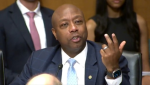
AI race with China takes centre stage in US Senate hearing
Washington: US lawmakers from both parties warned that America risks losing its technological edge to China unless it strengthens safeguards around artificial intelligence, as a Senate hearing highlighted growing concerns...