



June 22, 2020
New Delhi: The tension on the India-China border reaching inflection point, trade relations except for semantics, may not be impacted, as the world faces multi-dimensional economic problems, many from pro-corona period. Except for some moderation, trade is likely to continue.
The world growth, including India’s, started stunting long before corona virus. In February itself, the Economist Intelligence Unit, London, forecast a mere 2.9 per cent global growth. The UNCTAD in its latest report says global merchandise trade to drop 20 per cent in 2020 owing to the pandemic. The value of international trade 5 per cent by February and may actually drop to 27 per cent this year.
India’s trade prospects have also not been on a smooth drive. Despite tensions with China, the trade volume is $78 billion – imports from China $62.37 billion and exports $15.54 billion. China has trade surplus of $47 billion. Key imports are electronics, organic chemicals and machinery along with consumer durables, FMCG, toys and similar low-cost items.
Indian exports include crucial ores, fish and organic chemicals. If it lowers the relationship, its exports may get hit, affecting many companies. Instead it may consider Confederation of All India Traders (CAIT) suggestion of 450 items that may reduce import bill by $13 billion, about Rs 1 lakh crore by December 2021. The list includes items like fashion apparel, footwear, furnishing fabrics, kitchen items, handbags, cosmetics, food, watches, toys, consumer durables, FMCG and electronics.
The wish list is not easy to implement in the WTO regime of allowing level-playing field. Many domestic companies are marketing these low-cost products and need an alternative for survival. Their fortunes are likely to be hit when economy is anything but happy. Apart the plan to produce these items indigenously, though being mulled, is not easy. However, atmanirbhar Bharat has drawn up lists for import substitution and raising the quality and safety standards as per WTO norms. This is expected to curb sub-standard imports.
Some car manufacturers stopped imports of some accessories from China and awarded its manufacture to the Indian ancillary units. It was expected to reduce imports. But the suppliers prospected it from China again to meet the car makers’ needs. The pricing and quality aspects, the ancillary units found, are not easy to match.
The cost of indigenous production increases and the buyers are unwilling to pay higher prices. This is critical aspect of atmanirbhar Bharat. The country has not yet come out with a model rules and taxation pattern to ensure quality and low prices. Research is poor and impractical. Harassment of indigenous procurers or manufacturers is built into the system, more so despite supposed simplification of GST rules.
Getting back to the level even of 1970s self-reliance is not easy. Ophthalmologists often cite the instance of low-cost, high quality South Korean fixed-power lens spectacles. With curbs on Chinese goods, imports of these also virtually stopped. Indian manufacturers, however, neither could meet the quality nor the prices of these ophthalmic products.
That is the critical need of a self-reliant country. The consumers with their earnings lowered, job losses and other problems are unable to pay high prices but they clamour for quality. Indian market faces twin problems of low quality and high prices. This reduces competitiveness. The self-reliance mode has to take its care.
It calls for total revamp of Indian policies of manufacturing rules, taxes, pricing of petroleum products and electricity per unit cost. All these raise the cost of production as well as lead to compromise of quality. Another aspect is the system of multiple-layer of rent-seeking. It makes business difficult, particularly manufacturing. The inspectorate, introduced in various other names, harasses the producers in a number of ways. This has led many producers to turn traders as investment cost reduces.
The country has become a difficult place to start a business despite many efforts by the Narendra Modi government. This hits the most during times of economic stress and has not helped many start-ups or MUDRA loan beneficiaries. The cost is borne by the bankers, who lose their precious deposits euphemistically termed NPAs.
The NITI Aaayog has proposed 17 measures in a report on May 30, to improve competitiveness of India’s external trade. It calls for setting up a national trade network (NTN) for ensuring all export-import compliance online. It also suggests customs reform for reducing time for movement of goods from factory to final exports.
The Aayog makes critical observations on rent-seeking. It says, “Even in the absence of rent-seeking, officers often demand cars/free meals/other personalised services that brokers or operators have to provide to ensure presence of officers on location and expeditiously undertaking their job. Customs despite a sophisticated risk management system (RMS), many times, reject RMS and go for inspection of the goods”.
The report observes that these reforms could further improve India’s ranking on ‘trading across borders’ parameter in the World Bank’s Ease of Doing Business. Every year merchandise worth $780 billion or about 28 per cent of GDP passes through Indian customs before it could be exported or imported.
Even the Economic Survey 2019-20 speaks of crony capitalism. Citing the misuse of the Essential Commodities Act, 1955, it says about 76,000 raids under this law were conducted during 2019 alone. It hints that the law enables rent-seeking and harassment as the conviction rate is low. On June 5, the law has been amended widely through an ordinance by the Modi government to end the malpractice.
The Rs 91,000-crore collapse of IL&FS in August 2018 is a testimony how the system malfunctions. It has led to severe liquidity shortage in the financial system and has severely hit non-banking financial institutions (NBFC). The NBFC and housing finance companies face immense difficulty in raising funds from the market.
NITI Aayog Vice Chairman Rajiv Kumar says, “a large chunk of regulatory burden is in the states. Regulatory cholesterol has to be reduced. Unless we reduce the compliance and regulatory burden, we won’t be able to reduce the rent-seeking”.
This shows that while ills of the system are not unknown, these have not been easy to tackle. Almost all trade associations unofficially discuss and rue it. This adds to the cost and pricing. For self-reliant production system a lot needs to be done for correction. – INFA
India enters transformative era, GDP likely to reach $38 trillion: NSA Ajit Doval
New Delhi: National Security Advisor (NSA) Ajit Doval on Saturday projected a sharp expansion of the Indian economy over the next two decades, saying the country’s gross domestic product (GDP)...

Mayawati opposes proposed UPI charges, says additional burden will hit common people
New Delhi: Bahujan Samaj Party (BSP) chief Mayawati on Friday expressed concern over the proposed increase in UPI charges, saying that imposing an additional financial burden on the public would...

New Zealand FTA will open door to 1.4 billion Indian consumers: PM Christopher Luxon
New Delhi: New Zealand Prime Minister Christopher Luxon on Wednesday hailed the country's free trade agreement with India as a landmark deal that would open access to 1.4 billion Indian...
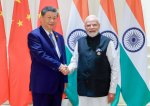
India, China working to address trade imbalance issue: Top official
New Delhi: Commerce Secretary Rajesh Agarwal said on Monday that India and China were working to address concerns over bilateral trade, including the structural imbalance and supply-chain challenges. The two...
No proposal for BRICS currency ‘as of now’: MEA
New Delhi: There is no proposal for a BRICS currency "as of now", while discussions on trade in local currencies have been underway for some time, the Ministry of External...
BRICS slams unilateral tariffs, backs WTO rule-based global trade
New Delhi: The BRICS group of emerging economies on Saturday unanimously adopted the New Delhi Declaration, in which it voiced serious concern over the rise of unilateral tariffs and non-tariff...

EU-India FTA proposal sent to European Council for final signature
New Delhi: The European Commission on Friday put forward its proposals to the Council for the signature and conclusion of the Free Trade Agreement (FTA) between the European Union and...

Piyush Goyal calls for linked BRICS payment systems, trade in local currencies
New Delhi: Commerce and Industry Minister Piyush Goyal on Friday urged BRICS member countries to link their payment systems, encourage trade in local currencies, and make digital trade more accessible...

India offers hope for growth amid global uncertainties: PM Modi
New Delhi: Prime Minister Narendra Modi said on Friday that India is keeping up its fast pace of growth amid global uncertainties, offering a source of confidence for growth and...

Putin takes aim at G7, says BRICS countries account for more than half of global growth
New Delhi: Russian President Vladimir Putin said on Friday that BRICS countries account for more than 40 per cent of global GDP, compared with 29 per cent for the G7,...

Global energy shock not over, warns IMF
Washington: The global energy shock triggered by the Middle East war is not over, the International Monetary Fund has warned, pointing to elevated oil and gas prices and sharply reduced...
PM Modi showcases India’s 7.8 pc growth, contrasts ‘policy paralysis’ of previous era when ‘glass was half-empty’
New Delhi: Contrasting the pre-2014 era under the Congress-led government with the present, Prime Minister Narendra Modi asserted that the world now sees India as the fastest-growing major economy. ...


