



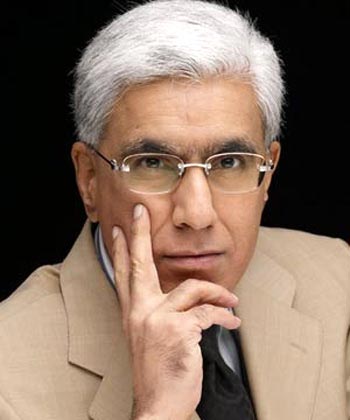
 by Karan Thapar
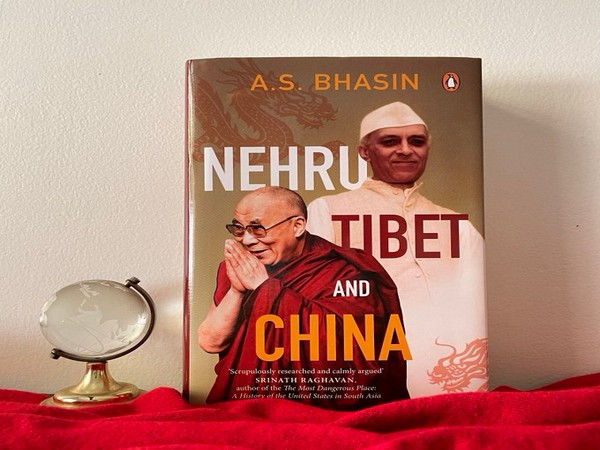
The pandemic was a great opportunity to read but, sadly, many books published during those dark days haven’t got the attention they deserve. Avtar Singh Bhasin’s ‘Nehru, Tibet and China’ is a prime example. It raises disturbing questions about India’s stand on both the eastern and western border with China and suggests Jawaharlal Nehru’s handling of this issue was almost irresponsible. After thirty years as Head of the Historical Division of the Ministry of External Affairs, Bhasin’s arguments are difficult to dispute, particularly when he’s corralled a mass of facts in support. Let me, briefly, share what he reveals.
From British times till 1954, Survey of India maps showed the western border as undefined. When Nehru decided a firm boundary must be marked he chose to unilaterally include the whole of Aksai Chin without any reason for believing the Chinese would accept. Two former Foreign Secretaries demurred. R. K. Nehru said: “Our experts had advised us that our claim to Aksai Chin was not too strong.” Subimal Dutt said the western boundary was not “properly delimited”.
However, Nehru insisted the boundary is “defined chiefly by long usage and custom”. Bhasin reveals there was no proof of this.
Worse, after claiming Aksai Chin India failed to assert its presence. Bhasin writes: “India even after having altered the border in 1954 had taken no steps to establish its military, political or administrative presence in the area … no check-post had been set up; no flag was unfurled to announce its sovereignty. India thought that merely drawing a line on the map was enough to announce its ownership.”
Worst of all, China built a 120 km road and during the seven years this was happening India was unaware of its existence. In 1957, when India found out, the protest was only informal. More bizarrely, it complained the Chinese men who built the road had not obtained Indian visas! Then, almost ludicrously, asked for Chinese help locating Indians who had gone missing on patrol duty. When the Chinese said they would deport them, India’s response was further damaging: “The question whether this particular area is in Indian or Chinese territory is a matter in dispute which is to be dealt with separately”. That confirmed doubts about India’s Aksai Chin claim.
Now, the eastern border. Here India’s claim is based on the validity of the 1914 McMahon Line. China, however, was not a party to the Simla Convention and never accepted this Line. That’s true both of the Kuomintang and Communist governments. Nehru knew this.
In 1935 McMahon himself questioned the 1914 Line. He called it a “verbal definition of the boundaries between Tibet and India”. Bhasin says this means the McMahon Line was drawn “on a map without surveys and was not delineated … it needed to be surveyed, delineated and demarcated”.
Here four facts are important. First, the British never occupied all the territory between the northern eastern border of that time and the McMahon Line. Second, Tibet remained in occupation of Tawang even though, according to McMahon, it was part of India. Third, Tibet wanted the McMahon Line adjusted to return “indisputable Tibetan territories that had been included in India”. Fourth, the British indicated a willingness to do this. Doesn’t this suggest the McMahon Line wasn’t sacrosanct?
In fact, Tawang remained in Tibetan hands till 1951.India only occupied it after Tibet began to fall under Chinese control, because if Tawang remained Tibetan it would become Chinese and, as Bhasin puts it, India’s border “would come down to the plains of Assam”.
Finally, Bhasin’s conclusion: “The Prime Minister had taken a simplistic view of the frontiers … Nehru’s insistence that India’s borders were what they were, maps or no maps, was unsustainable and proved disastrous for him and the nation.”
These are deeply disturbing findings and they clearly question the validity of India’s stand on both borders. If Bhasin is wrong, he should be challenged. If he’s right, we need to come to terms with the truth.
‘Undermines institutional neutrality’: K.C. Venugopal slams Kerala VCs who attended RSS event, demands resignation
Thiruvananthapuram: Congress General Secretary, Organisation, K.C. Venugopal, on Monday launched a strong political attack on three Kerala Vice Chancellors who attended an RSS centenary-related programme, describing their participation as contravening...

Foreign Secy Vikram Misri highlights indigenisation as key pillar for Rafale deal
Nice: Foreign Secretary Vikram Misri on Sunday highlighted indigenisation as a key pillar of the Rafale fighter jet deal with France, reaffirming India's commitment to defence self-reliance and strengthening domestic...
Trump approval slips as inflation climbs
Washington: US President Donald Trump's approval rating has fallen to its lowest level of his second term as inflation continues to weigh on voters and Democrats hold a modest advantage...

Actor Raghava Lawrence signals political entry in TN, says he has taken ‘positive decision’ after public backing
Chennai: Actor, choreographer and filmmaker Raghava Lawrence has strongly hinted at entering active politics in Tamil Nadu, stating that he has taken a “positive decision” after receiving overwhelming encouragement from...

El Nino likely to impact food prices, inflation projected to settle in 5.2–5.5 pc range in FY27
New Delhi: There is 80 per cent likelihood of an El Nino event during the June–August period and probabilities for this, to continue until at least November, are near or...
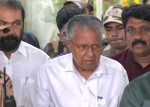
‘Hug row’ opens INDIA bloc cracks as Pinarayi Vijayan takes on Rahul Gandhi
Thiruvananthapuram: The simmering differences within the Opposition INDIA bloc have burst into the open as Leader of Opposition in Kerala, Pinarayi Vijayan, on Saturday launched a sharp attack on Congress...

‘Old method of BJP’: Trinamool’s Kirti Azad on raids against Madan Mitra, Abhishek Banerjee
New Delhi: Trinamool Congress MP Kirti Azad on Saturday launched a scathing attack on the BJP following raids conducted by the Enforcement Directorate (ED) against party leader Madan Mitra and...
‘Political vendetta’: Trinamool’s Sagarika Ghose on early morning raid at Abhishek Banerjee’s residence
Kolkata: Trinamool Rajya Sabha member Sagarika Ghose expressed scathing criticism of the early morning police raid at the residence of party General Secretary Abhishek Banerjee to track his absconding aide....

Whatever happening is immoral, unethical, says Saugata Roy amid growing crisis in Trinamool
Kolkata: Amid the growing rift in the Trinamool Congress, party MP Saugata Roy on Friday said that some of his fellow lawmakers are claiming they did not sign any document,...
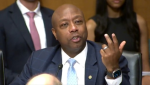
AI race with China takes centre stage in US Senate hearing
Washington: US lawmakers from both parties warned that America risks losing its technological edge to China unless it strengthens safeguards around artificial intelligence, as a Senate hearing highlighted growing concerns...
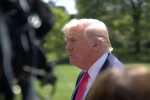
Trump signals political shift in Iran
Washington: US President Donald Trump suggested that recent US military action had reshaped Iran's leadership structure, saying a new group of leaders had emerged in Tehran and was proving more...
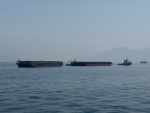
Gulf war hitting South Asia through oil shock: World Bank
Washington: The conflict in the Middle East is emerging as a major economic threat to South Asia through rising oil, gas and fertiliser prices, with the World Bank warning that...


