



 by Diptendra Raychaudhuri
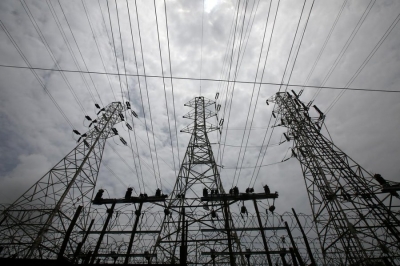
Reform is a process that when stalled can create a trap that sucks in the real sense. In India, power sector is a glaring example of it.
Caught between welfare demands and market needs, this sector is bleeding for years. The return from the supply cannot cover the cost as the sector suffers from high operational cost and distorted retail traffic. Recently the sector suffered further as the government, unable to pump up coal supply over the recent decades (something that China has accomplished excellently) asked the producers to import coal at a time when the international price was at its peak.
In fact the lack of preparation and foresight that has now left its stamp almost all over the economy has put a huge burden on the power sector. There is an enormous gap between the input into the system for generation of power and the money recovered from supplying it to the consumers.
The gap at the end of the suppliers (Discoms) stood at whopping 21 per cent in 2019-20, and in money terms it was INR 86,700 crores even after receiving support from the government to the tune of almost astronomical INR 1,10,000 crore.
This 1,10,000 crore is tax payers money. And remember, it is not only about the payers of direct taxes (income, corporate and so on). Every Indian, even those from the poorer sections, is a taxpayer as everyone pays GST and other different sorts of taxes when they buy different products. This 1,10,000 crore is the cost of mismanagement by consecutive governments over the decades.
It has been estimated that without the government help the total loss of the Discoms, the licensed distribution agencies, would have been 1 percent of the net domestic product. In money terms, according to an expert, the Discoms are suffering a burden of INR 1,37,000 crore in the form of unpaid bill. A sizable section of the defaulters are government owned concerns.
Over the last two decades various attempts have been made to salvage the economic miseries of the Discoms, and what has been stated above is the final outcome of all those. Now the Union government has decided to further change the provisions of the Electricity Act 2003, and an amendment to the bill was tabled in the Parliament last month.
Though some experts are somewhat excited about it, for laymen like us it is difficult to understand what great feat will be achieved by this bill. It intends to end the monopoly of Discoms (almost everywhere the state owned companies) over retail supply in their licensed areas, giving the retail consumers a choice of selecting the suppliers.
It is almost a rerun of what happened in television broadcasting when DTH companies ended the monopoly of the cable operators. But there is a significant difference. The cable operators were also private companies. But here the state owned Discoms will face competition from the private ones.
However, it was not that earlier the field was not open for the private players.. However, according to the previous mechanism, the incumbent had no obligation to let the newcomer use its network. This made the provision ineffective, as the cost of laying lines for a few subscribers (as will be the case in the beginning) was hugely prohibitive.
The amendment says now new licensees will have the right to use the existing network against a wheeling charge. The bill also arranges for proportionately sharing the liabilities between different providers. The actual costs will also be allocated between the two Discoms in case their differential load profiles result in differential costs. In a similar way, the cross subsidies too will be shared.
All these will augur well for the private companies. There is much consternation about privatization, ignoring the fact that the power distribution in Greater Kollkata and its suburbs is under a private company (Calcutta ESC) from the British period. The private companies are generally much more efficient (the private banks are a case in hand), and it may help.
It is expected that the private distribution companies will stop leakages which are rampant in suburban and rural areas, and that in turn will improve the finances of the Discoms. However political patronage to the miscreants is also a widespread phenomenon everywhere, and that may crop up as a major problem.
Altogether, we are yet to see a great endeavour to significantly bridge the gap between the cost and the recovery. Privatisation and the choice given to the consumers may help, but it is not a panacea.
Along with it the production of coal should be augmented within the country to create a buffer so that we can buy from the international market when it is cheap and use our coal when international market price is high. That is what China does. Further, the governments will have to think out of the box to bridge the gap between cost and recovery.
-INDIA NEWS STREAM
Commercial LPG cylinder gets dearer, jet fuel prices hiked
New Delhi: State-owned oil marketing companies (OMCs) have hiked the prices of 19-kg commercial LPG cylinders by Rs 9.50, while aviation turbine fuel (ATF) prices for domestic airlines have risen...

India can adjust to changes in global economy sans hurting its own growth: FM Sitharaman
Asheville : India has shown that it can adjust to changes in the global economy without allowing its growth to be derailed, Union Minister for Finance and Corporate Affairs Nirmala...

India records real GDP growth at Rs 81.36 lakh crore in Q1 FY27 with robust 7.8 pc growth
New Delhi: Despite global headwinds, India recorded real GDP growth at Rs 81.36 lakh crore in the first quarter of this fiscal (Q1 FY27), against Rs 75.46 lakh crore in...

IGL hikes CNG prices by Rs 3.89/kg in Delhi-NCR as LNG costs surge
New Delhi: Indraprastha Gas Limited (IGL) has increased compressed natural gas (CNG) prices by Rs 3.89 per kg across Delhi-NCR, citing a sharp rise in the cost of imported liquefied...

Banks raise $72.8 billion in forex inflows till Aug 21, FCNR(B) deposits reach $65.4 billion: RBI
New Delhi: The Reserve Bank of India (RBI) on Saturday said that authorised dealer banks have raised a massive $72.848 billion in forex inflows till August 21, and a major...

5 FBOs withdraw ‘100 pc’ claims following regulatory intervention: FSSAI
New Delhi: The Food Safety and Standards Authority of India (FSSAI) on Wednesday said that five food business operators (FBOs) have taken corrective action and withdrawn misleading “100 per cent”...
CPI(M)-backed Islamic Bank depositors in fix as plaints mount; Kerala CM Satheesan promises probe
Kannur: A financial headache is brewing for depositors of a Sharia-compliant cooperative society promoted by CPI(M) leaders in Kannur, with complaints surfacing that depositors have been unable to withdraw their...

Tata Sons Chairman N Chandrasekaran resigns ahead of AGM; will not seek reappointment
New Delhi: Tata Sons Chairman N Chandrasekaran has resigned from his position and will not seek re-appointment when his current tenure ends in February 2027, according to a report by...
Oil PSUs’ losses on LPG sales below market price cross Rs 59,000 crore
New Delhi: The cumulative under-recoveries of the government-owned oil marketing companies -- Indian Oil, Bharat Petroleum and Hindustan Petroleum -- on the sale of domestic LPG below the market price...

No charges on UPI transactions for users, limited merchant MDR possible: Govt
New Delhi: The government on Saturday clarified that consumers will not be charged for making payments through the Unified Payments Interface (UPI), while any future merchant discount rate (MDR) will...

India faces tariff risk as US Senate passes sweeping Russia sanctions bill
Washington:The US Senate passed a sweeping Russia sanctions bill that does not name India but could expose it and other major buyers of Russian energy to tariffs of up to...
RBI projects 5 pc inflation for FY27, seen rising in near term
Mumbai: The Reserve Bank of India (RBI) on Wednesday projected consumer price inflation at 5 per cent for FY27, while expecting it to rise further in the near term. Announcing...


