


 by Smita Gupta
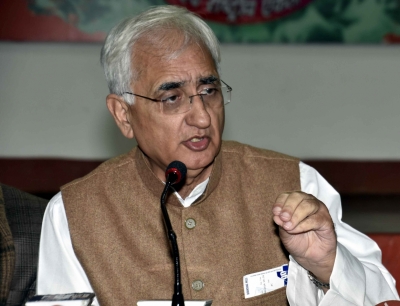
By setting fire to former Foreign Minister Salman Khurshid’s cottage in Nainital, the arsonists – doubtless from the ranks of those who had objected to his finding similarities between Hindutva and the ideologies of radical jihadi groups such as ISIS and Boko Haram – proved his point. The comparison, made in his new book, “Sunrise over Ayodhya: Nationhood in Our Times,” was definitely controversial, and certainly exaggerated as Hindutva-inspired radical groups have yet to touch the violent heights achieved by radical jihadi groups. But, in essence, Mr Khurshid was not wrong.
Home grown groups, such as the Bajrang Dal which, like the Bharatiya Janata Party (BJP), is an affiliate of the Rashtriya Swayamsewak Sangh (RSS), take their inspiration from Hindutva, a political construct, believe in Hindu majoritarianism, and their ultimate goal is a Hindu theocratic state. More importantly, groups like the Bajrang Dal have, over the years, demonstrated their belief in the power of violence. Uttar Pradesh Chief Minister Yogi Adityanath may not come from the RSS stream, but is as much a believer in Hindutva as Narendra Modi and Amit Shah are, or any other self- respecting BJP member.
Two months after the Gujarat riots in 2002, the head priest of the Gorakhnath Math in Gorakhpur, and then a rising political star in eastern U.P., “put together a number of unemployed youth to form an anti-minority organisation… named the Hindu Yuva Vahini (HYV). Undying support to their patron and founder and a firm vow to turn India into a Hindu nation were perhaps the threads that bound the group founded by Yogi Adityanath”, wrote the Indian Express in 2017 (https://indianexpress.com/article/what-is/what-is-yogi-adityanaths-hindu-yuva-vahini/), adding, “Since the moment of its formation, the HYV had steadily been embroiled in communal violence… Focusing on the meat eating habits of the Muslims, specifically cow meat, and how it allegedly created a tendency to incite violence, the HYV spread its communal wings across Gorakhpur and other parts of eastern U.P. to soon make Adityanath the face of saffron politics in UP.”
Indeed, the activities of the more violent adherents of Hindutva – their roles in incidents of communal violence, in targeting members of the Muslim and Christian communities — is well documented. And let us not forget Abhinav Bharat that was involved in attacks on the Samjhauta Express and the Mecca Masjid in 2007 and in the 2008 Malegaon blasts. But Abhinav Bharat does not figure in India’s list of proscribed organisations.
Yes, none of these groups has the firepower of a Boko Haram or ISIS. So, to that extent, the Congress’s Ghulam Nabi Azad was right, when he raised objections to Mr Khurshid’s description. The latter, however, responding to Mr Azad’s criticism, said: “Interestingly, my senior colleague Ghulam Nabi Azad has, perhaps unwittingly, added fuel to the fire. His suo motu signed statement released within hours of the book release leaves me perplexed, whilst the media has declared that a vigorous debate has begun in the party with him being the lead naysayer. But two points need to be kept in mind: Azad too has rejected Hindutva as a political ideology, although for what reason he does not say. He then goes on to say that Hinduism has a composite culture but comparing Hindutva with Boko Haram and ISIS is factually wrong and exaggerated. But there must be something identifiable that can be exaggerated.”
Sometimes, exaggeration is required, because nuance does not appear to have any place in today’s India. For too long, too many people in this country have turned a blind eye to the horrors of the many communal riots, including the one in 2002 in Gujarat, where Muslims bore the brunt, or to the murder of Christian missionary Graham Staines and his sons by the Bajrang Dal, to cite just two insrances. For too long, those who have physically targeted poor Muslims – often on trumped up charges of having slaughtered cows or indulging in “love jehad” – have gone unchecked by the authorities. Indeed, unless stopped, all these believers of Hindutva could perpetrate even greater crimes.
Dr Sudha Ramachandran, an independent political and security analyst based in Bengaluru, warned last year, in an article entitled, “Hindutva Violence in India: Trends and Implications”, in the journal, Counter Terrorist Trends and Analyses, “The Hindutva ideology is an important source of violence in India. It is driving the anti-Muslim violence in the country, which has assumed grave proportions in recent years. The anti-Muslim violence has manifested itself not only in rising physical attacks on Muslims but in other insidious and no-less dangerous ways:
virulent hate speech and demonisation of Muslims and their way of life. Equally dire are ongoing moves on the legislative front that are undermining Muslim rights and their identity
and could even strip millions of Muslims of their citizenship. The rapid inroads that Hindutva is making into India’s Constitution,
the manner in which it is prejudicing the outlook of people and colouring social interaction and politics should concern not just
Muslims or Christians but Hindus as well.”
Indeed, it should concern Hindus as well, as Congress MP Shashi Tharoor also underscored in his book, “The Battle Of Belonging: On Nationalism, Patriotism, And What It Means To Be Indian”, “This is not just about the minorities, as the BJP would have us believe. Many proud Hindus like myself cherish the inclusive nature of our faith and have no desire to live, as our Pakistani neighbours are forced to, in an intolerant mono-religious state.”
Need for a new lexicon
Over the last three decades and more, from the time the Ramjanmabhoomi movement began to take centre stage, the secular parties, while stressing that religion has no place in politics have sought to make a distinction between Hinduism and Hindutva. But the waters got muddied when the Supreme Court in 1995 described Hindutva as “a way of life”, rather than as the political doctrine that it is. A.G.Noorani, the noted lawyer, wrote in “Constitutional Questions and Citizens’ Rights: An Omnibus Comprising Constitutional Questions in India and Citizens’ Rights, Judges and State Accountability” (2006) that “Equating Hindutva with Hinduism, giving Hindutva a benign meaning, calling Hindutva the same as Indianization, etc. were unnecessary digressions from the facts of the case, and in doing so, the court may have brought down the wall separating religion and politics”.
Today in 2021, as Hindu majoritarianism has taken deep roots in Hindu society, on the ground, journalists, activists and party workers have found that most people do not understand the difference between Hinduism, the religion, and Hindutva, the Savarkar-inspired political doctrine whose aim is to build a Hindu state, the mirror image of Pakistan, a theocratic state, a concept that our Constitution-framers had rejected.
It is time, therefore, that our secular politicians construct a new religion-neutral vocabulary that eschews the use of the word Hindutva. They need to explain the principles of the Constitution, the sanctity of “equality before the law”, and the importance of “justice” in building a stable society. They must point out the dangers of politics that portrays those who practise other religions as “enemies”. They need to emphasise the importance of “pluralism” and “inclusiveness” in creating a powerful nation. They need to reiterate what we learned as children: “United we stand, divided we fall”, underlining that “we” stands for all Indians, not members of the majority community alone.
Describing oneself as a “janeudhari Brahmin”, visiting temples and reciting the Chandipath is not sufficient to neutralise the BJP’s divisive ideology. The narrative itself has to be changed by creating a new lexicon, a new vocabulary to explain why Hindutva politics is so dangerous for a multi-cultural, multi-religious country like India – but without using the word Hindutva. –
(Smita Gupta is a senior journalist and political commentator. She was Senior Fellow, The Hindu Centre for Politics and Public Policy, and earlier, Associate Editor, The Hindu. She can be contacted at smita_g@hotmail.com)
—INDIA NEWS STREAM
India cannot afford to fritter away energies in religious and social strife
Jan 11, 2020 New Delhi: Protests against the Citizenship Amendment Act (CAA) continue unabated across India. Police brutality, prohibitory orders, and frequent shutting down of metro and internet services have...

New idea of India: Secularism of common aspirations takes shape
BY Saeed Naqvi 'Majrooh uthi hai mauje saba Aasaar liye toofanon ke Har qatra-e-shabnam bun jaaye Ek mauj-e-rawan, kuchh door naheen' (The morning breeze is deceptive; it is actually a...
A suggestion for India on the Afghanistan peace talks
By Ali Ahmed Jan 24, 2029 New Delhi: Some ten years back, India scared off Richard Holbrooke, a legend in cracking heads as a mediator, when he tried to manage...

Reflection on partition as government opens wounds on citizenship
By Saeed Naqvi Jan 28, 2020 New Delhi:Since the word "Partition" has figured in the discourse on CAA, NCR, NPR the mind turns towards Maulana Azad, who was fiercely opposed...
India’s Budget 2020: Needs a few course corrections
By Frank Islam Feb 12, 2020 Washington: In her marathon 2 hours and 46 minutes speech introducing India's 2020 budget, Finance Minister Nirmala Sitharaman painted an optimistic picture of the...
Hardline Iran and aggressive nationalism
By Shubha Singh Feb 19, 2020 New Delhi: Iran's parliamentary polls are likely to elect a hardline Parliament when the country goes to the polls to choose a new Majlis...
Idea of India: Two former ambassadors skirmish on Shaheen Bagh
By Saeed Naqvi March 17, 2020 New Delhi:The Idea of India is being fiercely contested within Hindu society. Rampaging communalism is an offshoot. The latest to pick up the glove...
3 Indian Army men killed during face-off with Chinese soldiers
June 16, 2020 New Delhi: Three Indian Army men, including an officer, were killed on Monday night during a violent face-off with Chinese People's Liberation Army troops at Galwan Valley...
Xi Jinping: The man and his mind
July 2, 2020 New Delhi:A lot of is being written and rewritten today about China. Of course the principal focus is on Xi Jinping, President of China as a protagonist...
Can’t register FIR against Ramdev’s Patanjali claim: Delhi Police tells court
July 15, 2020 New Delhi: The Delhi Police on Wednesday told a district court that an FIR could not be registered against Patanjali Ayurved Limited, Ramdev and others on the...
SC issues notice to Prashant Bhushan on remarks against judiciary
July 22, 2020 New Delhi: The Supreme Court Wednesday issued notice to advocate Prashant Bhushan on the alleged contemptuous remarks on Twitter. The top court also asked the Attorney General...

Kashmiris: Homeless in Homeland
Aug 5, 2020 New Delhi: Generations have grown up hearing death rattle fade away in the mountains and valleys after the guns stop blazing. This is what Kashmir was and...