



 by Nilova Roy Chaudhury
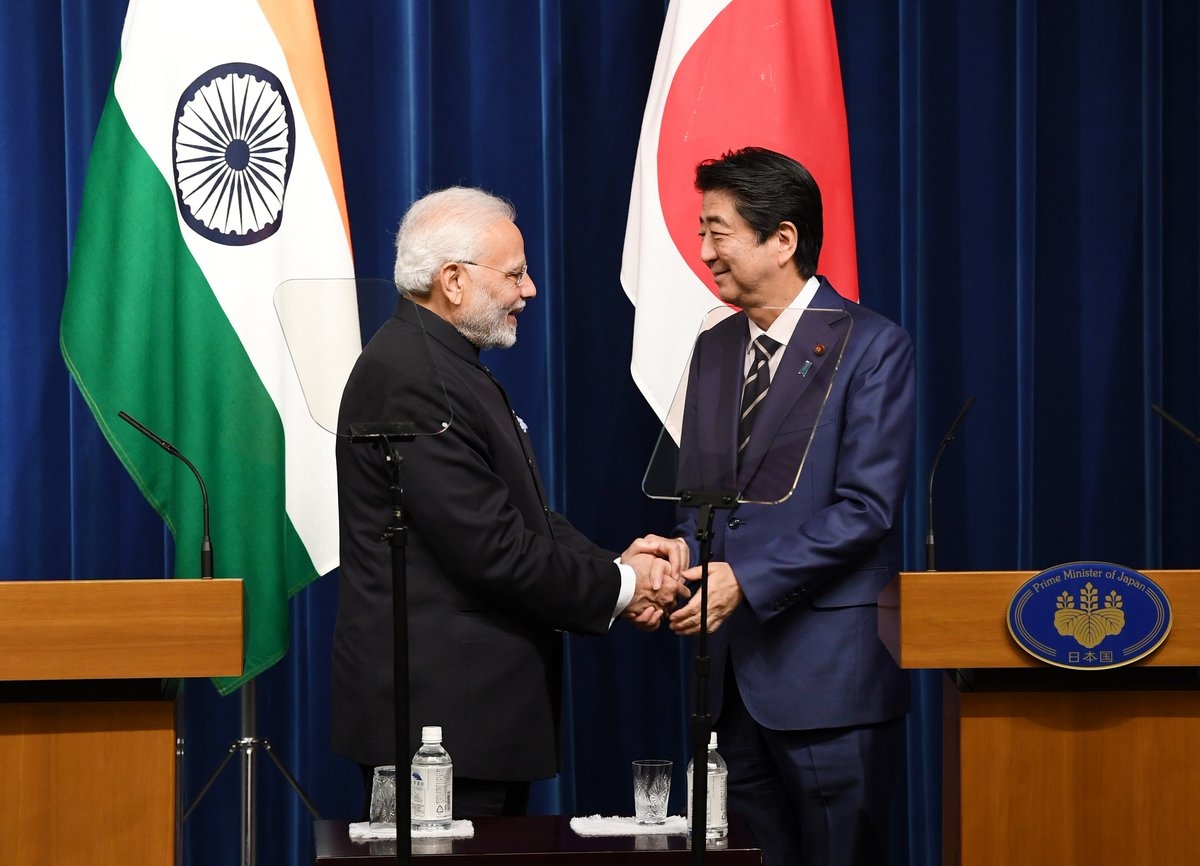
In a shocking incident in that normally peaceful nation, the former prime minister of Japan, Shinzo Abe, was shot twice by an assailant while he was delivering a campaign speech in Nara, in western Japan this morning. Abe, who was taken to hospital in a gravely critical condition, died shortly thereafter, it was officially announced.
The shocking assassination has stunned the country which has among the lowest rates of gun violence in the world. However, the lax security apparatus surrounding the former prime minister indicates a fatal intelligence and security failure. The assailant has been apprehended and, reportedly, confessed to wanting Abe dead.
Speaking before Abe’s death was announced, Japan’s Prime Minister Fumio Kishida, a member of Abe’s Liberal Democratic party, condemned the shooting in the “strongest terms” while the people of Japan and leaders across the world expressed shock at the violence in a country in which political violence is rare and guns are tightly controlled. The only country to have lived through atomic attacks, Japan has since become a deeply pacifist nation, where public acts of violence are extremely rare.
“This attack is an act of brutality that happened during the elections – the very foundation of our democracy – and is absolutely unforgivable,” said Kishida, in a televised address.
Abe was the longest serving Prime Minister of Japan, serving over two terms, and has been widely credited with personally investing in pushing for much improved ties with India. He visited India on many occasions, even before he became prime minister, and had a vision for Japan and India to become the democratic pillars to power the growth of Asia in the 21st century.
Abe’s maternal grandfather, Nobusuke Kishi, who served as prime minister of Japan from 1957 to 1960, was the first Japanese PM to visit India. In an eerie throwback, Kishi was attacked and survived an assassination attempt in the final days of his tenure.
Delivering a speech to the Indian Parliament in 2007, Abe sought a ‘confluence of oceans’ among the Pacific and the Indian Oceans, and first mooted the concept of the Indo-Pacific, before it became accepted as a geopolitical construct. Abe was also the primary initial mover of the concept of the Quad, or Quadrilateral of democracies, which has now been raised to the summit level and has become an important pillar of India’s foreign policy.
India, led by Prime Minister Narendra Modi with whom he shared a close personal bond, has been deeply shocked and saddened by the Abe’s assassination. National mourning has been declared in India tomorrow (July 9) in solidarity with the people of Japan.
Today, India’s relations with Japan are among the closest possible, with deep geo-strategic and geo-economic linkages. The two countries have raised their ties to a Special Strategic and Global Partnership and plan to make the relationship more robust and complementary in 2022, particularly in view of the 70th anniversary of the establishment of their diplomatic relations this year. Japan is one of the very few countries with which India has the mechanism of an annual summit, begun during the Abe era, before he resigned his premiership in 2020.
India has been a beneficiary of substantial Japanese infrastructure and development assistance, most visible symbols of which are the Delhi and other urban metropolitan railway systems (subways) and the Delhi-Mumbai development corridor, and have collaborated closely in heavy industry and science and technology. The Maruti-Suzuki automobile is another ubiquitous symbol of that collaboration, which suffered a setback after India tested nuclear weapons in May 1998.
However, Abe was among those who worked to restore linkages with India and, today, India is the largest recipient of Japanese overseas development aid, worth well over $39 billion. An indicator of the trust between the two countries is also apparent in the decision by India to allow Japan to invest in infrastructure and development projects in India’s sensitive North-East. Abe walked the talk on ensuring that projects were implemented and provided the platform on which India’s Act East Policy can bear fruit. In fact, he was scheduled to hold the 2019 summit meeting with Modi in Guwahati in December 2019, but the prolonged agitation across Assam and the Northeast against the Citizenship Amendment Act (CAA) in 2019, forced Abe to call off that visit.
Abe’s recognition and advocacy of the deep civilizational linkages between the two countries saw him visit Varanasi, in December 2015, and host Modi at his ancestral home and also in Kyoto, the cultural and ancient capital of Japan. While Abe’s end signals an abrupt end to a visionary legacy, the platform built for Indo-Japan ties has been strongly cemented to last beyond personalities. – INDIA NEWS STREAM
BRICS cultural conference concludes with ‘Bhopal Declaration’
Bhopal: The four‑day BRICS Cultural Conference‑2026 concluded in Bhopal on Saturday with the adoption of the ‘Bhopal Declaration’ in the presence of culture ministers from participating nations. The declaration...
Private event, India does not endorse remarks made at forum: MEA on Sheikh Hasina media interaction
New Delhi:Reiterating its earlier stance, the Ministry of External Affairs (MEA) on Friday said that the Indian government had no involvement in former Bangladesh Prime Minister Sheikh Hasina's recent virtual...
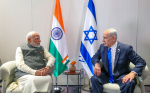
Netanyahu dials PM Modi, discusses West Asia situation and progress in India-Israel ties
New Delhi: Prime Minister Narendra Modi on Thursday evening received a phone call from his Israeli counterpart, Benjamin Netanyahu, during which both leaders not only reviewed progress on various aspects...
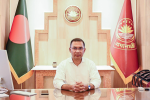
Bangladesh PM invited to BRICS Summit as BIMSTEC Chair: MEA
New Delhi: India on Tuesday said that Bangladesh Prime Minister Tarique Rahman has been invited to attend the outreach session of the 18th BRICS Summit to be held in New...
In call with Iranian FM, Jaishankar raises issue of attacks on commercial shipping and seafarers
New Delhi:) External Affairs Minister (EAM) S Jaishankar on Friday held a telephonic conversation with Iran’s Foreign Minister, Seyed Abbas Araghchi, during which he expressed India’s deep concerns at...
Baseless and technically untenable: India rejects Pak media reports on upstream intervention
New Delhi: Terming them as baseless, factually incorrect and technically untenable, India on Friday rejected reports in Pakistani media that alleged that New Delhi was deliberately causing flooding in Pakistan....
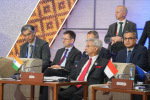
Attack on merchant ships unacceptable, international waters must be safe: EAM Jaishankar at ASEAN forum
Manila: External Affairs Minister (EAM) S. Jaishankar on Thursday described attacks on merchant shipping and civilian infrastructure as "unacceptable", stressing that commerce through international waterways must remain safe and free...

Trump says $19.2 trillion in global investments flowing into US; calls it ‘golden age’
Washington: President Donald Trump has claimed his administration had secured more than $19 trillion in new investment commitments for the United States, saying manufacturers from Asia and Europe were shifting...

India, UAE agree to deepen cooperation in consular matters
New Delhi: India and UAE held the 7th Joint Committee on Consular Affairs meeting in New Delhi on Wednesday, where both sides agreed to deepen cooperation in all consular matters,...
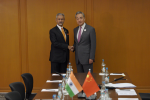
EAM Jaishankar holds talks with Chinese FM Wang Yi in Manila, says ties gradually normalising
Manila: External Affairs Minister S. Jaishankar held a wide-ranging discussion with Chinese Foreign Minister Wang Yi in Manila, Philippines, focusing on bilateral relations, border stability and key regional and global...
India lodges strong protest with Russia over cargo ship attack that killed four Indians
New Delhi: India on Tuesday summoned the Russian Charge d'Affaires, Vladimir Ladanov, to the Ministry of External Affairs (MEA) and condemned the attack on the commercial vessel MV Golden Leo,...
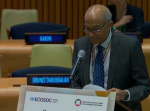
India warns Security Council inaction undermining public faith in UN
United Nations: India has warned that people’s view of the UN is sinking as it fails to reform the Security Council to make it capable of ending conflicts end human...


