


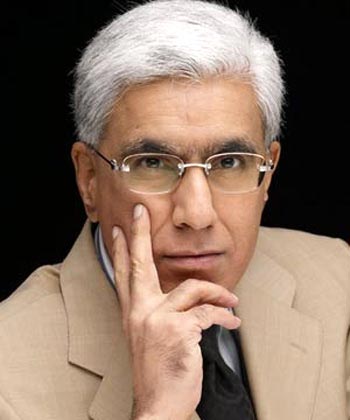
 by Karan Thapar
Friday the 5th was the third anniversary of the nullification of Article 370. It’s also the date on which ‘Hamin Ast: A Biography of Article 370’ was published by the Vidhi Centre for Legal Policy. This book could create an enormous stir because it argues that “the nullification of Article 370 is legally unsound”. It has four authors – Jinaly Dani, Pranay Modi, Kevin James and Arghya Sengupta, the Founder and Research Director of the Centre.
Hamin Ast argues the nullification of Article 370 is unconstitutional for three reasons. They are technical and you both need to know exactly what steps were taken and how that was done to understand them. Laymen may not find it easy to follow. But the issue is so important I want to try to summarize the arguments.
The first is to do with the Jammu and Kashmir Governor’s concurrence equating the constituent assembly with the legislative assembly. Here it’s not so much how it was done – though that’s an issue too – but the character of the Governor at the time that is the key concern. This concurrence was given when President’s rule applied in the state. The book says: “When the Governor of Jammu and Kashmir purportedly gave his concurrence on behalf of the Jammu and Kashmir government, he was not acting in his independent capacity, but rather as a delegate of the President … this amounted to the President seeking his own concurrence … can such self-concurrence be deemed to satisfy the requirements of law? The short answer is no.”
The second reason is the way Article 367 was used. This Article is intended to help interpret the constitution. However, in this instance, when it was used to interpret the constituent assembly as the legislative assembly, it made “substantive changes to the provisions of the constitution”. Hamin Ast says: “It is abundantly clear that this (was done) … not to resolve any interpretative conflict or confusion (but) … to clothe the legislative assembly with a specific substantive power which it did not have earlier.” It concludes this is an “improper and unlawful use of Article 367”.
Now to Hamin Ast’s third reason. It’s do with the proclamation of President’s rule in Jammu and Kashmir. This declared that all the powers of the state assembly would be exercisable by parliament “unless the context requires otherwise”. The context is, therefore, the determining factor.
What was this context? Hamin Ast says it was “the historic compromise between Jammu and Kashmir and the Union of India, which was embodied in the text of Article 370.” In turn this means “the terms and conditions of Jammu and Kashmir’s constitutional relationship with India would be determined by the representatives of the people of Jammu and Kashmir jointly with the representatives of the people of the rest of India”. This context “required two hands to clap before any change could be made to this constitutional relationship”. The second hand was missing.
The book’s point is simple but stark: “Even though the powers of the Legislative Assembly … had been taken over by Parliament as a consequence of the imposition of President’s Rule, the terms of the Proclamation … prohibited Parliament from exercising those powers on behalf of the Jammu and Kashmir Legislative Assembly in the context of Article 370.”
Now Hamin Ast is only the view of the Vidhi Centre. But the Centre and Arghya Sengupta, in particular, are highly regarded and widely acknowledged authorities on the constitution. Their view matters and the fact it’s been published in a book makes it all the more significant. They wouldn’t have done that if they weren’t convinced of their case.
Of course, the Supreme Court has to still hear this matter. So far it’s postponed doing so in the belief it can, if necessary, turn the clock back. Most people believe after three years that’s unlikely. Hamin Ast goes one step further. The book suggests it would be a constitutional travesty if nullification becomes a fait accompli

Favourable view of US slides among Indians: Survey
New York: Favourable views of the US in India have slid since last year amid President Donald Trump's actions and rhetoric against the country, according to an international survey. ...
‘Our Constitution guarantees right to dissent’: Pawan Khera slams police action after Sonam Wangchuk shifted to hospital
New Delhi: Congress leader Pawan Khera on Saturday criticised the Union government over the police action after climate activist Sonam Wangchuk was shifted to a hospital from Delhi’s Jantar Mantar,...

Rajasthan HC clears marriage of two life convicts at Jodhpur open jail
Jaipur: In a rare order, the Rajasthan High Court has allowed two life convicts to marry at the open-air prison in Mandore, Jodhpur, observing that the marriage of two consenting...

Taslima Nasrin’s upcoming Kolkata visit litmus test for free speech
New Delhi: Author Taslima Nasrin’s upcoming Kolkata visit has become a subject of political debate since it became known that the writer, a long-standing target of zealots, is attending an...
India warns Security Council inaction undermining public faith in UN
United Nations: India has warned that people’s view of the UN is sinking as it fails to reform the Security Council to make it capable of ending conflicts end human...
Maharashtra economy collapsed due to institutional corruption: Shiv Sena(UBT) in ‘Saamana’
Mumbai: In a blistering attack on the ruling dispensation, Shiv Sena(UBT) on Wednesday alleged that Maharashtra's economy has completely collapsed due to unprecedented institutional corruption. Citing a recent report by...
Did not want to work in PMO, had notion of extra vetting being a Muslim officer, says ex-CEC Quraishi
New Delhi: Former Chief Election Commissioner (CEC) S.Y. Quraishi on Tuesday said he had declined an offer to serve as Joint Secretary in the Prime Minister's Office (PMO), saying he...
India-UK FTA to make British goods cheaper and boost Indian exports from July 15
New Delhi: The India-UK Comprehensive Economic and Trade Agreement (CETA) will come into force on Wednesday, paving the way for cheaper British goods in India while granting Indian exporters near-total...
US grant rule sparks science concerns by lawmakers
Washington: A coalition of more than 40 US lawmakers has urged the Trump administration to withdraw a proposed federal grant regulation, warning that it would inject politics into scientific funding...

BJP serves Rs 100 crore defamation notice to Omar Abdullah over MLA bribery remarks
Jammu: The Jammu and Kashmir unit of the BJP has served a Rs 100 crore defamation notice to Chief Minister Omar Abdullah for his remarks that the party was offering...
India pursues parallel bid for UNSC, launching candidature for election while campaigning for permanent seat
United Nations: India is pursuing parallel roads to the UN Security Council (UNSC), launching on Monday a campaign for election to it, while continuing its bid for a permanent seat....

Difficult to fill vacuum after Ajit Pawar’s demise, NCP needs corrective steps: Praful Patel
Mumbai: The structural cracks within the Nationalist Congress Party (NCP) have widened into a high-stakes battle for organisational control following the untimely demise of former national president and Maharashtra Deputy...