



 by Manan Kumar
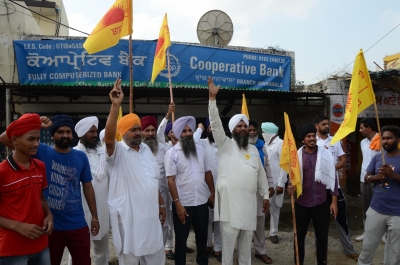
New Delhi: Prime Minister Narendra Modi finally bit the bullet by reluctantly agreeing to repeal the three farm laws on a carefully chosen day of Guru Purab, the birth anniversary of Guru Nanak. The morning announcement came as a shock, as it betrayed the rock-like unflinching image of PM Modi. It was, perhaps, his biggest U turn since 2001, the year he became the chief minister of Gujarat.
PM Modi chose his words carefully, sugar coating his words with an apology. He also tried to fix the onus on the farmers for rejecting something that was good for them. “While apologising to the nation, I want to say with a sincere and pure heart that maybe something was lacking in our tapasya (dedication) that we could not explain the truth, as clear as the light of the diya, to some of our farmer brothers,” said PM Modi announcing the decision.
It is obvious that the step has come not because of a change in heart but because clear signs of a staring defeat in Uttar Pradesh and Uttarakhand polls. The attempts of communal polarisation too have been pushed back by unwavering farmer’s unity. According to RSS sources, a recently done internal survey had projected 125 seats for the BJP in coming Uttar Pradesh elections – a drastic fall from the current tally of over 320 seats. Uttar Pradesh is crucial for the BJP because a loss in the most populous state has the potential to turn the tables in 2024 Lok Sabha elections.
It seems that coming elections are not the only reason behind this massive U turn. The reason also lies in the larger impact that the farmer’s movement was able to make on other movements. During 11 months of struggle at three Delhi borders – Singhu, Tikri and Gazipur – the farmers’ protest became an umbrella movement of sorts attracting all kinds of protesting masses. It became a unifying place for struggling students, bank employees, defence employees, teachers, industrial workers, minorities and other oppressed classes.
The initial euphoria generated by the BJP leaders and hailed as ‘Masterstroke’ by pro-government media has not yielded any perceptible change in farmer’s thinking as yet. Farmer leaders are cautious for they have learnt to read between the lines. PM Modi’s words – “We regret we could not convince all farmers. Only a section of them was opposing the laws, but we kept trying to educate and inform them” is a giveaway of a partial retreat according to a random farmer leader that this correspondent met at the Gazipur border.
The Samyukt Kisan Morcha, an umbrella organization of over 30 farmers unions, has been measured in its response. Celebrating the decision as an important milestone in its struggle, the SKM noted that the agitating farmers will leave their protracted zones only after the due parliamentary process is over. The SKM has already drawn the next battle line by reminding PM Modi of their remaining key demands – to ensure statutory guarantee of remunerative prices for all agricultural produce for all farmers and withdrawal of the Electricity Amendment Bill.
Giving any concession on these two demands is a very tough call for the Modi government. It cannot afford to agree to these demands as it will not only hit the corporate interests but will also make a huge dent on the exchequer. As a follow up step, the only option for the BJP is to hard sell the idea that PM Modi outlined in his speech that the government is much concerned about the farmers and has made great concessions at the altar of politics for them. The BJP’s well-oiled machinery has already started this perception war with the help of friendly channels and a formidable social media presence.
The BJP also has a seemingly veritable tool in Meghalaya governor Satyapal Malik. Despite being on a constitutional post Mr Malik, a farmer from the Jat belt of western Uttar Pradesh, has openly criticized the farm laws while claiming that PM Modi is a well-intentioned leader who has been kept in the dark on farmer’s issues. When will the BJP use him to penetrate the farmers and how much ice he will be able to cut remains to be seen?
The year-long struggle has made the farmers wise enough and they cannot be deceived easily by mere promises. Moreover, the structure of the SKM is highly democratic and strong to keep a check on renegades unless the defection is too large – not an easy task for any power under present circumstances.
(Manan Kumar is a senior print and radio broadcast journalist and political commentator. He is based in New Delhi and can be contacted at manankmr@gmail.com)
—-INDIA NEWS STREAM
‘Jo dar gaya, woh…’: AAP rift wide open, Kejriwal’s ‘soldiers’ hit back at Raghav Chadha with ‘soft PR’ jibe
New Delhi: The rift within the Aam Aadmi Party (AAP) came out in the open on Friday, with Raghav Chadha, party's 'sacked' Deputy Leader in Rajya Sabha, and party leaders...

‘Silenced, not defeated’: Raghav Chadha after removal from AAP’s deputy leader post in RS
New Delhi: AAP MP Raghav Chadha on Friday finally broke his silence and expressed a strong reaction after the party removed him and appointed Ashok Mittal as its new Deputy...

Unrealistic to liberate Strait of Hormuz through force: French President Macron
Seoul: Calling for resumption of talks to resolve the ongoing conflict in West Asia, French President Emmanuel Macron said on Thursday that it would be "unrealistic" to conduct military operation...

The West Asia Conflict: Bitter Pill for India
New Delhi: Into the second month of hostilities in West Asia, the world is watching how those who fuelled the aggression appear to be caught in an impasse from which...

Launch of Artemis II signals new US space race push
Washington: The United States has launched its first crewed mission around the Moon in more than 50 years, with President Donald Trump and senior lawmakers hailing Artemis II as a...

NASA Artemis mission set for mankind’s return to moon
New York: More than half-a-century after mankind’s sojourn to the moon, four astronauts are planned to take off Wednesday on a voyage that will take them around the celestial body...

LS: YSRCP terms Amaravati Bill ‘hopeless’, stages walkout
New Delhi: YSR Congress Party staged a walkout from the Lok Sabha during the debate on the Bill to give statutory status to Amaravati as the sole capital of Andhra...
Citizenship not ECI’s purview, falls under Home Ministry: AIMIM Chief on Bengal SIR
New Delhi: AIMIM President Asaduddin Owaisi on Wednesday strongly criticised the Special Intensive Revision (SIR) process in West Bengal, insisting that citizenship verification does not fall under the Election Commission...
Political temperature soars in Bhabanipur as it gets ready for high voltage Mamata-Suvendu showdown
New Delhi: In West Bengal, the April-end state election is more than a political contest at the hustings; it is now a fierce struggle for identity and dominance between the...

Language row deepens in Jharkhand over exclusion of Bhojpuri, Magahi, Angika from JTET
Ranchi: A fresh linguistic controversy has erupted in Jharkhand after the state government decided to exclude Bhojpuri, Magahi, Maithili, and Angika from the list of regional languages for the Jharkhand...

A top-notch forum formed to strengthen Indo-Saudi ties, help people in distress
RIYADH: As part of a major outreach initiative, a cross-section of Indian expatriates has launched the all-inclusive “Indian Expatriates Society” (IES), which will serve as an apex social andcultural organization...

US lawmakers clash over troops, war powers
Washington: US lawmakers are sharply divided over the prospect of deploying ground troops in Iran, with senior politicians warning of escalating risks, unclear objectives and the need for Congressional approval....


