



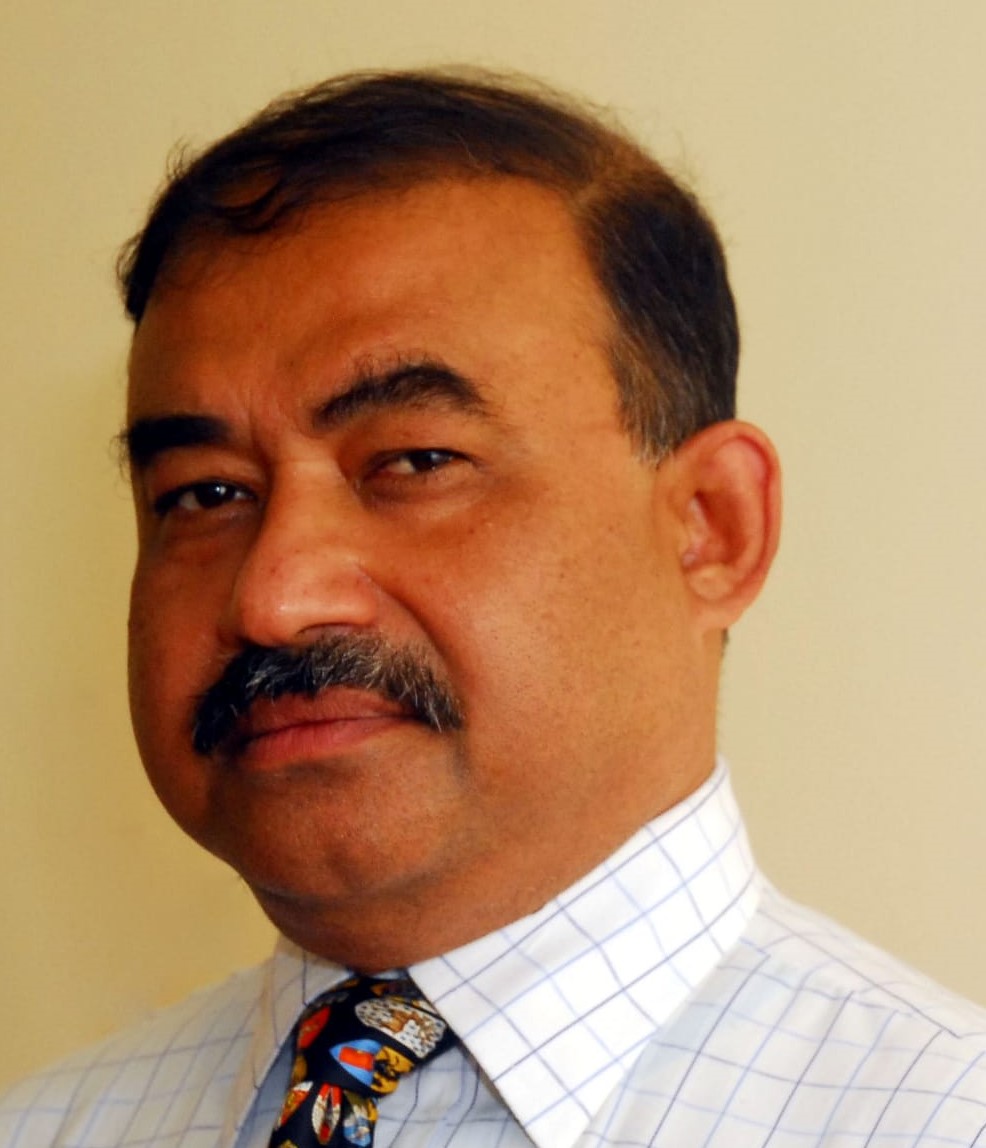
 by Subir Bhaumik
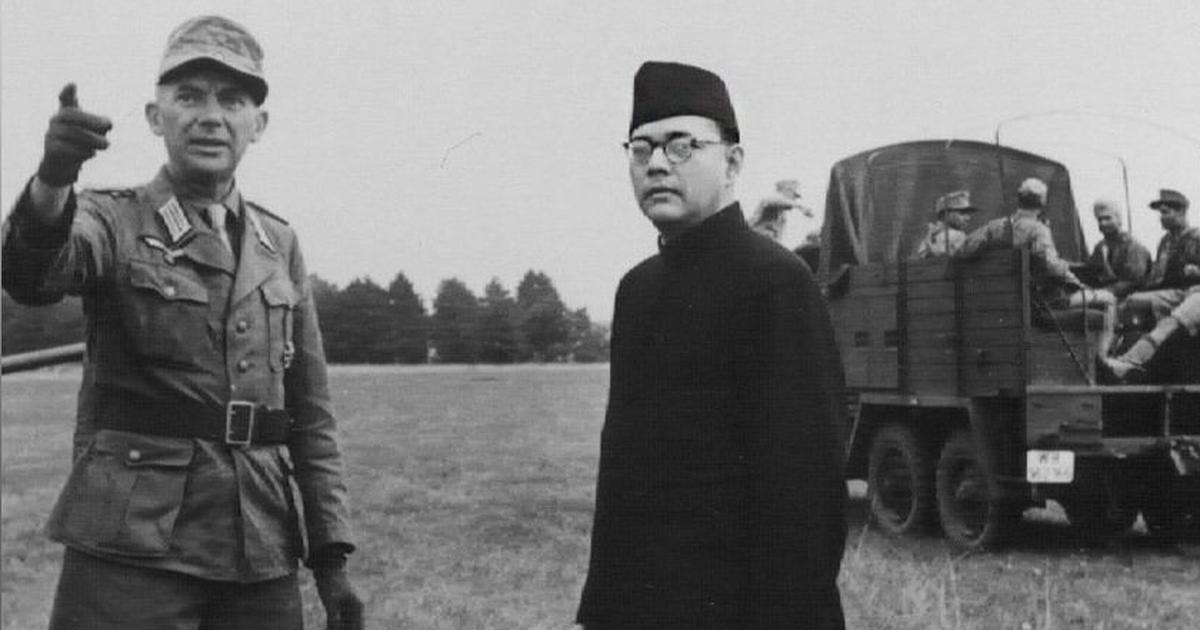
Image Source: IndiaTV News
Why did the British finally leave India, the ” brightest jewel in the Crown” ?
The answer is not difficult.
British Prime Minister Clement Attlee , who had replaced Sir Winston Churchill at the end of the Second World War, made it clear why it was time to leave India.
He pointed to the ‘uncertain loyalty of the Indian soldier’ as the single biggest reason for not wanting to hang on to the biggest colony of the Empire and leave before it was too late.
For every British involved in ruling India , the worst nightmare was the 1857 Mutiny , a revolt started by disgruntled Indian Sepoys and joined by various Indian rulers in North India.
What was the most important instrument for perpetuating British colonial rule ? Doubtlessly, the British Indian Army . Officered largely by British but also some Indians, this was the army that suppressed any challenge to British rule across the globe. If these tens of thousands of Indian sepoys refused to uphold their oath to preserve the King Emperor, there was no way the British could hold on to colonies like India.
The Congress led by Gandhi , the Hindu Mahasabha led by Savarkar or the Muslim League led by Jinnah never took on the British in what was easily their Achilles Heel. They supported the British war effort and backed the recruitment of Indians to defend the Empire, leaving their ultimate departure from India on their good sense and fairness. So in reality , none of these political forces, however revered , posed any real challenge to the British Empire.
A period in jail after a Satyagraha was followed by talks and some power sharing.
Subhas Chandra Bose’s rise in Indian politics changed these equations. For the first time , here was a leader with nationwide popularity who was prepared to take on the British and do whatever it takes to throw them out. That made the difference.
In a way, Bose focusing on raising an Indian National Army and sparking a revolt among Indian soldiers was not something unique. The Bengal revolutionaries who believed in armed ouster of the British by use of arms had shown the way. He merely drew from that understanding to plan the overthrow of British rule . These revolutionaries and Bose after them knew that an effort could turn the greatest strength of the Empire into its greatest weakness, an asset into a liability. After the INA , that is what exactly happened.
Modern Indian historiography, wedded to projecting the primacy of the Congress in India’s freedom struggle, has disdainfully run down these bravehearts mostly from Bengal and Punjab as nihilist and anarchists. That is not correct.
Revolutionaries like Rashbehari Bose and Jatin Mukherjee had carefully studied the history of 1857 Mutiny and realised the easiest way to hit the British was to work on the Indian soldier and swing his loyalty from the King Emperor to Mother India. The uprising that Rashbehari had planned during the First World War was to begin from Meerut– such was the influence of 1857 in the minds of His Majesty’s fiercest opponents. The plot fell through and Rashbehari fled to Japan. Jatin Mukherjee died fighting the British police when encircled while waiting fir a German ship to arrive with weapons.
The first Indian National Army was raised by Rashbehari Bose and Captain Mohan Singh after the fall of Singapore.
When Subhas Bose arrived in Southeast Asia after a perilous submarine voyage , the senior Bose and Mohan Singh handed over the INA leadership to Netaji . The rest is history.
Having failed to turn the Congress into a vehicle of national revolution and forced to quit its leadership after winning its presidential polls, Netaji did what Rashbehari had done after his uprising plans failed– turn abroad and enlist support of Britain’s enemies.
Those who make a big deal about Netaji’s joining hands with Nazi Germany and Imperial Japan and hold it against him fail to realise that he could never have raised an army without foreign support. And that army , however ramshackle , was a living example for the India soldier to revolt against the British.
There is no doubt Bose would have done to the Japanese , if they tried dominate him, what Myanmar’s independence War hero Marshal Aung Saan did to the flag bearers of Nippon. Aung Saan raised the Burma army with Japanese support but then turned against them and took British help to drive them out of what was then Burma.
For Bose and Aung Saan, all that mattered was the independence of their own country . And both knew to use the Great War and the fight of the Powers to work for national Liberation.
India’s real tragedy is Bose was not around at the time of Transfer of Power. It is impossible to believe he would have accepted the Partition.
His strong secular credentials and ability to inspire all Indians, even those laboring in the plantations of Southeast Asia, would have blown away the power sharing manipulations of the Congress and Muslim League , all in a hurry to eke out their acre of green grass.
The tragedy is similar to Burma where Aung Saan’s murder foreclosed a federal deal with the ethnic minorities and paved the way for an unending civil war. – INDIA NEWS STREAM
Subir Bhaumik is a senior journalist and author. The opinion in this article are author’s own.
‘Hug row’ opens INDIA bloc cracks as Pinarayi Vijayan takes on Rahul Gandhi
Thiruvananthapuram: The simmering differences within the Opposition INDIA bloc have burst into the open as Leader of Opposition in Kerala, Pinarayi Vijayan, on Saturday launched a sharp attack on Congress...

‘Old method of BJP’: Trinamool’s Kirti Azad on raids against Madan Mitra, Abhishek Banerjee
New Delhi: Trinamool Congress MP Kirti Azad on Saturday launched a scathing attack on the BJP following raids conducted by the Enforcement Directorate (ED) against party leader Madan Mitra and...
‘Political vendetta’: Trinamool’s Sagarika Ghose on early morning raid at Abhishek Banerjee’s residence
Kolkata: Trinamool Rajya Sabha member Sagarika Ghose expressed scathing criticism of the early morning police raid at the residence of party General Secretary Abhishek Banerjee to track his absconding aide....

Whatever happening is immoral, unethical, says Saugata Roy amid growing crisis in Trinamool
Kolkata: Amid the growing rift in the Trinamool Congress, party MP Saugata Roy on Friday said that some of his fellow lawmakers are claiming they did not sign any document,...
AI race with China takes centre stage in US Senate hearing
Washington: US lawmakers from both parties warned that America risks losing its technological edge to China unless it strengthens safeguards around artificial intelligence, as a Senate hearing highlighted growing concerns...
Trump signals political shift in Iran
Washington: US President Donald Trump suggested that recent US military action had reshaped Iran's leadership structure, saying a new group of leaders had emerged in Tehran and was proving more...
Gulf war hitting South Asia through oil shock: World Bank
Washington: The conflict in the Middle East is emerging as a major economic threat to South Asia through rising oil, gas and fertiliser prices, with the World Bank warning that...
Won’t beg anyone to join our statehood movement: Dr Farooq Abdullah
Srinagar: National Conference (NC) President and former J&K Chief Minister Dr Farooq Abdullah said on Thursday that his party won’t beg anyone to join its protest in New Delhi for...
‘No political, alliance-related talks’: Cong says Sonia-Mamata meeting was cordial, personal
New Delhi: Senior Congress leader Sonia Gandhi and Trinamool Congress chief Mamata Banerjee have strongly refuted media speculation surrounding their recent private meeting, describing some news reports as inaccurate and...

South Korea: Lee says Iran war makes North Korea less likely to give up nukes
Seoul: The US-Iran war has made North Korea even less likely to give up its nuclear weapons program, South Korean President Lee Jae Myung said in an interview published on...

‘Political and personal reasons’ : Sushmita Dev on quitting Trinamool and Rajya Sabha
New Delhi: Sushmita Dev, who announced her resignation from the Trinamool Congress as well as from the Rajya Sabha on Wednesday, cited "political and personal" reasons for her decision, while...
A century and a half on, the Ishavasya Upanishad returns to Oxford, this time in Acharya Prashant’s voice
Oxford (UK): In 1879, Professor Max Muller carried the Ishavasya Upanishad to the West, publishing its first English translation through Oxford University Press as the opening volume of the ‘Sacred...


