




Dhaka: BNP candidate Mirza Fakhrul Islam Alamgir was elected as the 23rd President of Bangladesh on Thursday after defeating Oli Ahmed, the candidate backed by Jamaat-e-Islami-led 11-party alliance, local media reported.
Fakhrul secured 255 votes, while Ahmed could manage only 88 of the 343 valid votes cast in the presidential election held on Thursday afternoon in the national Parliament under the supervision of Chief Election Commissioner (CEC) and Returning Officer A M M Nasir Uddin.
The new President is scheduled to take the oath of office at Bangabhaban on Friday, according to the Chief Whip.
Announcing the result, the CEC said, “Mirza Fakhrul Islam Alamgir was elected to the post of President properly as he got the highest votes,” the CEC said, Bangladeshi media outlet UNB reported.
Reports suggest that among the 349 eligible voters, six lawmakers did not cast their ballots in the presidential election.
Those who did not vote include BNP lawmakers Mirza Abbas and Mostafa Kamal Pasha, independent lawmaker Rumeen Farhana, Jamaat lawmaker Gazi Nazrul Islam and Islami Andolan Bangladesh lawmaker Oli Ullah.
The presidential election marks the first “ballot battle” in more than three and a half decades, breaking the longstanding practice of electing Presidents unopposed, a trend that continued since 1991.
The last presidential election decided through voting in Parliament was on October 8, 1991.
Following the resignation of Bangladesh President Mohammed Shahabuddin on July 24, Speaker of the National Parliament Hafiz Uddin Ahmed was serving as the country’s acting President. Under the Constitution of Bangladesh, the election of a new President must be held within 90 days of the office falling vacant.
For over 15 years, Fakhrul served as BNP’s effective “number two”, becoming the party’s longest-serving Secretary General and one of its most prominent public faces.
During BNP’s turbulent period, when Tarique Rahman was in exile in London and his mother and former BNP chief Khaleda Zia faced imprisonment, house arrest, or battled prolonged illness, Fakhrul emerged as the senior leader physically present in Bangladesh. He remained in contact with party workers on the ground and helped execute party decisions into action, Bangladesh’s leading newspaper The Daily Star reported.
Fakhrul’s presidency assumes added significance amid the proposed changes agreed upon by political parties under the July Charter.
The charter seeks to create a balance of power between the President and the Prime Minister by amending provisions in the country’s constitution and granting the president greater independence in making appointments to a few posts, including those to the National Human Rights Commission and the Information Commission.
IANS

New J&K High Court bench to come up in Ladakh, announces HM Amit Shah
New Delhi/Leh: The Union Cabinet on Thursday approved the establishment of a bench of the High Court of Jammu and Kashmir and Ladakh in the Union Territory of Ladakh, Union...
Iran’s President says negotiation with US does not mean surrender
Tehran: Iranian President Masoud Pezeshkian has said that negotiating with the United States did not mean surrender. At a conference in Tehran on Wednesday (local time), Pezeshkian stressed the...
Close alignment on India’s MAHASAGAR, Japan’s FOIP more important than ever before: Rajnath Singh
New Delhi: Defence Minister Rajnath Singh on Thursday said that a close alignment between India's MAHASAGAR vision and Japan's Free and Open Indo-Pacific (FOIP) initiative is "more important now than...

Large protest held in Japan against Takaichi govt’s ‘distorted view of history’, ‘dangerous moves’
Tokyo: Tens of thousands of Japanese citizens gathered in front of the National Diet Building in Tokyo to protest a series of dangerous moves by the government of Prime Minister...

Jharkhand: Students move HC against cancellation of recruitment exams, hearing on four petitions at 3 PM
Ranchi: The legal battle launched by affected candidates against Jharkhand government's decision to cancel 22 recruitment examinations has intensified, with four petitions challenging the move filed in the High Court...
Sajjan Kumar, convicted in 1984 anti-Sikh riots cases, dies at 80
New Delhi: Former Congress MP, Sajjan Kumar, who was serving life imprisonment in connection with cases arising from the 1984 anti-Sikh riots, died on Thursday at a Delhi hospital. He...
Bangladesh: Shibir-backed event for extremist triggers widespread concerns
Dhaka: Citing it as a "dangerous" development, a report has highlighted that Islami Chhatra Shibir, the student wing of Bangladesh's radical Islamist party Jamaat-e-Islami, is seeking to establish extremist Asif...
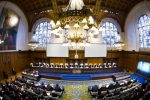
EU leaders voice support for ICC after US sanctions
Brussels: The European Union (EU) leaders on Wednesday voiced firm support for the International Criminal Court (ICC), a day after the United States imposed sanctions on the court's president and...
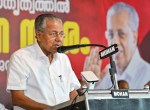
Pinarayi Vijayan sounds alarm over Census questions, sees NPR agenda
Thiruvananthapuram; Kerala's Leader of Opposition Pinarayi Vijayan on Wednesday accused the Centre of attempting to use the forthcoming Census to advance the agenda of the National Population Register (NPR) and...

Jharkhand exam cancellations spark fresh protests, selected candidates storm Secretariat campus
Ranchi: Protests by candidates who cleared recruitment examinations and employees affected by the cancellation of appointments intensified in Jharkhand following the state government's decision to cancel several JPSC and JSSC...
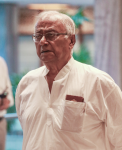
Trinamool MP Saugata Roy raises car attack matter at Kolkata airport with LS Speaker
Kolkata: A day after his car was attacked by protesters outside the Kolkata airport, Trinamool Congress MP Saugata Roy on Wednesday wrote a letter to the Lok Sabha Speaker Om...

Bengal court issues arrest warrant against Trinamool MP Mahua Moitra in hate speech case
Kolkata: A court in West Bengal’s Krishnanagar issued an arrest warrant against Trinamool Congress MP Mahua Moitra in a case of controversial comments regarding the Indian Army on Wednesday. ...


