



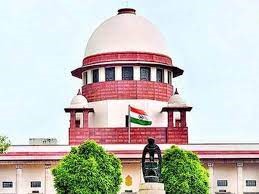
- Govt is an important stakeholder in the process of appointment of judges in Supreme Court and high courts’
- Vice president also criticized the process of judges’ appointment, calling it ‘opaqueness
- SC recently said that it is a “matter of concern” that the government is sending back the names reiterated by the Collegium
Union government has written a letter to Chief Justice of India DY Chandrachud suggesting that the Supreme Court Collegium, which appoints the judges, should include central government representatives.
In the letter, Union Law Minister Kiren Rijiju asked for inclusion of government representatives in the SC-created two-tiered collegiums for infusion of transparency and public accountability into the selection process of constitutional court judges, according to Times of India. He has also suggested the inclusion of state government representatives in High Court collegiums.
In a letter dated January 6, the Union government underlined that the government is an “important stakeholder in the process of appointment of judges in the Supreme Court and high courts” and therefore, its views should also find a place in preparation for the panel of names who are eligible for being appointed as judges of the constitutional courts, according to Hindustan Times.
The top court has recently said that it is a “matter of concern” that the government is sending back the names reiterated by the Collegium for the judgeship in constitutional courts despite there being nothing in the present scenario to prevent the appointment post reiteration.
The context
The development is likely to further escalate ongoing tug-of-war between the government and judiciary. The Law Minister in November had called the collegium system “opaque” and said India was the only country where judges appoint judges. Critics, including many prominent lawyers, have been accusing the Union government of attempting to control judicial appointments ever since Narendra Modi came into power in 2014.
Collegium
The collegium system allows the Chief Justice of India and a panel of four senior-most judges of the Supreme Court to recommend appointments and transfers of judges. The system was framed by the Supreme Court judgments in the “Three Judges Case” dating to October 28, 1998. The two-tiered collegiums are a 25-year-old system through which judges of the Supreme Court appoint judges to the apex court and high courts. At present, the collegium comprises CJI Chandrachud, and Justices S.K. Kaul, K.M. Joseph, M.R. Shah, Ajay Rastogi and Sanjiv Khanna.
Public posturing from judicial platforms is not good: VP
Last week, Vice President Jagdeep Dhankar said, “Public posturing from judicial platforms is not good.” He has also criticized the process of judges’ appointment, calling it ‘opaqueness. In his maiden address to Rajya Sabha in December, Dhankar hit out at the SC for scrapping the National Judicial Appointment Commission (NJAC), which was established by an Act of Parliament, terming it a compromise of parliamentary sovereignty.

New J&K High Court bench to come up in Ladakh, announces HM Amit Shah
New Delhi/Leh: The Union Cabinet on Thursday approved the establishment of a bench of the High Court of Jammu and Kashmir and Ladakh in the Union Territory of Ladakh, Union...

Preacher sentenced to death for sexually assaulting four minor girls in TN’s Tirunelveli
Tirunelveli: A special court in Tamil Nadu's Tirunelveli on Thursday sentenced a 50-year-old preacher to death after convicting him of sexually assaulting four minor girls who attended classes at a...

Jharkhand: Students move HC against cancellation of recruitment exams, hearing on four petitions at 3 PM
Ranchi: The legal battle launched by affected candidates against Jharkhand government's decision to cancel 22 recruitment examinations has intensified, with four petitions challenging the move filed in the High Court...

Bengal court issues arrest warrant against Trinamool MP Mahua Moitra in hate speech case
Kolkata: A court in West Bengal’s Krishnanagar issued an arrest warrant against Trinamool Congress MP Mahua Moitra in a case of controversial comments regarding the Indian Army on Wednesday. ...
July 20 protest: SC to form panel to probe ‘police excesses’ against students
New Delhi: The Supreme Court on Tuesday announced its decision to constitute a high-powered fact-finding committee to scan CCTV footage of the students’ march from Jantar Mantar towards Parliament on...
SC refuses to ban ‘hanging till death’ as mode of execution
New Delhi: The Supreme Court on Tuesday refused to ban hanging as the mode of execution in the country, allowing the government and other stakeholders to discuss and explore other...
Parliament: 12 bills passed; 19 pc productivity in LS, 39 pc in RS, says Kiren Rijiju
New Delhi: The Monsoon Session of Parliament, which concluded on Thursday, was successful in terms of legislative business but remained unsatisfactory in terms of productivity, Union Parliamentary Affairs Minister Kiren...
Delhi court takes cognisance of CBI chargesheet in NEET-UG paper leak case
New Delhi: A Delhi court on Wednesday took cognisance of the chargesheet filed by the Central Bureau of Investigation (CBI) against 13 accused in the alleged NEET-UG 2026 question paper...
Justice Varma cash row: Panel rejects his defence, finds charges proved
New Delhi: A three-member inquiry committee constituted by Lok Sabha Speaker Om Birla has found all three charges against former Delhi High Court judge Justice Yashwant Varma proved in connection...

FCRA Bill sent to JPC for broad-based consultation: BJP; Oppn says ‘organised attack’ against minorities
New Delhi: The Bharatiya Janata Party (BJP) said on Wednesday that the Foreign Contribution (Regulation) Amendment Bill, 2026, was referred to the Joint Parliamentary Committee (JPC) for a "more broad-based...
Calcutta HC cancels all OBC certificates issued under new rule in Bengal during previous Trinamool govt
Kolkata: A division bench of the Calcutta High Court on Wednesday cancelled all the Other Backward Class (OBC) certificates issued under the new rule in West Bengal during the previous...

MSME confidence in ‘expansionary’ phase despite global volatility: Report
New Delhi:The MSME Business Confidence Index stood at 59.3 for the April‑June 2026 quarter, compared to 59.8 in the previous quarter, remaining comfortably above the 50‑mark and signalling "business confidence...


