

The recent reports of one type of pre human skull found in pristine condition in China called Homo Longi or Dragon Man and fragments of another type of pre-human skull found in Israel named Homo Nesher Ramla has virtually put the anthropologists, zoologists, primatologist in a tizzy.
All kinds of theories are being proposed in favour of and against Dragon Man which is being claimed to be closer to the human kind than even our closest kin till date – the Neanderthals. As far as Nesher Ramla is concerned scientists feel they are archaic Neanderthals thus opening the possibility that Neanderthals were not primarily a European phenomenon.
Researchers unearthed the bones alongside stone tools and the remains of horses, fallow deer and wild ox during excavations at the Nesher Ramla prehistoric site near the city of Ramla in central Israel. Remains of spears that surfaced in Nesher Ramla with arrowheads and spearheads which mean that they were capable of not only making these, but attaching them to a spear or pole, something thought to have only been exclusive to humans and Neanderthals.
The bones are 120,000 to 140,000 years old.
Renowned Primatologist Iqbal Malik said “ I am skeptical as far as what China says whether on Covid 19 and Dragon Man”.
“This is a current assertion which may change again as new specimens are going to be unearthed. My question is if it is a new specimen how come China remembered their Dragon Man only when Israel find was announced.”
China always does long term planning and is clear about its goal to become a world power so its ramifications can be seen in all its actions. The political economic side of the announcement cannot be missed, she pointed out.
She wished that there was a complete skeleton to examine and Chinese people would be more open in allowing others to study the specimen.
In the last 20 years the list of species in genus Homo growing with new findings like the Indonesian H. floresiensis, discovered in 2003; Siberian Denisovans, identified in 2010; South African H. naledi, in 2015; and Filipino H. luzonensis, in 2019 and now Dragon Man and Homo Nesher Ramla, placing individual species in family tree is becoming very complex.
Senior practicing Anthropologist Naresh Kumar Vaid said that with claims and counter claims being made regarding every find , he hoped matters will be settled once the International Conference of Anthropological and Ethnological Sciences takes place in New Delhi in 2023.
He said 43 Homo erectus fossils were found like Peking Man (Homo erectus pekinensis) in China around 1930 which later disappeared. He hoped that after the discovery of Dragon Man other lost fossils also will be found.
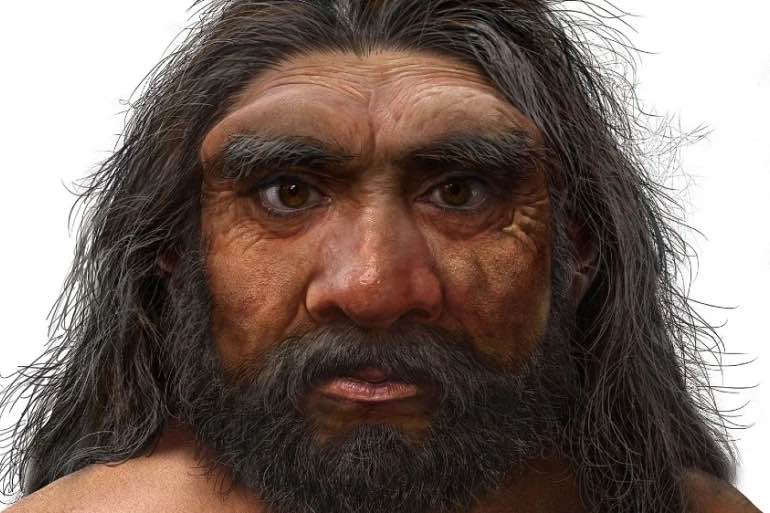
According to Associate Professor of Zoology, Delhi University Dr Rita Rath, Dragon Man is at least 146,000 years old. The specimen is 50 years old with a brain size larger than modern man at least 7 per cent larger . The morphological features are assessed to be having deep set eyes,larger eye brows( large supra orbital torus),large flat cheeks,big wide mouth and fat round nose.
These morphological features are not found in any other known animal cousin species of humans and therefore Dragon man is considered to be a distinctly different species, she said.
The known cousins in the evolutionary history of man, namely the Neanderthals and the Denisovans which occurred 60,000 years ago and are now extinct were known to interbreed by DNA studies.
In studies comparing the Dragon Man to 54 other fossils to find its fit in the evolutionary tree, it was found that it is similar to Tibetan jaw fossil (Denisovan) and Dali Man (Homo deliensis) a mixture of Homo erectus and archaic Homo sapiens,she said.
Whereas the Neanderthal Man had protruding face (Prognathous face)from under the eyebrows, the modern men have a face set below and under the eyebrow.Scientists believe that Dragon Man is closer to Homo sapiens than the Neanderthals .
Paleoanthropolgical community is however split on some issues. Some believe that Dragon Man is a Denisovan .However Denisovan DNA is closer to Neanderthal .
Therefore assigning the correct place to the Dragon Man in the evolutionary tree of Modern Man need further genetic data rather than morphological data, Dr Rath said.
So extracting DNA from the Dragon Man fossil and studying it may be exciting, she added.
If we track back the human evolutionary path , we find that humans have come from Eutherian mammals which include rodents, bats, whales, elephants, shrews, and armadillos. Eutherian mammals are those which give birth to babies, and are nourished before birth in the mother’s uterus through a specialized embryonic organ attached to the uterus wall called the placenta.
There are 18 to 20 orders of placental mammals including the insect eaters; the toothless anteaters; the rodents; the aquatic mammals including whales; the carnivorous mammals including dogs, cats, and bears; and the Primates, which includes, Prosimians , old World Monkeys,New World monkeys, Great Apes and Humans.
Interestingly, Primates range from the tiny mouse lemur at 30 grams to the mountain gorilla at 200 kilograms.
Humans are classified in the sub-group of primates known as Hominid. We most closely resemble the apes and therefore classified along with all other apes in a primate sub-group known as the hominoids .The Great Apes includes Chimpanzees,Bonobos,Gorilla, Orangutans. But we did not evolve directly from any Primate living today.
Interestingly humans share 99 percent of DNA with chimpanzees and Bonobos and thus they are genetically our closest living relative in the animal kingdom.
Fossil records of human and chimpanzee DNA suggests that humans and chimpanzees diverged from a common hominoid ancestor approximately 6 million years ago.
There have been also specimen like Graecopithecus a hominid found in Nikiti,Greece in 1944 which is dated 7.2 million years ago supposed to be the last common ancestor of both humans and chimpanzees, though many scientists are skeptical of the claim.
Several species evolved from the evolutionary branch that includes humans known as hominin who are closely related to humans than to chimpanzees, although our species is the only surviving member.
Hominins were predominantly bipedal and include those groups that may have given rise to human species,—including Australopithecus, Homo habilis, and Homo erectus—and those non-ancestral groups that can be considered “cousins” of modern humans, such as Neanderthals.
A hominid called Australopithecus is a strong contender from which humans are supposed to have evolved which lived around 4 million to 2 million years ago in eastern Africa though they had more characteristics similar to apes than humans.
The famous fossil of an adult female called Lucy Australopithecus afarensiss supposed to be our human ancestorwas found in the Afar region of Ethiopia and dated to 3.24 million years in 1974.
The human genus, Homo, first appeared between 2.5 and 3 million years ago , Homo habilis had a jaw that was less prognathic than the australopiths and a larger brain, at 600–750 cubic centimeters. Remarkably stone tools were found near its remains showing the basic rudiments of intelligence.
Homo erectus appeared approximately 1.8 million years ago in East Africa but migrated out of Africa. Fossils of Homo erectus have been found in India, China, Java, and were known in the past as “Narmada Man” in India , “Java Man” in Java or “Peking Man” in China.
It had many features similar to modern humans than even those of Homo habilis.
It was much larger in size reaching heights up to 1.85 meters and weighing up to 65 kilograms, which are sizes similar to those of modern humans. Males were 20 to 30 percent larger than females like modern humans and had larger brain than earlier species at 775–1,100 cubic centimeters, which compares to the 1,130–1,260 cubic centimeters seen in modern human brains. Unlike forward facing nostrils of primates it had downward facing nostrils like humans.
Showing much advanced capacity for knowledge and intelligence Homo erectus which was living about 50,000 years ago had learnt the use of fire.
Species, called archaic Homo sapiens, evolved from Homo erectus with brain size similar to that of modern humans, averaging 1,200–1,400 cubic centimeters. They differed from modern humans by having a thick skull, a prominent brow ridge, and a receding chin. They survived till about 10,000 years ago.
Modern humans or Homo sapiens sapiens are supposed to have moved out of Africa 100,000 years ago and in the long run replaced the Homo erectus which had migrated earlier.This evolutionary timeline is supported by molecular evidence.
Professor of Anthropology in the Department of Anthropology, University of Delhi, Dr Prakash Ranjan Mondal said, “There are two different groups of Neanderthal , one we call classic and another call progressive Neanderthals. Dragon Man Homo longi is like Progressive Neanderthal found 1,40,000 years ago . The time period shows that they were contemporary to Progressive type of Neanderthals.”
“Even if they are a different species they were co existing at the same time. During that time period many human species were co existing like Neanderthal, Archaic type of Homo sapiens sapiens, Dinosevans, Dragon Man or Homo longi, Mesher Ramla Homo and tremendous interbreeding went on.”
“Later on we modern Homo sapiens sapiens came up. Still we are unable to know from which particular stock we have come ,genetically speaking we are sharing many genes of Neanderthals. Neanderthals had suddenly disappeared from the earth . It happened due to tremendous inter breeding, I perceive they genetically merged together and we must go for genomic studies to find out what happened,” Dr Mondal said.
“About 40,000 years ago we had early modern men in Europe like CroMagnon Man, Grimaldi Man, Chancelade M an who were similar to you and me” he said.
Untill and unless we go in for thorough study of the genetic constitution Dragon Man and Mesher Ramla as their time period is very close to modern humans, the picture will not be clear, he added.
“ Major findings have taken place in India too like pre ape Dryopithecus found in Europe, Africa, Asia has been found even in India. We have two species Sivapithecus indices and Sivapithecus sivalensis . We think Drypethecus could be a common ancestor of Great Apes and Humans”.
“Ïn India we have found the fossil called Ramapithecus which is of Miocene phase about 14 million years ago. It was found in Shivalik hills region and other places of world, like in Kenya it is called it Kenyapithecus.”
Ramapithecus was little advanced more towards human line. We have two species of Rampiethcus , Ramapethicus brevirostris and Ramapithecus punjabicus, he added.
In Miocene period the common line diverted, one went towards Great Apes, and another towards humans, he added.
The Dragon Man’s fossil was supposed to have been hidden by a laborer in a well and has lain there for more than 85 years.
In 1933, a laborer working at a bridge construction site in the city of Harbin discovered the peculiar skull. Just four years earlier, researchers had found another humanlike skull, nicknamed Peking Man, near Beijing. It appeared to link the people of Asia to their evolutionary forerunners.
Rather than hand over the new skull to the Japanese authorities who occupied northeast China at that time, the laborer chose to hide it.
Shortly before his death in 2018, the laborer told his family about the fossil. They went to the well and found it.
‘Dragon man’ skull reveals new branch of family tree more closely related to modern humans than Neanderthals.
“It is widely believed that the Neanderthal belongs to an extinct lineage that is the closest relative of our own species. However, our discovery suggests that the new lineage we identified that includes Homo longi is the actual sister group of Homo. sapiens,” says Xijun Ni, a co-author of the studies and a paleoanthropologist at the Chinese Academy of Sciences and Hebei GEO University.
Some paleoanthropologist believe Dragon Man may be a Denisovan. The tooth on Dragon Man’s upper jaw has the same massive shape as the one on the Denisovan jaw found in Tibet, both lack a third molar. Dragon Man also lived in Asia at the same time as Denisovan.
Associate Professor of Anthropology , Department of Anthropology, Delhi University, Dr Manoj Kumar Singh said, “They are claiming this is a separate species of Homo, it is not placed in our lineage in the chronological evolution of Man, it is different may be they have left somewhere and separate species has developed as genus Homo, they have not talked about any cultural remains.To understand Dragon Man we must have artefacts to show culture , Pre historic man used to make stone tools,Homo erectus, Homo habilis both have left cultural remains . Here they have just found a fossil.”
He said, it is very difficult to say about the authenticity. They have just no clear evidence, some cultural remains like tools are necessary, eye brows are very prominent which is not so prominent in humans . They can be part of Neanderthals.”

Deepawali included in UNESCO’s Intangible Cultural Heritage list
New Delhi: Deepavali or Diwali, one of India’s foremost cultural and spiritual festivals, was on Wednesday included in the UNESCO's Intangible Cultural Heritage (ICH) List. UNESCO announced the development...

After PM Modi’s attack, Cong says Nehru advocated mass publicity of Vande Mataram
Guwahati: Following Prime Minister Narendra Modi’s fierce attack on Jawaharlal Nehru on Vande Mataram, Congress Lok Sabha MP Gaurav Gogoi on Monday said that the BJP, despite its all-out effort,...

Nehru followed Jinnah, claiming Vande Mataram could irritate Muslims, says PM Modi in LS
New Delhi: Prime Minister Narendra Modi on Monday launched a blistering attack on the Congress during a Lok Sabha discussion marking 150 years of Vande Mataram, accusing the party of...

‘Division over Vande Mataram not created by Muslims’: DMK’s A Raja, cites Nehru-Bose correspondence
Chennai: A sharp political and historical debate unfolded in Parliament on Monday as DMK MP A. Raja questioned the legacy and interpretation of Vande Mataram, citing a letter written by...

Nehru’s writings record of India’s evolving conscience, not just history, says Rahul Gandhi
New Delhi: Congress leader Rahul Gandhi on Friday said that Jawaharlal Nehru’s writings are not merely historical documents but a reflection of India’s evolving conscience. Gandhi made the remarks after...

India criticises ‘inaccurate’ UN report that its traditional culture endangered
United Nations: India has criticised as "inaccurate" a UN report that made several far-fetched claims to assert "traditional cultural expressions" are under threat in the country, and pointed out that...

Our govt working to enlist Chhath Puja on UNESCO list, Congress insulted it: PM Modi in Muzaffarpur
Patna: Prime Minister Narendra Modi on Thursday congratulated the people of Bihar on the successful culmination of Chhath Puja and informed that his government was trying to draw global support...

UNESCO adds Guinea-Bissau’s Bijagos Archipelago to World Heritage list
Bissau (Guinea-Bissau): The Bijagos Archipelago in Guinea-Bissau, a country in West Africa, has been inscribed on the UNESCO World Heritage list, the United Nations Educational, Scientific and Cultural Organization (UNESCO)...

North Korea’s Mount Kumgang listed as UNESCO World Heritage site
Paris: North Korea's Mount Kumgang, a scenic mountain known for its beauty that changes with the seasons, has been named a United Nations Educational, Scientific and Cultural Organisation (UNESCO) World...

Slugfest erupts over Bengal university exam paper referring to freedom fighters as ‘terrorists’
Kolkata: A political and social uproar has erupted in West Bengal after a history question paper from a reputed state university indirectly referred to Indian freedom fighters as “terrorists.” The...

Taj Mahal Hotel in Rio becomes cultural hub after in-house chef prepared meal for PM Modi
Rio de Janeiro: The Taj Mahal Hotel, Rio de Janeiro’s only Indian hotel, known for serving authentic Indian and Jain cuisine, witnessed a moment of pride when its in-house chef...

Only Marathi will be compulsory, no attempt to impose Hindi, says CM Fadnavis
Mumbai: Amid raging controversy over the introduction of Hindi as a compulsory language in Classes 1 to 5 in Marathi and English schools in Maharashtra, Chief Minister Devendra Fadnavis has...