




New Delhi: Renewable sources of electricity generation are continuing to grow strongly around the world, with India on course to become the second-largest renewables growth market globally, after China, and is expected to comfortably reach its ambitious target by 2030, the IEA’s medium-term forecast said on Tuesday.
Led by the rapid rise of solar PV, renewables’ expansion is taking place in a context of supply chain strains, grid integration challenges, financial pressures and policy shifts, and it is expected to more than double by 2030.
“Renewables 2025”, the IEA’s main annual report on the sector, sees global renewable power capacity increasing by 4,600 gigawatts (GW) by 2030 — roughly the equivalent of adding China, the European Union and Japan’s total power generation capacity combined.
Solar PV will account for around 80 per cent of the global increase in renewable power capacity over the next five years — driven by low costs and faster permitting timeframes — followed by wind, hydro, bioenergy and geothermal.
Geothermal installations are on course to hit historic highs in key markets, including the US, Japan, Indonesia and a host of emerging and developing economies.
Rising grid integration challenges are renewing interest in pumped-storage hydropower, whose growth is expected to be almost 80 per cent faster over the next five years compared with the previous five.
In emerging economies across Asia, the Middle East and Africa, cost competitiveness and stronger policy support are spurring faster growth of renewables, with many governments introducing new auction programmes and raising their targets.
At the company level, confidence in renewables remains strong. Most major developers have either maintained or raised their 2030 deployment targets compared with last year, reflecting resilience and optimism in the sector.
Offshore wind stands apart, however, with a weaker growth outlook — around a quarter lower than in last year’s report — resulting from policy changes in key markets, supply chain bottlenecks and rising costs.
“The growth in global renewable capacity in the coming years will be dominated by solar PV — but with wind, hydropower, bioenergy and geothermal all contributing, too,” said IEA Executive Director Fatih Birol.
“Solar PV is on course to account for some 80 per cent of the increase in the world’s renewable capacity over the next five years. In addition to growth in established markets, solar is set to surge in economies such as Saudi Arabia, Pakistan and several Southeast Asian countries. As renewables’ role in electricity systems rises in many countries, policymakers need to play close attention to supply chain security and grid integration challenges.”
The report’s outlook for global renewable capacity growth is revised downward slightly compared with last year, mainly due to policy changes in the US and in China.
The early phase-out of federal tax incentives, along with other regulatory changes in the US, lowered growth expectations for renewables in the US market by almost 50 per cent compared with last year’s forecast.
China’s shift from fixed tariffs to auctions is impacting project economics, resulting in a reduction in IEA’s forecast for renewables’ growth in the Chinese market. These adjustments are partly offset by buoyancy in other regions — particularly India, Europe, and most emerging and developing economies — where growth prospects have been revised upward due to ambitious new policies, expanded auction volumes, faster permitting and rising deployment of rooftop solar.
Corporate purchase power agreements, utility contracts and merchant plants are also a major driver, together accounting for 30 per cent of global renewable capacity expansion to 2030 — doubling their share compared with last year’s forecast. Solar PV is expected to dominate renewables’ growth between now and 2030, remaining the lowest-cost option for new generation in most countries, while wind power, despite its near-term challenges, is still set for considerable expansion as supply bottlenecks ease and projects move forward, notably in China, Europe and India. Hydropower and other renewable technologies will continue to play important roles in supporting electricity systems and enhancing flexibility.
Global supply chains for solar PV and rare earth elements used in wind turbines remain heavily concentrated in China, underscoring ongoing risks to supply chain security. While new investment to diversify supply chains is taking place in countries around the world, concentration in China for key production segments is set to remain above 90 per cent through 2030.
At the same time, the rapid rise of variable renewables is placing increasing pressure on electricity systems. Curtailment and negative price events are already appearing in more markets, signalling the need for urgent investment in grids, storage and flexible generation.
Several countries are beginning to respond with new capacity and storage auctions, but much more will be needed to ensure that variable renewables are integrated in a cost-efficient and secure way.
The role of renewables in transport and heating is expected to rise in the coming years, but only slightly. In the transport sector, their share of energy use is forecast to increase from four today to six per cent in 2030, driven mainly by renewable electricity for EVs in China and Europe, with biofuels adding growth in Brazil, Indonesia, India and other key markets.
Renewables’ share of energy used globally to provide heat for buildings and industry is set to increase from 14 to 18 per cent over the forecast period.
IANS

US threat of sanction on Russian oil imports violative of national sovereignty
New Delhi: The passage of Lindsey O. Graham Sanctioning Russia and Iran Act of 2026 in the House of Representatives, which gives President Donald Trump power to impose tariffs of...

Power cuts in Kerala hand Left its first major weapon against Satheesan govt
Thiruvananthapuram: For nearly a decade, power cuts had largely vanished from Kerala's political discourse, depriving the opposition of a potent issue to target the government. But a week of prolonged...

OPEC+ cartel sticks to status quo on oil production
New Delhi: The OPEC+ cartel maintained a status quo on its oil production for October at a meeting held on Sunday to review global market conditions and outlook. The...
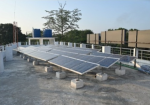
India well on path to solar overtaking coal-based capacity
New Delhi: India reached installed capacity of 162.15 GW of solar energy in June this year, marking a significant rise from 3 GW in 20214. Though India still remains...
6.83 pc electric power tariff hike comes into force in J&K
Srinagar: Electric power consumers in Jammu and Kashmir will have to pay 6.83 per cent increase in their monthly bills with effect from Tuesday. The revised power tariff was...

India surpasses US to become world’s second-fastest growing solar energy market
New Delhi: India's installed solar power capacity has surged by a massive 50-fold from a mere 3 GW in 2014 to scale the 162.15 GW mark till June 30, 2026,...
POMCs cut commercial LPG cylinder prices by over Rs 200
New Delhi: State-owned oil marketing companies (OMCs) on Saturday reduced the price of 19-kg commercial LPG cylinders by over Rs 200 across major cities, providing relief to restaurants, hotels and...

No decision yet to raise ethanol blending in petrol beyond 20 per cent: Govt
New Delhi: The Union government told the Parliament on Thursday that no decision has been taken so far to increase ethanol blending with petrol beyond 20 per cent. Any future...

Govt hikes windfall duty on diesel, ATF exports
New Delhi: The Centre has raised windfall taxes on exports of diesel and aviation turbine fuel (ATF) while lowering the levy on petrol exports, as surging global oil prices driven...
India, Australia sign energy security agreement, pave way for uranium trade
Melbourne: India and Australia on Thursday finalised the administrative arrangements required to enable the export of Australian uranium to India for exclusively peaceful purposes, with Prime Minister Narendra Modi saying...

E20 petrol has saved Rs 1.90 lakh crore forex, blending is global practice: Govt
New Delhi: The Ethanol Blended Petrol (EBP) Programme has emerged as a key pillar of India's energy transition and biofuel strategy, which has saved the country's foreign exchange by reducing...

India to lift fuel sale curbs for commercial buyers from July 1
New Delhi: The Centre on Monday decided to withdraw temporary restrictions on the retail sale of petrol and diesel to commercial consumers from July 1, restoring normal fuel purchases for...


