



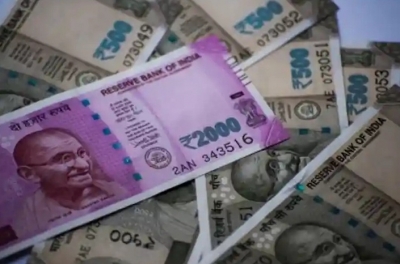
New Delhi: Its an irony that India, despite being raked very poorly in the world hunger index, continues to add to its list of super rich, which highlights the imbalance in the growth model of the country.
A report released here on Wednesday says that a new class of super rich entrepreneurs, financiers, CEOs of multinationals and heirs has emerged in India whose wealth exceeds $100 million (Rs 830 crore). The country ranks third in the number of these people known as centi-millionaires, being home to 1,132 of them.
The USA comes first, having 38% (9,730) share in the population of these titans despite constituting only 4% of the world’s population. China comes second with 2,021 centi-millionaires. The UK is in 4th place (with 968 centi-millionaires) followed very closely by Germany in 5th place (with 966). Surprisingly tiny state of Switzerland ranks 6th on the list with 808 inhabitants worth over USD 100 million.
Japan (765), Canada (541), Australia (463), and finally Russia (435) make up the rest of the top 10 countries for centi-millionaires. Other major economies such as France and Italy just miss out, with 380 and 298 centi-millionaires, respectively, while South Africa is the top-ranked country on the African continent, with 92 resident centi-millionaires, holding 27th position globally, says the report prepared by international residence and citizenship by investment advisory firm Henley & Partners, in partnership with wealth research firm New Wealth.
Misha Glenny, financial journalist, author, and contributor to the report says that “At around 57%, the growth of centi-millionaires in Asia will be twice that of Europe and the US over the next decade. Concentrated primarily in China and India, the centi-millionaires in these countries are set to eclipse their European and American peers.”
The fastest growing market for centi-millionaires over the next decade is forecast to be Vietnam, with an astonishing 95% growth rate predicted for this emerging Asian manufacturing hub, with strong growth expected in the real estate, technology, and financial services sectors.
India is next in line with an anticipated 80% growth rate in individuals worth over USD 100 million by 2032. Mauritius has recently emerged as a hot spot for migrating centi-millionaires, with growth of 75% predicted for this safe, business-friendly African island nation. Three other countries on the continent make it into the top league of fastest growing centi-millionaire markets in the next decade — Rwanda (70%), Uganda (65%), and Kenya (55%) — with New Zealand (72%) and Australia (60%) also forecast to enjoy exceptional growth.
This report comes close on the heels of another, the Global Hunger Index (GHI) report in which India finds itself slipped six places to 107th position out of the total 121 countries. This is below all the South Asian countries except war-torn Afghanistan.
The report, released last Friday, says India’s score of 29.1 places it in the ‘serious’ category. India’s score has improved slightly from last year’s 27.5. However, in 2000, India’s score was a much better 38.8 points.
The GHI calculates its ranking on four component indicators – undernourishment, child stunting, child wasting and child mortality. It tracks hunger globally as well as by region and by country. It is published annually by Concern Worldwide, Ireland’s largest aid and humanitarian agency and Welthungerhilfe.
The Modi Government has, however, rejected this report, describing it as an attempt to “taint” India’s image. This is the second year in a row that the government has rejected the GHI rankings.
.“A consistent effort is yet again visible to taint India’s image as a nation that does not fulfil the food security and nutritional requirements of its population,” the women and child development ministry said in a statement. “Misinformation seems to be the hallmark of the annually released Global Hunger Index,” the women and child development ministry said in a statement.
The government has questioned the GHI’s methodology, as it did last year. “The index is an erroneous measure of hunger and suffers from serious methodological issues,” it said.
However, other global bodies, including the UN’s Human Development Index 2021 published in August, have also questioned India’s performance on human development parameters such as education and health.
——-INDIA NEWS STREAM

India remains key equity bet for wealthy Gulf NRIs: Report
Mumbai: India continues to remain a key equity investment destination for wealthy non-resident Indians (NRIs) in the Gulf, even as they increasingly diversify their portfolios into global liquid assets, private...

7.7 pc growth rate despite West Asia crisis reflects India’s inherent strength, says PM Modi
New Delhi: Prime Minister Narendra Modi on Monday said that India maintaining a growth rate of 7.7 per cent despite the West Asia crisis reflects India's "inherent strength" and "offers...

AI will transform, not diminish, India’s IT services industry: Anand Mahindra
New Delhi: Tech Mahindra Chairman Anand Mahindra has dismissed concerns that artificial intelligence (AI) will undermine India's IT services industry, asserting that the sector's role will evolve and become even...

Historic cargo service between Kolkata and Nepal’s Biratnagar begins
Kathmandu: A first-ever rail cargo service between Kolkata and Biratnagar, an eastern city in Nepal, officially began on Friday, marking a major milestone in facilitating imports from third countries under...

‘Phone banking’ during UPA rule resulted in huge NPAs: FM Nirmala Sitharaman
Amaravati: Union Finance Minister Nirmala Sitharaman alleged on Friday that ‘phone banking’ during the UPA rule resulted in huge NPAs, pushing banks into losses. She said that between 2004...

US Federal Reserve keeps rates unchanged
Washington: US Federal Reserve Chairman Kevin Warsh told Congress that the central bank would bring inflation under control, as policymakers held interest rates steady and signalled a sweeping review of...

India-UK FTA to make British goods cheaper and boost Indian exports from July 15
New Delhi: The India-UK Comprehensive Economic and Trade Agreement (CETA) will come into force on Wednesday, paving the way for cheaper British goods in India while granting Indian exporters near-total...

Oil prices surge three per cent amid escalating US-Iran tensions
Washington: Oil prices rose more than 3 per cent as the United States and Iran exchanged fresh strikes, renewing fears of disruption in the Strait of Hormuz, a critical route...

India, Indonesia sign key pacts for BrahMos missile supply, maritime security
Jakarta: In a key boost for the domestic defence industry, India and Indonesia on Tuesday signed an agreement for the supply of BrahMos missiles to the Indonesian military. Indonesia is...

Landmark India-Israel bilateral investment pact comes into force
New Delhi: The landmark India-Israel bilateral investment agreement (BIA), which was signed on September 8, 2025, came into force on Saturday. The trade pact is a significant step towards strengthening...

India challenges proposed US tariff
Washington: India will mount a coordinated challenge next week to a proposed US tariff on its exports, with government officials and leading industry bodies arguing that Washington's findings on forced...

India sees new enquiries for BrahMos from Gulf, Latin America and Asia: Report
New Delhi: Interest in the BrahMos supersonic cruise missile — a joint venture between India’s DRDO and Russia’s NPO Mashinostroyeniya — has expanded beyond Philippines, Vietnam and Indonesia to reported...


