



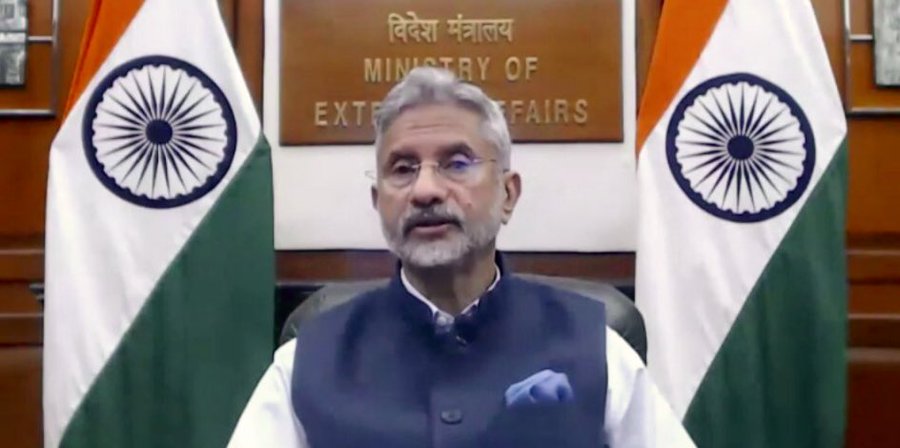
New Delhi: India is looking to deepen its engagement with Centrel Asian countries which are its extended neighbourhood, and so are important part of the country’s push for regional solution to the regional problems.
The point was recently highlighted by External Affairs Minister Dr S Jaishnakar during the 3rd meeting of the India-Central Asia Dialogue here.
”Our meeting today comes amidst a rapidly changing global, economic and political situation. The Covid-19 pandemic has resulted in an enormous setback to global health and to global economy. It has changed the way we imagined societies, workplaces, supply chains and governance. It also highlights the inadequacy of the existing multilateral structures to meet new and emerging threats. We need diversified supply chains and more regional solutions,” the External Affairs Minister said addressing the meeting.
He underlined that each country of the region faces the test of rebuilding its economy. ”Our pursuit of SDGs must also be energized. But together we can do this better and India, I assure you, will be your steadfast partner. We already have a good history of cooperation. But my message to you today is a readiness to take it to the next level. Our ties must now focus around 4 Cs: Commerce, Capacity enhancement, Connectivity and Contacts,” he said.
Dr Jaishankar also sought the cooperation of the Central Asian nations in helping the people of conflict battered Afghanistan and ensuring that an inclusive and representative government was in place in the country which was part of the region.
”Excellencies, we all also share deep-rooted historical and civilizational ties with Afghanistan. Our concerns and objectives in that country are similar: a truly inclusive and representative government, the fight against terrorism and drug trafficking, ensuring unhindered humanitarian assistance and preserving the rights of women, children and the minorities. We must find ways of helping the people of Afghanistan,” he said.
A joint statement released at the end of the meeting reflected that India and the Central Asian countries were on the same page as regards the solution to the Afghanistan crisis.
” The Ministers reiterated strong support for a peaceful, secure and stable Afghanistan while emphasizing the respect for sovereignty, unity and territorial integrity and non-interference in its internal affairs. They also discussed the current humanitarian situation and decided to continue to provide immediate humanitarian assistance to the Afghan people. The Ministers reaffirmed the importance of UNSC Resolution 2593 (2021) which unequivocally demands that Afghan territory not be used for sheltering, training, planning or financing terrorist acts and called for concerted action against all terrorist groups. The Ministers also agreed to continue close consultations on the situation in Afghanistan,” the joint statement said.
”While taking note of the outcome document of the Delhi Regional Security Dialogue of 10 November 2021, Ministers noted that there is a broad ‘regional consensus’ on the issues related to Afghanistan, which includes formation of a truly representative and inclusive government, combating terrorism and drug trafficking, central role of the UN, providing immediate humanitarian assistance for the Afghan people and preserving the rights of women, children and other national ethnic groups.
There was a sparate paragraph in the joint statement on terrorism. ”The Ministers condemned terrorism in all its forms and manifestations and reiterated that providing safe haven, using terrorist proxies for cross-border terrorism, terror financing, arms and drugs trafficking, dissemination of a radical ideology and abuse of cyber space to spread disinformation and incite violence, goes against the basic principles of humanity and international relations. They stressed that perpetrators, organizers, financiers and sponsors of terrorist acts must be held accountable and brought to justice in accordance with principle of “extradite or prosecute”. In this context, they called for early adoption of the UN Comprehensive Convention on International Terrorism. They called on the international community to strengthen UN-led global counter-terrorism cooperation and fully implement the relevant UNSC resolutions, Global Counter-Terrorism Strategy and FATF standards.”
The Central Asian Foreign Min isters sough deeper cooperation with India in the areas of defence, security, health and connectivity.
The meeting was attended by Foreign Ministers of Kazakhstan, Kyrgyz Republic, Tajikistan, Turkmenistan and Uzbekistan.
”The holding of annual meetings of the India-Central Asia Dialogue is symbolic of the interest on the part of all member countries for greater engagement between them in a spirit of friendship, trust and mutual understanding,” the Ministry of External Affairs later said in a statement.
–INDIA NEWS STREAM
India dismisses UN rapporteur’s report on Waqf law as false, displaying ‘hostility’
United Nations: India has dismissed a report by the expert on minority issues as “factually incorrect” and displaying “hostility” to the country. Gaurav Kumar Thakur, a counsellor at India’s UN...
EAM Jaishankar, Bangladesh envoy Hamidullah discuss advancing bilateral ties
New Delhi:External Affairs Minister (EAM) S Jaishankar met Riaz Hamidullah, the High Commissioner of Bangladesh to India, in New Delhi on Friday with discussions focusing on advancing bilateral ties. ...
Spokesman of Iran’s Islamic Revolutionary Guard Corps killed in Israeli strike
Jerusalem: The Israel Defence Forces (IDF) on Friday announced that spokesperson and head of the Public Relations Array of the Islamic Revolutionary Guard Corps (IRGC) Ali Mohammad Naini has been...
Safe passage to Indian vessels through Strait of Hormuz demonstrates Tehran’s friendship: Iranian diplomat
Mumbai: The Consul General of Iran in Mumbai, Saeid Reza Mosayeb Motlagh, said on Friday that Tehran's decision to provide safe passage to Indian vessels through the Strait of Hormuz...
PM Modi and Jordan’s King Abdullah II express concern over West Asia situation, call for dialogue
New Delhi: Prime Minister Narendra Modi and Jordan's King Abdullah II held a telephonic conversation on Thursday, their second this month, expressing concern over the evolving situation in West Asia....
Vikram Doraiswami appointed as India’s next Ambassador to China
New Delhi: Vikram K Doraiswami, presently High Commissioner of India to the United Kingdom, has been appointed as the next Ambassador of India to the People's Republic of China, the...
Tharoor’s ‘responsible statecraft’ remark on West Asia draws mixed political reactions
New Delhi: Congress MP Shashi Tharoor’s remarks defending India’s diplomatic restraint over the ongoing West Asia conflict have sparked sharp reactions from leaders across the political spectrum, with some supporting...
Not surrender, responsible statecraft: Days after Sonia Gandhi, Tharoor writes, citing Nehru on India’s ‘silence’ on West Asia
New Delhi: Congress MP Shashi Tharoor has weighed in on the ongoing West Asia crisis, offering a nuanced defence of India’s diplomatic restraint and pushing back against critics who have...
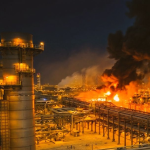
UAE condemns Iran’s attack on Habshan gas facility, suspends operations
Abu Dhabi: The United Arab Emirates (UAE) authorities said on Thursday that operations at the Habshan gas facilities have been temporarily suspended due to falling debris from interceptions of missiles...
US envoy Gor, NSA Doval discuss ‘critical security and geopolitical issues’
New Delhi: US Ambassador to India, Sergio Gor held a "fruitful meeting" with National Security Advisor (NSA) Ajit Doval on Wednesday, discussing "critical security and geopolitical issues" and the ongoing...
‘If India can get involved’: Finnish Prez calls on Delhi to broker ceasefire in West Asia
New Delhi/Helsinki: Finnish President Alexander Stubb has suggested that India could play an important diplomatic role in easing tensions between the United States and Iran, urging an immediate ceasefire as...
Skipper Kohli is improving by the day: Shastri
By Baidurjo Bhose Jan 1, 2020 New Delhi:A brilliant 2019 done with, 2020 is the year of the World T20. But before that comes the Kiwi challenge for Team India...


