




New Delhi: Two days before the hearing on petitions against the Places of Worship (Special Provisions) Act, 1991, the All India Muslim Personal Law Board (AIMPLB) has submitted a fresh plea urging the Supreme Court to not interfere with the Act, citing disturbances in the law and order situation.
AIMPLB, in its plea quoted the finding of Srikrishna Commission set up to enquire into the causes of the riots in Mumbai in December 1992 and January 1993 and the causes of the serial bomb blasts that occurred in March 1993. “The unequivocal finding of the Commission is that the December 1992 riots were due to the hurt feeling that the Muslims felt by the shameful act of demolition of Babri Masjid on 6 December 1992 which were followed till January 1993,” it said.
The plea contended that while dealing with the causes of the bomb blasts that occurred in Mumbai, the commission unequivocally found that had there been no riots in December 1992-January 1993 in Mumbai, there would not have been the bomb blasts in March 1993 and unequivocally held that there is a causal connection between the riots of December 1992-January 1993 and the bomb blasts of March 1993.
“Sequel to those riots our country has seen a carnage that occurred in February 2002 in burning of the coaches of Sabarmati express followed by the systematic carnage of Muslims in Gujarat. The salutary object of the Act is to prevent such disturbance of public order and to maintain public peace and tranquillity and strengthen basic feature of secularism,” said the plea, seeking to implead in the matter.
The Muslim body said there appears to be a trend of filing the PIL petitions selectively targeting the issues relating to a particular minority community with the intention to use the pendency of such cases to fuel hate politics on the ground.
“This court must not allow such unregulated PILs which has potential to create uncalled for new items; consequentially leading to publicity stunts for these petitioners,” it said.
It further added that the Act does not violate any cultural rights of any section of the people and it envisages peaceful co-existence and thereby promotes diversity of cultures in our country. “The Act achieves the objective of promoting syncretic culture (Ganga-Jamuni Tehzeeb) which are the basic ethos of Indian culture,” it said, adding that the Act is religion neutral.
The AIMPLB claimed the petitioners are wrecking vengeance on the present generation of the Muslims who had played no part in inflicting such alleged insults on the Hindus of the distant past. “Generally, such controversies are revived by the dominant group against the subservient group which results in the infliction of insult and humiliation of the subservient group. Such revival, far from inflicting the rights of life and liberty of the persons of the dominant group, definitely infringes Article 21 of the persons belonging to the subservient group. Such activities generally are resorted to by non-state actors enjoying tacit support of the present establishment. They are the hands of the present establishment,” it said.
It claimed there are innumerable instances in history where the Jains and Buddhist places of worships have been converted in to Hindu temples as well as the Muslim places of worships have been converted into gurudwaras and the Hindu places of worships have been converted into masjids.
On September 9, the Supreme Court said the petitions against the Act will be heard by a three-judge bench on October 11 and asked the parties to complete the pleadings before the hearing. The top court said the Solicitor General has been granted two weeks to file an affidavit.
On March 12, 2021, a bench headed by then Chief Justice S.A. Bobde had sought the Centre’s response on the plea filed by advocate Ashwini Upadhyay challenging the validity of certain provisions of the law.
Upadhyay’s plea said: “The 1991 Act was enacted in the garb of aPublic order’, which is a state subject (Schedule-7, List-II, Entry-1) and ‘places of pilgrimages within India’ is also state subject (Schedule-7, List-II, Entry-7). So, the Centre can’t enact the Law. Moreover, Article 13(2) prohibits the state to make law to take away fundamental rights but the 1991 Act takes away the rights of Hindus, Jains, Buddhist, Sikhs to restore their places of worship and pilgrimages, destroyed by barbaric invaders.”
-IANS
Religious Conversion: Shia cleric raise questions over arrests
June 25, 20201Lucknow: Renowned Shia cleric Maulana Kalbe Jawad has raised questions over the working of the ATS and has asked for a fair investigation into religious conversions case slapped...

Dalai Lama applauds Jain tradition for non-violent way of life
Dharamsala: Tibetan spiritual leader the Dalai Lama has applauded the non-violent way of life propagated by the Jain tradition, one of India's ancient spiritual traditions. "Your organisation has the potential to...
No Rath Yatra this year as Govt denies permission
Ranchi: This year Rath Yatra could not take place in Jharkhand as the state govt had denied permission for it. In the wake of coronavirus the state government has this...
Observe strict hygiene in sacrifice, and follow all Covid protocols, IMPAR appeals to Muslims ahead of Eid-ul-Azha
New Delhi: IMPAR (Indian Muslims for Progress and Reforms) has appealed to the community to oberve the coming festival of Eid-ul-Azha, keeping in view the Covid protocols issued by the...
Akhara Parishad seeks place in Ram temple trust
Prayagraj (Uttar Pradesh):The Akhil Bhartiya Akhara Parishad (ABAP) has now demanded that it should be included in the Shri Ram Janmabhoomi Teerth Kshetra Trust. ABAP chief Mahant Narendra Giri made...
Can a non-Muslim be forcibly converted to become Muslim in Islam?
Nowadays, there are rumours in social media and newspapers that non-Muslims have been forcibly converted to become Muslim. The nuisance creators are making noise in this regard. But these nuisance...
Challenge accepted, says Lingayat seer on leadership change in Karnataka
Bengaluru: Reacting to the resignation of B.S. Yediyurappa from the Karnataka Chief Minister's post, Dingaleshwara, the seer of the Lingayat Mutt in Balehosuru, told the BJP leadership on Monday that religious...

UP bans Moharram processions but allows ‘Tazia’
Lucknow: The Uttar Pradesh government has banned religious processions on the occasion of Moharram in view of the Covid-19 pandemic and security concerns but allowed 'Tazias' and 'Majlis' inside homes....

Israel shuts down for Jewish Day of Atonement
Tel Aviv: Israel came to halt in observance of Yom Kippur, the Jewish calendar's most important day associated with atonement and repentance. Yom Kippur, or "Day of Atonement," is a...
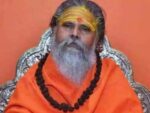
Akhara Parishad chief Giri found hanging from a rope, followers shocked
Prayagraj: In what has sent shockwaves across his followers and well-wishers, Mahant Narendra Giri, the chief of Akhil Bhartiya Akhara Parishad (ABAP), the apex body of 14 akharas, has been...

Char Dham Yatra opens to mixed response
The Uttarakhand High Court’s recent go-ahead to the Char Dham Yatra in the state has evoked mixed responses, coming as it does at a time when the number of COVID...
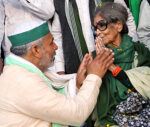
Tikait visits Shiva temple sporting saffron stole, says BJP has no copyright over colour
Muzaffarnagar (Uttar Pradesh) Sporting a saffron stole, Bhartiya Kisan Union (BKU) spokesman, Rakesh Tikait, has offered a bell weighing 51 kilograms at a Shiva temple. This comes after his chants...


