




Washington: Federal Reserve Chair Jerome Powell said that higher US inflation is being driven mainly by tariffs on goods, not excess demand — an assessment that could shape expectations for global trade-linked economies.
“These elevated readings largely reflect inflation in the goods sector, which has been boosted by the effects of tariffs,” Powell said on Wednesday (local time), while stressing that price pressures in services continue to ease.
The Federal Open Market Committee kept interest rates unchanged, holding the benchmark rate in a range of 3.5 to 3.75 per cent. Powell said the current policy stance is “appropriate” as inflation remains above the Fed’s 2 per cent goal.
Powell said most of the tariff’s impact on prices has already passed through the economy. “A lot of it has,” he said, calling tariffs “likely to move through and be a one-time price increase.”
He said inflation in goods has been pushed higher by trade measures, while services show a different trend. “Disinflation appears to be continuing in the services sector,” Powell said.
Powell said core PCE inflation rose 3.0 per cent over the 12 months ending in December, while total PCE inflation rose 2.9 per cent. He said inflation expectations remain stable.
“Most measures of longer-term expectations remain consistent with our 2 per cent inflation goal,” he said.
The Fed chair said the central bank is watching how tariff-related price increases evolve. He said the expectation is that goods inflation tied to tariffs will peak and then begin to ease.
“The expectation is that we will see the effects of tariffs flowing through goods prices peaking and then starting to come down,” Powell said, assuming no major new tariff increases are introduced.
Powell said the Fed is not setting a timetable for future policy changes. “Monetary policy is not on a preset course,” he said, adding that decisions will be made “on a meeting-by-meeting basis.”
He said the US economy is growing at a solid pace, with consumer spending “resilient” and business investment continuing to expand, even as housing activity remains weak.
Powell said inflation progress has stalled in recent months, but argued that the underlying picture is more nuanced because tariff effects are concentrated in goods prices.
“If it weren’t from tariffs, it might mean it’s from demand,” he said, adding that demand-driven inflation would be “a harder problem to solve.”
The U.S. is one of India’s largest trading partners, and changes in American trade policy and inflation trends can affect global supply chains, export pricing, and investment flows. Tariffs typically raise prices by increasing import costs. Central banks often treat such increases as temporary if they do not trigger broader inflation expectations.
IANS

Mamata stirs up controversy with ‘conspiracy angle’ in Ajit Pawar’s death
Kolkata: West Bengal Chief Minister Mamata Banerjee has insinuated a conspiracy behind the Wednesday plane crash on Wednesday that resulted in the tragic demise of Maharashtra Deputy Chief Minister Ajit...

Greenland tensions ‘strategic wake-up call’ for Europe: French President Macron
Paris: French President Emmanuel Macron said on Wednesday that the escalating tensions with the United States over Greenland constitute a strategic wake-up call for Europe as a whole, while reiterating...

US role overstated in India-Pakistan crisis: Senator Warner
Washington: Claims that the Trump Administration single-handedly defused recent India-Pakistan hostilities have been overstated and risk distorting the reality of how the crisis was resolved, a powerful American Senator has...

US, UAE back India corridor, expand AI ties
Washington: The US and the UAE have reaffirmed support for the India-Middle East-Europe Economic Corridor while deepening cooperation on trade, investment, and artificial intelligence at their latest Economic Policy Dialogue...

Over 99 pc of Indian goods gain preferential entry into EU, $75 billion worth exports to take off
New Delhi: With the India-EU trade deal, the country has secured unprecedented market access for more than 99 per cent of Indian exports by trade value to the EU that...

Plea in SC against new UGC equity regulations, says these ‘institutionalise discrimination’
New Delhi: A writ petition has been filed before the Supreme Court challenging the University Grants Commission (Promotion of Equity in Higher Education Institutions) Regulations, 2026, alleging that it institutionalises...
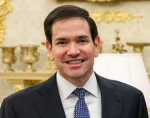
US, India share historic bond: Rubio
Washington: The United States stressed the depth of its relationship with India, extending greetings to the country on Republic Day and highlighting expanding cooperation across strategic sectors and sustained engagement...

‘Our Constitution has defined justice, brotherhood’: President in address to nation on R-Day eve
New Delhi: In her address to the nation on the eve of Republic Day, President Droupadi Murmu said on Sunday that the Constitution of the country has defined justice and...
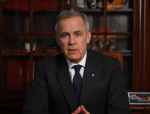
Canadian PM calls for ‘buy Canadian’ in response to Trump’s new tariff threat
Ottawa: Canadian Prime Minister Mark Carney on Saturday called for "buy Canadian" and "build Canadian" in response to a new tariff threat from US President Donald Trump. Carney published a...
Iran thanks India for opposing ‘unjust and politically motivated’ UNHRC resolution
Tehran/New Delhi: Mohammad Fathali, Ambassador of Iran to India, on Saturday expressed Tehran's "sincere gratitude" to the Indian government for its "principled and firm support" while voting against a resolution...

Australian heatwave five times more likely due to climate change: Study
Melbourne: Climate change made early January's southeastern Australia heatwave five times more likely, scientists say, as the country braces for another 50 degrees Celsius scorcher on Saturday. The Bureau...

UN human rights chief condemns abuse in US immigration enforcement
Geneva: The UN human rights chief condemned in a statement the repeated use of "unnecessary or disproportionate force" in US immigration enforcement. Volker Turk, the UN High Commissioner for Human...


