



 by Nilova Roy Chaudhury
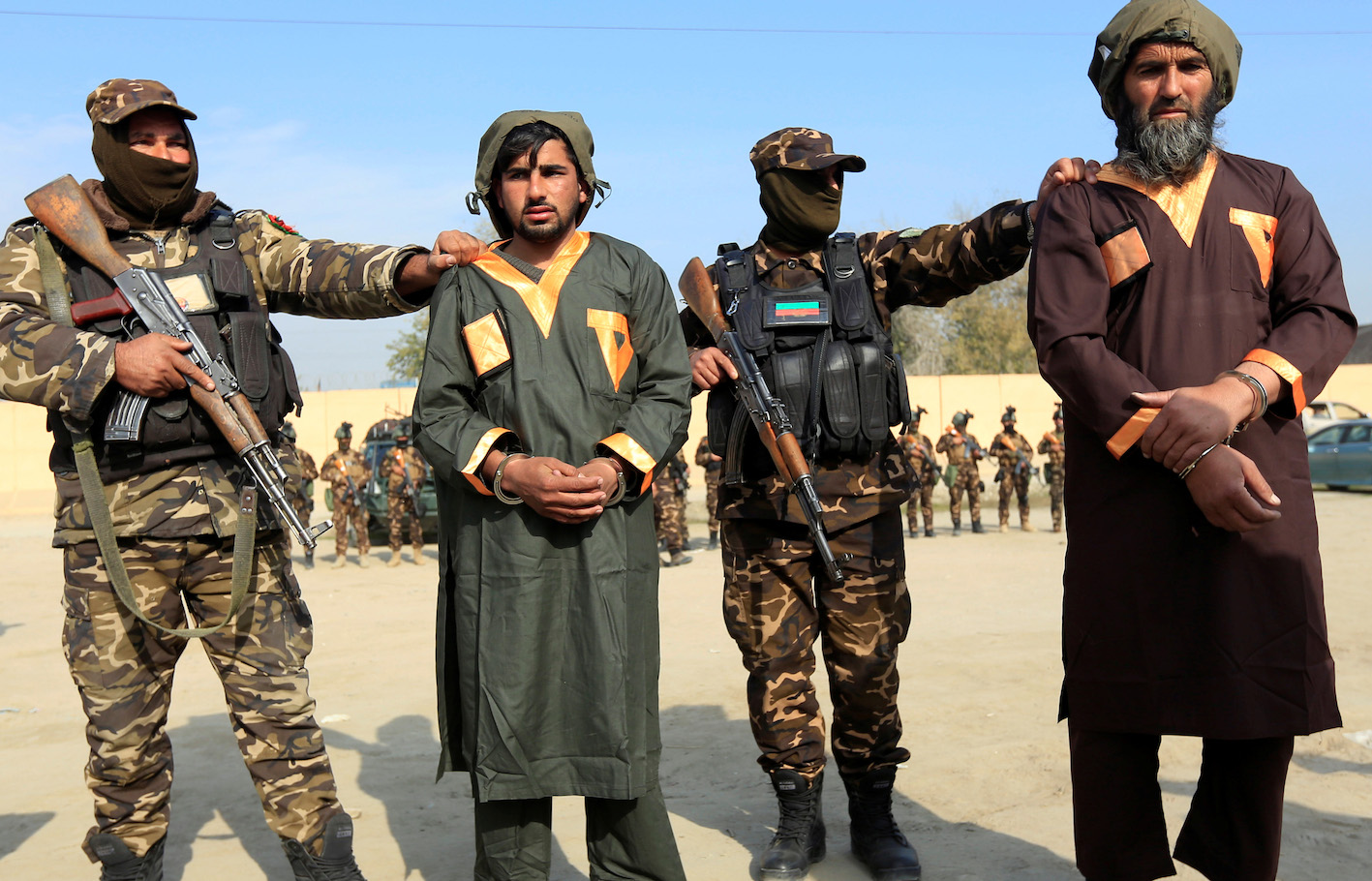
Representational image.
Despite the efforts it appears to have made, Pakistan was found deficient and the UN’s Financial Action Task Force (FATF) stated on June 25 that Pakistan would continue to remain on the ‘grey list’ of countries, which require increased monitoring for terrorist financing activities. While Islamabad is fuming at this decision, it could prove beneficial for Afghanistan, and even India, as it would serve to curb Pakistani ambitions to stir up more trouble in war-ravaged Afghanistan as the US and NATO troops depart.
Getting off the FATF’s ‘grey list’ has been a top priority for the Pakistan government, making Islamabad’s frustration more acute. Continuation on the ‘grey list’ has not only made it very difficult to access much-needed financial aid from the IMF, World Bank, Asian Development Bank and other multilateral institutions, it has also made its strategic ambitions in the region more difficult to attain.
By using its considerable influence with the Taliban, Pakistan has consistently aimed to keep India at bay while it plays a key role to shape the nature of the polity and the security apparatus that will emerge from the intra-Afghan dialogue once the US and NATO troops withdraw from Afghanistan. In many ways, primarily given its geographic position and strategic inclination, Islamabad has succeeded in keeping New Delhi distanced from the decision-making in Kabul and for Afghanistan as a whole.
But given the Taliban resurgence on the ground and the real possibility of a violent takeover by them of Kabul, there is no certainty that any such substantive intra-Afghan dialogue will take place. For Islamabad, which has not only provided sanctuary to the Taliban’s top leadership and treated their wounded forces in its hospitals, but has also provided them substantial financial assistance, this continued stay on the FATF grey list could become a huge problem. Its efforts at this crucial juncture to shape the external and internal environment in Afghanistan may backfire if it is unable to provide continued funding to the Taliban, which continues to be on the UN’s proscribed list of terrorist organizations. Without this funding, it is entirely possible that parts of the Taliban could go out of its control.
The FATF, which monitors global terror financing, places countries which it views as having deficiencies in their internal systems, which enable money laundering, terror financing and weapons proliferation, on their grey list. These countries face heightened difficulties in international financial dealings, like seeking loans and credit, leading to economic problems and losses. Pakistan claims to have lost out on $10 billion annually since 2018, when it was first put on the list.
The reason the FATF has retained Pakistan on its grey list is for not cracking down hard enough against UN-designated terrorists on its territory. These include leaders of the Taliban, the Haqqani Network, Lashkar-e-Tayyaba (LeT), Jaish-e-Mohammed (JeM), Jamaat-ud-Dawah (JuD), al-Qaeda and Islamic State.
India, which chairs some key UN counter-terrorism committees, has kept up the pressure on FATF members to ensure that Pakistan fulfils all its commitments. Hence Islamabad, after being retained on the grey list, accused New Delhi of ‘politicizing’ the FATF and working against it, despite fulfilling 26 out of the stipulated 27 conditions imposed on it.
The LeT, JuD and the JeM are of particular interest to India, since LeT founder and JuD chief Hafiz Saeed master-minded the November 2008 Mumbai terror attack and JeM chief Masood Azhar, who was released from India in the IC-814 hijack incident, has specifically chosen to target India, even the Indian Parliament. While Pakistan has arrested Saeed, Azhar remains elusive.
Pakistan risked demotion earlier to the FATF ‘blacklist,’ which would have meant it being declared a state sponsor of terrorism and boycotted, but was saved by China, then FATF chair, when it acted to arrest and jail Saeed and others like Zaki-ur-Rehman Lakhvi, who allegedly planned the Mumbai 26/11 attack.
Pakistan has managed to act politically on most issues highlighted by the FATF by putting in place proper legal frameworks on money laundering and terror financing. It has taken action to identify and sanction illegal Money or Value Transfer Services, implemented cross-border currency and bearer negotiable instruments controls, improved international cooperation in terrorist financing cases and passed amendments to make its Anti-Terrorism Act more stringent.
However, the remaining issue, of acting against UN-designated terrorists, including the Taliban, on its territory, will be a major problem for the Pakistani state, which is deeply embedded at various levels with different groups. Cutting these ties could trigger a serious backlash against the Pakistan establishment, both military and civilian. And severely hinder its efforts to gain strategic depth in Afghanistan. The coming weeks will be crucial for both.

Kolkata air worse than Delhi for a week, experts seek more monitoring stations in crowded zones
Kolkata: After Kolkata’s air pollution level surged past that of Delhi for the past seven days in a row, environmentalists have called for a wider network of automatic air quality...
‘Respect Gandhian legacy’: Shashi Tharoor terms MGNREGA renaming row ‘unfortunate’
New Delhi: Congress MP Shashi Tharoor on Monday termed the controversy surrounding the proposed renaming of the Mahatma Gandhi National Rural Employment Guarantee Act (MGNREGA) as "unfortunate", cautioning against creating...

India very close to sealing interim trade deal with US: Top official
New Delhi: Commerce Secretary Rajesh Agrawal said on Monday that India is "very close" to concluding an interim trade deal with the US to bring down tariffs, but stopped short...
‘Amit Shah was never in RSS’: Digvijaya Singh during Rajya Sabha discussion on election reforms
New Delhi: The Rajya Sabha witnessed heated exchanges during the ongoing discussion on electoral reforms, as senior Congress member Digvijaya Singh launched a sharp attack on the government, alleging systemic...

No link between Covid-19 vaccines and sudden deaths in young adults: AIIMS
New Delhi: A year-long autopsy-based study conducted by the AIIMS, New Delhi, found no scientific evidence linking Covid-19 vaccination to sudden deaths among young adults, reaffirming that the vaccines are...

CII proposes 6-pronged investment roadmap for India’s next decade of growth
New Delhi: Ahead of the Union Budget 2026-27, the Confederation of Indian Industry (CII) on Sunday proposed a comprehensive, six-pronged investment strategy anchored in fiscal prudence, capital efficiency and investor...

Former Nepal PM Oli alleges conspiracy behind destruction during Gen-Z protests
Kathmandu: Nepal's former Prime Minister K P Sharma Oli on Saturday described the destruction of public and private properties during the Gen-Z protests in early September as a conspiracy prepared...

‘Dhurandhar’ triggers political storm as parties spar over propaganda, terrorism and creative freedom
New Delhi: Filmmaker Aditya Dhar's latest release 'Dhurandhar' has sparked an intense debate across India, as several political parties accused the film of "promoting the government's propaganda", while the Centre...

Muslim rights leader says govt assured action over Waqf property registration, flags concerns over jihad narrative
New Delhi: Indian Muslims for Civil Rights (IMCR) Chairman and former MP Mohammad Adeeb on Saturday said that Union Parliamentary Affairs Minister Kiren Rijiju has assured a delegation of the...

Mirwaiz Umar Farooq expresses concern over arrest of people in decades-old cases
Srinagar: Senior religious and separatist leader, Mirwaiz Umar Farooq, on Friday, expressed concern over the arrest of people in decades-old cases. Mirwaiz, while speaking at the Friday congregation at...
‘The Hameed precedent’: Pakistan uses Secrets Act to build treason case against Imran Khan, senior military officials
New Delhi: The conviction and sentencing of former ISI chief Lt General Faiz Hameed is a sign of what is to come for Pakistan's former Prime Minister Imran Khan. The...

Bangladesh: Awami League rejects election schedule, accuses Yunus govt of bias
Dhaka: Bangladesh’s Awami League party rejected the election schedule announced by the country’s Election Commission (EC), arguing that free and fair polls cannot be ensured under the Muhammad Yunus-led interim...


