
Antalya (Turkey): The growing presence and influence of fossil fuel companies at the 31st United Nations Climate Change Conference (COP31) in Antalya has sparked renewed criticism from environmental organisations, climate activists and human rights groups, raising serious questions about whether global climate negotiations are being shaped by the interests of polluting industries rather than the needs of people and the planet.
A preliminary analysis by Transparency International of the list of participants found that Australia, which holds the COP31 presidency, and the EU, which positions itself as a climate leader, both have tangible fossil-linked or business representation in their delegations.
The analysis said, of the 218 business and commercial participants in Australia’s delegation, 43 across 23 organisations (almost one in five) were linked to the fossil fuel sector.
EU member states registered 780 business delegates, about 70 per cent in senior positions and 98 per cent of them on overflow badges.
It says there is a long-running problem of the transparency gap, 19 per cent of all national delegates chose not to disclose their relationship with the nominating entity (42 per cent if the ‘guest of the nominating entity’ category is counted).
Brice Böhmer, Climate and Environment Lead at Transparency International, said: “Business is not a one-off presence at Conference of Parties. These actors come back year after year, and most hold senior positions. The question is not whether business has a voice, but who gets a badge, in what role, and with what interests.
“When a large share of delegates have an unclear relationship to nominating entity, the public cannot tell whether climate policy is being shaped in the public interest or by those with a financial stake in the status quo.”
Having nearly one in five of Australia’s business and commercial delegates linked to the fossil fuel industry is a glaring conflict of interest.
“How could they do that while playing the role of the presidency of negotiations? It’s so brutal,” Harjeet Singh, global convener of the Fill the Fund campaign, told IANS.
He said instead of making polluters pay for the climate damages they have caused, Australia is giving them a front-row seat inside its official delegation.
“You cannot claim to be an impartial steward as president of the negotiations while handing badges to the very companies driving the crisis. For decades, fossil fuel lobbyists have used consensus-based UN talks to stall ambition, dilute outcomes, and protect their profits, while frontline communities in the Pacific and across the Global South are left to foot the bill for escalating loss and damage,” he said.
He added, “If Australia wants any credibility at COP31, it must immediately remove fossil fuel interests from its delegation, enforce strict conflict-of-interest rules, and hold polluters financially accountable for the destruction they continue to fuel.”
Following Brazil’s COP30 Presidency’s formal presentation at COP31 of a global roadmap for transitioning away from fossil fuels, world leaders, including Antonio Guterres and Lula Da Silva, urged countries to commit to national transition plans.
Alongside these pronouncements, experts at COP31, which is underway till November 20, are urging governments to look at their own state-run oil companies, which produce more than half of the world’s oil.
In Brazil, for instance, the state-owned oil and gas giant Petrobras plans to spend $69.2 billion in fossil fuel exploration and production between 2026 and 2030. And despite being the host of COP31, Turkey’s national oil company celebrated the discovery of new oil fields this week.
The COP30 Presidency, together with United Nations Secretary-General Antonio Guterres, this week presented Brazil’s global roadmap for transitioning away from fossil fuels.
While many countries from around the world, including developed and developing countries, welcomed the roadmap as a catalyst for real action, calling for urgency, accountability and an accelerated transition, the interventions from COP31 Presidencies Australia and Turkey were short, general and avoided mentioning fossil fuels in any meaningful way.
Responding to transitioning away from the fossil fuel roadmap, International Campaigner at Beyond Fossil Fuels Anna McGurk said: “It is shocking that the COP31 Presidencies offered such a lukewarm response when the UN Secretary-General and countries around the world welcomed the roadmap as a catalyst for real action on transitioning away from fossil fuels.
“Turkey and Australia have been handed a roadmap and a clear political mandate to act, yet neither offered a concrete way forward. This was a huge missed opportunity to demonstrate leadership and turn international momentum into real action.”
Meanwhile, the COP31 Business Forum opened on Thursday, bringing together more than 600 CEOs and senior business leaders from nearly 300 organisations with a focus on accelerating private-sector action and investment across electrification, resilient cities and green industrialisation.
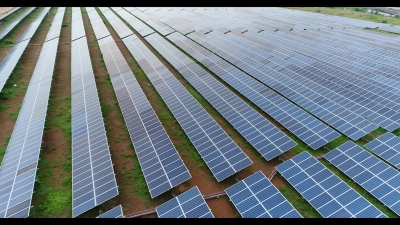
The investment push was underscored by a major new renewable energy agreement between Turkey and China. Signed with China’s National Energy Administration, the agreement envisages approximately $15 billion in investment in Turkey, including 7,000 MW of new solar and wind capacity, new energy storage systems, and 4,000 MW of electricity transmission capacity.
It will also support technology transfer and the production of wind turbine equipment in Turkey.
IANS