




Three new members appointed in Ram Temple Trust
Ayodhya: The Shri Ram Janmabhoomi Teerth Kshetra Trust appointed three new members to the Trust on Wednesday, one of whom is said to be a relative of former Vishwa Hindu...
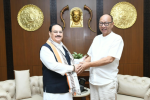
Centre agrees to upgrade RIMS Imphal to AIIMS status; Manipur CM expresses gratitude to JP Nadda
New Delhi/Imphal:In a significant decision aimed at strengthening health infrastructure in Manipur, Union Health and Family Welfare Minister J.P. Nadda on Monday agreed to upgrade the Regional Institute of Medical...
‘Did any such demolition happen before?’: Azam Khan’s wife calls for reconsidering Jauhar University razing order
Rampur (Uttar Pradesh): Amid the growing political controversy surrounding the demolition orders issued against Mohammad Ali Jauhar University, senior Samajwadi Party leader Azam Khan's wife Tazeen Fatma has appealed to...
Pinarayi Vijayan family back in focus as ED searches aides of Mohammed Riyas
Kozhikode: The Enforcement Directorate’s renewed searches in the controversial ‘monthly payment’ case have once again put the family of former Chief Minister Pinarayi Vijayan under the political spotlight, with the...

UP govt reconstitutes SIT for probe into Ram Mandir donation theft
Ayodhya: In line with the Supreme Court's instructions, Uttar Pradesh government has reconstituted the Special Investigation Team (SIT) for investigation into alleged irregularities of donations and offerings made at Ayodhya's...
‘Pained by last 10 days’ events’: Dharmendra Pradhan on stepping down as Education Minister
New Delhi: Union Education Minister Dharmendra Pradhan on Saturday announced his resignation, saying he was deeply pained by the developments of the past 10 days and wanted to ensure that...
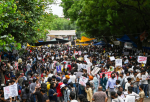
Cabinet approves Bill for harsher punishment in paper leak cases; to be introduced next week
New Delhi: As promised by Prime Minister Narendra Modi earlier, the Union Cabinet on Friday approved a Bill and related provisions aimed at setting up fast-track courts and giving harsher...
JPSC defers Civil Services Mains, suspends entire 2026 exam schedule amid CID probe
Ranchi: The Jharkhand Public Service Commission (JPSC) has postponed the 14th Combined Civil Services Main Examination-2025 until further orders, a statement said on Wednesday. The Commission has also decided to...
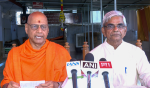
Temple Trust meet: 9-member religious committee formed, spokesperson chosen for better communication
New Delhi: The Shri Ram Janmabhoomi Teerth Kshetra Trust, holding a crucial meeting in Ayodhya to fill up vacancies and pick its first-ever Chief Executive Officer (CEO), has decided to...
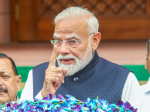
Govt took swift action over paper leak, says PM Modi; calls on lawyers to ensure severe penalties
New Delhi: Prime Minister Narendra Modi stated on Tuesday that the issue of paper leaks is "not limited" to a single state or the Central government; rather, it is a...
MP Lokayukta raids nine premises in DA case; finds assets 258 pc above known income
Indore: The Madhya Pradesh Lokayukta on Tuesday carried out simultaneous searches at nine locations in Indore, Dhar and Morena in connection with a disproportionate assets case against a senior finance...

Demolition of Abhishek Banerjee’s party office in Bengal’s Amtala continues on Sunday
Kolkata: The demolition work of the five-storey party office of Trinamool Congress general secretary and Lok Sabha member Abhishek Banerjee at Amtala in South 24 Parganas district of West Bengal...


