
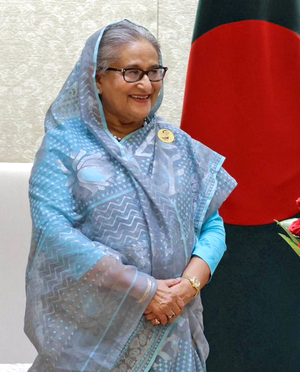
Nilova Roy Chaudhury
New Delhi: If November has been a difficult month for the Tarique Rahman government in Bangladesh, initially with workers from the garment industry striking work and
inflicting a huge blow on the country’s fragile economy, and increasing violence and arson on the streets across the country, December appears likely to be much more troubled after former Premier Sheikh Hasina announced her intention to return to Dhaka on December 16, celebrated nationwide as the
country’s ‘Liberation Day.’
Hasina plans to return to Dhaka from her forced exile in Delhi, where she has been living since she was given shelter in the Indian capital after her ouster
from office on August 5, 2024. She has sought official transportation, in the form of a government aircraft, and has submitted a formal request through her
lawyers for papers from the government in Dhaka to facilitate her return to her country.
The request has caught the government in Dhaka in a bind: it has refused to provide her either “an aircraft, or a car or even a rickshaw” for her return, which they claim, can only be in handcuffs. Exactly a year ago, in November 2025, a judicial tribunal in Dhaka pronounced Hasina guilty of committing “crimes against humanity” and sentenced her to death, in absentia. The (then) Bangladesh interim government under Mohammad Yunus, immediately sent a
formal request for her extradition to that country, under terms of the India – Bangladesh bilateral extradition treaty, signed in January 2013. While India
mulled over the request, Hasina, who refused to accept the jurisdiction and functioning of the judicial tribunal, upped the ante by voluntarily announcing that she would return to her homeland. But Dhaka has said it will adhere to its legal position that Hasina can only return as a convicted criminal extradited from India.
Analysts and commentators on international law said the Bangladesh government’s insistence on bringing the former Premier back by having her extradited as a criminal was not a legally sustainable demand.
Firstly, India has not said it had accepted the criminal conviction of Sheikh Hasina under the hastily convened judicial tribunal — an extradition treaty is functional if the crimes are recognised by both countries party to the extradition treaty. Also, such treaties normally apply to fugitives from the law. In this case, the person in question is voluntarily seeking to return. Additionally, Sheikh Hasina herself had, in October 2025, filed a case with the Prosecutor of the International Criminal Court (ICC) in The Hague, in which she accused the Mohammad Yunus-led interim government of Bangladesh of having committed crimes against humanity. This was well before the verdict of the International Crimes Tribunal in Dhaka pronounced its verdict on her, in November.
Dhaka’s insistence on Hasina’s extradition clearly indicates that the government does not want her back, because they know India is unlikely to extradite her. The Tarique Rahman government, which was elected in February with a clear mandate for change and good governance, appears to have belied many of those
expectations and is fighting on multiple fronts within the country.
Along with striking garment workers, the law and order situation has been deteriorating and Sheikh Hasina’s proposed return has revitalized the opposition Awami League cadres after a couple of years in the wilderness. Incidents of arson erupted when angry cadres violently protested the government’s rejection of her announcement. Former interim Administrator Yunus’ ancestral home in Chittagong (Chattogram) was among the buildings razed, forcing the government to call out its paramilitary forces to assist the police and civil administration to restore peace. Communal tensions, with the Jamaat particularly, have also been triggered.
The example of Benazir Bhutto’s assassination after her return from exile will also be haunting the government in Dhaka, which will perforce be responsible
for her security. With the announcement of a specific date for her proposed return, Hasina appears to have regained the political initiative and resumed her place at the centre stage of the political landscape of Bangladesh, while the Tarique Rahman’s government’s efforts to either stall her return or threaten her incarceration both reflect its diminishing control over the situation and the prospect of greater political convulsions across Bangladesh.
INDIA NEWS STREAM