



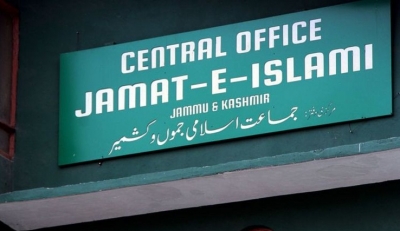
Srinagar: On November 7, Jama’at-e-Islami-owned properties worth crores were sealed by the J&K government.
The Jama’at is booked under the Unlawful Activities (Prevention) Act, 1967, issued by the Central Government and the Jammu and Kashmir Government, which prohibits entry, use, and association with any legal bodies that are directly involved in the case. A “red entry” has been drawn in the revenue records in light of this notification.
The burning question here is, why wasn’t this done earlier? Jama’at-e-Islami (JeI) is a religious party with a political agenda that has used militancy and religion as tools to brainwash the two generations of Kashmiris into believing that the jihad against India and non-muslims is Sunnah.
District Shopian of South Kashmir has been the most deeply infected with Jama’at influence. The SIA identified and presented nine properties worth Rs 25 crore in the district under Jamaat ownership to the District Magistrate of Shopian who has banned JeI from these properties.
This is the first step in the series to dismantle the ecosystem of anti-national elements and terror networks that threaten India’s sovereignty.
Kashmir was not always like this. It had a great Sufi tradition that translated into Kashmiriyat, a unique form of communal harmony and religious syncretism. The Jamaat was founded by Maulana Maududi in 1941. It is the biggest and most influential Islamic movement in South Asia. Its Kashmir brand, Jama’at-e-Islami Kashmir has its roots in Lahore. It has dominated the underbelly of Kashmiri’s political and religious foundation right from its inception in the 1940s.
Back in 1942, Saadu-din Tarabali and Gh. Ahmad Ahrar organised an ijetma (religious gathering), the first of its kind at Badami Bagh Shopian. Though the organisation did not gain a strong political foothold until the 1980s, it was working at the speed of light through other means and spreading venom which would later reveal its face.
They consulted their parent group in Pakistan and met them frequently in Saudi on the pretext of performing Hajj. Pakistan’s ISI officers also flew out representatives of Jama’at-e-Islami Kashmir and Jammu and Kashmir Liberation Front (JKLF) to Pakistan for “training and practicals on jihad” in the mid-1980s. And soon enough the full-fledged armed struggle in the region began in the late 1980s.
How Jama’at has managed the decades-long rebellion and how it continues to fuel it is not the trick question. The more important question is who are these people who have tried to proselytise their conservative and destructive ideas on the Kashmiri society and push two generations of Kashmiris into a cycle of crisis and pain?
They are Muslim conservatives who have sought to dilute Kashmiriyat because it threatens the Arab-imported idea of Islamic purity. Their strategy was two-fold – advocacy of sanctity and social Islamization programs, and exploitation of an invented threat to Kashmiri Muslim identity.
The alienation of J&K from India through Article 370 of the constitution further allowed Jama’at to spread its wings without opposition. It invested in the indoctrination of malleable, young minds by opening a network of schools under the banner of Falah-e-Aam Trust (FAT), which was the breeding ground for militancy. What started with just ten schools in the Valley in 1972, today has 323 schools with 75,313 students enrolled.
Falah-e-Aam Trust (ironically meaning Welfare for All) attracted lower and middle-income groups in far-off areas. They promised the illiterate parents quality education and deen studies. Sometimes specific children who showed the characteristics of aggression and low wit were put into hostel facilities for years, away from their parents to create future foot soldiers and suicide bombers.
The parents were told that their children are receiving quality education which will financially benefit them tomorrow. These children would later define their learnings by securing ranks in the Hizb-ul-Mujahideen (HuM) terrorist organisation and Jama’at-e-Islami Kashmir’s military wing which follows the direction of ISI across the border.
HuM literally translates to Party of Holy Fighters. Though it has been banned for its radical jihad in the region by India, European Union, Canada, and the US, it is a lawfully operating organisation in Pakistan.
Of course, no such network can exist without funding. So where does Jama’at get its funding from?
Syed Ali Shah Geelani had his electoral break from Sopore (North Kashmir), his hometown, on the Jamaat ticket in 1972. He played the separatist and slowly drove the youth away from India and Kashmiriyat towards fundamental Islam. In 1999, the Jama’at fostered the People’s Democratic Party (PDP) run by Mufti Mohammad Sayeed who was once India’s Home Minister and Federal Minister for Tourism.
Later he would also be the Chief Minister of J&K serving two tenures. With these political parties in their pocket, the Jama’at and HuM together outsmarted the mainstream political parties. They were unchallenged and displayed unbridled and unaccountable power looting the public exchequer in the “interest of tehreek” (freedom movement). This flow has to be choked at the source.
Being stripped naked of their lies from all directions since Naya Kashmir has taken shape, today more than ever, Jamaat will continue killing “Kafirs” across the Valley to desperately remain relevant and showcase power. They cannot digest the idea of a peaceful and developing Kashmir.
Across the Union Territory, there are as many as 188 JeI properties identified by the SIA which will meet the same fate. Now that Article 370 no longer protects these anti-national, anti-peace elements behind the legal veil, Jama’at cannot run too far too long.
-IANS
US, India share historic bond: Rubio
Washington: The United States stressed the depth of its relationship with India, extending greetings to the country on Republic Day and highlighting expanding cooperation across strategic sectors and sustained engagement...
‘Our Constitution has defined justice, brotherhood’: President in address to nation on R-Day eve
New Delhi: In her address to the nation on the eve of Republic Day, President Droupadi Murmu said on Sunday that the Constitution of the country has defined justice and...

Canadian PM calls for ‘buy Canadian’ in response to Trump’s new tariff threat
Ottawa: Canadian Prime Minister Mark Carney on Saturday called for "buy Canadian" and "build Canadian" in response to a new tariff threat from US President Donald Trump. Carney published a...
Iran thanks India for opposing ‘unjust and politically motivated’ UNHRC resolution
Tehran/New Delhi: Mohammad Fathali, Ambassador of Iran to India, on Saturday expressed Tehran's "sincere gratitude" to the Indian government for its "principled and firm support" while voting against a resolution...

Australian heatwave five times more likely due to climate change: Study
Melbourne: Climate change made early January's southeastern Australia heatwave five times more likely, scientists say, as the country braces for another 50 degrees Celsius scorcher on Saturday. The Bureau...

UN human rights chief condemns abuse in US immigration enforcement
Geneva: The UN human rights chief condemned in a statement the repeated use of "unnecessary or disproportionate force" in US immigration enforcement. Volker Turk, the UN High Commissioner for Human...
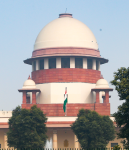
Bail should not be linked to monetary deposits/undertakings: SC
New Delhi: In a significant ruling on bail jurisprudence, the Supreme Court has observed that courts should not insist on upfront monetary deposits or undertakings as a precondition for...

Trump lays out Greenland, Ukraine plans
Washington: President Donald Trump said negotiations over a long-term US role in Greenland were ongoing and framed his push to end the Ukraine war as a life-saving effort, during an...

For every $1 world invests in nature, it spends $30 on destroying it: UN report
New Delhi: For every $1 the world invests in protecting nature, it spends $30 on destroying it. This stark imbalance is the central finding of a new UN Environment Programme...
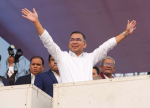
Rebranding of BNP’s Tarique Rahman cannot erase corrupt legacy: Bangladesh Awami League
Dhaka: Bangladesh Awami League on Thursday warned that the country is witnessing a disturbing political trend, with Bangladesh Nationalist Party (BNP) Chairman Tarique Rahman being celebrated, rehabilitated, and projected as...
Rahul Gandhi, Kharge join ‘MGNREGA Bachao Sangram’; Cong plans to make it ‘mass movement’
New Delhi: Leader of the Opposition (LoP) in the Lok Sabha, Rahul Gandhi and Congress President Mallikarjun Kharge on Thursday joined the 'MGNREGA Bachao Sangram' in the national Capital, as...
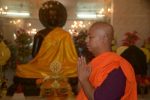
Buddhist community says minorities in Bangladesh facing severe repression, violence
Colombo: Highlighting that Buddhist minorities and other religious communities in Bangladesh are facing severe repression and violence, the Sri Lanka–Bangladesh Buddhist Solidarity Front has urged Buddhists across the world to...


