



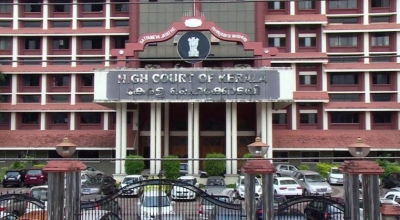
The Kerala high court on Wednesday stayed a sessions court’s controversial order of granting bail to a noted writer-cum-activist in a case of sexual harassment.
The Kozhikode sessions court on August 12 had granted anticipatory bail to social activist Civic Chandran in a sexual abuse case – involving a Dalit woman – saying 354A of IPC will not prima facie stand if the woman was wearing a “sexually provocative dress”. It had sparked outrage as the judge had noted that the offence of sexual harassment was not made out because the complainant had been wearing a “sexually provocative” dress.
Hearing the Kerala government appeal against the order, Justice Kauser Edappagath observed that the former had undertaken an “improper exercise of jurisdiction” and had relied on “irrelevant materials” while granting bail to the activist.
Justice Edappagath, however, made it clear that the writer “shall not be arrested” until the case is heard by the high court, taking into consideration of his age.
“Prima facie it appears that there was an improper exercise of jurisdiction by the Session Judge while granting bail to the accused. Irrelevant materials of substantial nature are seen relied on to grant bail. The finding of the impugned order that Section will not be prima facie attracted if the victim was wearing sexually provocative dress cannot be justified. In these circumstances, the impugned order shall stand till the disposal of this Crl.MC,” Bar and Bench quoted Justice Edappagath as saying.
The Kerala government had challenged the lower court order saying that the findings and reasoning given by the sessions court suffer from the illegality, lack of sensitivity, sobriety and perversity.
The state government’s appeal argued that the victim’s sexual provocative dressing cannot be valid legal ground absolving the accused of the charges, calling the order “highly insensitive and insulting” and arguing that it potentially exposed the victim to secondary trauma, reported The Wire.
“The right to decide on what to wear and how to wear etc is the natural extension of personal freedom guaranteed by the Constitution of India and one of the fundamental facets of the right to life guaranteed under Article 21,” Bar and Bench quoted the appeal as saying.
The Kozhikode court had contended that the accused was fighting against the caste system and “it is highly unbelievable that he will touch the body of the woman fully knowing she belongs to the Scheduled Caste.” – INDIA NEWS STREAM

Congress protests rejection of Meenakshi Natarajan’s RS nomination in MP
Bhopal: A major political controversy erupted in Madhya Pradesh on Tuesday after the nomination of Congress Rajya Sabha candidate Meenakshi Natarajan was declared invalid by the Returning Officer following objections...

Jaypee Infratech case: ED attaches Rs 100 crore assets of 2 companies
New Delhi: As part of the ongoing money laundering investigation involving Jaypee Infratech, the ED attached immovable assets worth Rs 100 crore belonging to two companies, an official said on...

AI can help India leapfrog without building its own models: Rubrik executive
Washington: Artificial intelligence can help India emerge as a global leader in the next phase of technological innovation even without developing frontier AI models of its own, according to Dev...

‘Illegal and unacceptable’: UN Special Rapporteur condemns detention of Afghan women over dress code
Kabul: The UN Special Rapporteur on the situation of human rights in Afghanistan, Richard Bennett, has expressed concern over the detention of Afghan women for violating the Taliban's dress code,...

Delhi-NCR to swelter at 44 degrees as monsoon advances across India; rain likely later this week
New Delhi: Delhi-NCR is set for a scorching Tuesday, with temperatures expected to touch 44 degrees Celsius even as the southwest monsoon continues its advance across different parts of the...

Eight killed as ladle carrying molten steel explodes in Vizag Steel Plant
Visakhapatnam: Eight workers died, and six others were injured after a ladle carrying molten steel exploded at the Visakhapatnam Steel Plant on Monday. The accident occurred when a large...

Israel strikes petrochemical company in Iran’s Khuzestan
Jerusalem: Israel on Monday morning carried out an airstrike against the Karun Petrochemical Company in Iran's southwestern Khuzestan province, state media reported. Part of the petrochemical complex has sustained...

Iran announces halt in operations against Israel
Tehran: Iran's main military command, Khatam al-Anbiya Central Headquarters, announced on Monday the cessation of the Iranian armed forces' operations against Israel, the semi-official Fars news agency reported. In a...
SC invokes extraordinary powers to acquit POCSO convict after victim marries him, seeks case closure
New Delhi: Invoking its extraordinary powers under Article 142 of the Constitution to ensure "complete justice", the Supreme Court has set aside the conviction of a man sentenced under the...
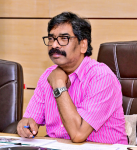
Setback for Jharkhand CM as court dismisses his discharge plea in PMLA case
Ranchi:Jharkhand Chief Minister Hemant Soren suffered a major legal setback on Monday after a special court hearing cases under the Prevention of Money Laundering Act (PMLA) rejected his discharge...

OPEC+ cartel to hike oil production by 188,000 barrels a day
New Delhi: The seven OPEC+ countries announced on Sunday that they would increase their production by another 188,000 barrels per day from July 2026 as part of "their collective commitment...
Bumpy ride for INDIA bloc: DMK to skip meet, JMM and CPI-M miffed with Cong conduct
New Delhi: The INDIA bloc meeting, scheduled for June 8 in the capital, seems to be heading into trouble even before its commencement. While Congress and the embattled Trinamool Congress...


