




New Delhi, Aug 15: Chief Justice of India N.V. Ramana on Monday said the fundamental duties are not merely pedantic or technical, instead they were incorporated as the key to social transformation, as the framers of the Constitution imagined a nation, where citizens are aware, alert and able to make the right decisions.
The Chief Justice was speaking at the 76th anniversary of India’s Independence organised by the Supreme Court Bar Association (SCBA). The event was also attended by Solicitor General Tushar Mehta, SCBA president Vikas Singh, Supreme Court judges and the members of the Bar.
The Chief Justice said: “Our Constitution is the fundamental document which regulates the relationship between the citizens and the government. While it has granted us inalienable rights, it places upon us certain fundamental duties. The fundamental duties are not merely pedantic or technical. They were incorporated as the key to social transformation. Our framers imagined a nation, where citizens are aware, alert and able to make the right decisions.”
He emphasized that in order to contribute meaningfully to the society, the citizens must first understand the Constitution and its organs. “It is imperative for the people to understand the system and its nuances, the powers and the limitations. That is why I am very keen on spreading the constitutional culture in India”, he said.
He said the struggle for Independence was not merely for freedom from colonial power. “It was for the dignity of all. It was for laying the foundation of democracy. This foundation was laid through years of detailed deliberation in the constituent assembly, which produced the most progressive and scientific document, i.e., the Constitution of India”, said Justice Ramana.
He said under the constitutional framework, each organ has been given a unique obligation and the notion that justice is only the responsibility of the court is dispelled by Article 38 of the Indian Constitution which mandates the state to secure justice: social, economic and political. “Every deed of each organ of the state has to be in the spirit of the Constitution. I must note that all the three organs of the State, i.e., the executive, legislature and the judiciary, are equal repositories of Constitutional trust,” said the Chief Justice.
He said the Indian judiciary, since its inception, has strived to fulfil the constitutional aspirations and through interpretative exercise, has also strengthened various independent institutions, be it the Election Commission, CVC, CAG and so on. “By interpretation of statutes, the courts have given effect to the true intent of the legislature. The courts have breathed life into the Statutes, by making them relevant to contemporary times”, said Justice Ramana.
He further added that the country’s judicial system is unique not only because of its commitment to the written Constitution and its spirit, but also because of the immense faith reposed by the people in the system. He added that people are confident that they will get relief and justice from the judiciary and it gives them the strength to pursue a dispute, and they know that when things go wrong, the judiciary will stand by them.
He said, “The Indian Supreme Court is the guardian of the Constitution in the world’s largest democracy. The Constitution gives wide ranging powers and jurisdiction to the Supreme Court to do complete justice. This power to do absolute justice under Article 142, brings to life the motto of the Indian Supreme Court, Yato Dharma Sthato Jaya, that is, where there is Dharma, there is victory”.
Justice Ramana said it has been my personal endeavour to advocate for the Indianization of judiciary and the system will truly belong to the people, “when we honour and cherish our diversity”. He said, “While it is the mandate of the constitutional courts to uphold human rights and fundamental freedoms, the lawyers play an instrumental role in leading the courts in the right direction”.
Justice Ramana said he urges every citizen to be a meaningful stakeholder in our democracy. “We all must try to imbibe the Constitutional philosophy in its true spirit. Today as I see the Tricolour fluttering high above us, I cannot help but take pride and remember Keertiseshulu Sri Pingali Venkayya Garu, who hailed from Telugu land. It is he who designed the pride and identity of independent India, our national flag,” he said.
–IANS

MSME confidence in ‘expansionary’ phase despite global volatility: Report
New Delhi:The MSME Business Confidence Index stood at 59.3 for the April‑June 2026 quarter, compared to 59.8 in the previous quarter, remaining comfortably above the 50‑mark and signalling "business confidence...
SC refuses interim bail to Asaram on health grounds, allows round-the-clock caregiver
New Delhi: The Supreme Court on Thursday declined to grant interim bail to self-styled godman and rape convict Asaram on medical grounds, but permitted him to avail round-the-clock services of...

Bombay HC convicts ex-Tehelka editor Tarun Tejpal, reverses acquittal in rape case
New Delhi: The Bombay High Court on Thursday set aside the acquittal of former Tehelka editor Tarun Tejpal in the 2013 sexual assault case involving a junior colleague and convicted...

Jharkhand HC terms bulldozer demolition illegal, orders compensation for shopkeeper
Ranchi: In a setback to the Jharkhand Government, the High Court has dismissed the state's appeal against an order directing compensation to a shopkeeper whose establishment was demolished by the...

SEBI bars Punit Goenka, Subhash Chandra from securities markets for a year
Mumbai: Market regulator SEBI has barred Zee Entertainment Enterprises Ltd (ZEEL) and two of its top executives, Punit Goenka and Subhash Chandra, from the securities market after finding that...
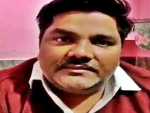
Delhi riots: Tahir Hussain, four others get life imprisonment in Ankit Sharma murder case
New Delhi: A Delhi court on Friday sentenced former Aam Aadmi Party (AAP) councillor Tahir Hussain and four others to life imprisonment in the murder case of Intelligence Bureau...

Delhi HC issues notice on Umar Khalid’s bail plea in 2020 riots conspiracy case
New Delhi: The Delhi High Court on Friday issued notice to the Delhi Police on jailed former JNU student Umar Khalid's regular bail plea in the 2020 northeast Delhi...

Muthanga verdict ends 23-year legal battle in Kerala; 35 acquitted, 21 found guilty
Wayanad:More than 23 years after the Muthanga police firing shook Kerala's social and political landscape, the Wayanad District Principal Sessions Court on Friday delivered its long-awaited verdict in the...
SC to examine use of metallic pellet guns on protesters, orders treatment for injured
New Delhi:The Supreme Court on Thursday asked the petitioners seeking a ban on the use of metallic pellet guns for dispersing civilian assemblies to amend their plea to specifically...
SC hints at retired judge-led SIT, orders no coercive action against student protesters
New Delhi :The Supreme Court on Tuesday indicated that it may constitute a Special Investigation Team (SIT) headed by a former apex court judge to probe allegations of police...

UP: Demolition order against Azam Khan’s Jauhar University stayed for now
Moradabad: In a big relief to Mohammad Ali Jauhar University, founded by Samajwadi Party leader and former MP Azam Khan, the Uttar Pradesh government’s Divisional Commissioner has stayed, for...

Centre introduces anti-paper leak bill in Lok Sabha amid Opposition’s uproar
New Delhi,: The Centre introduced the Public Examinations (Prevention of Unfair Means) Amendment Bill, 2026, in the Lok Sabha on Monday amid intense sloganeering by the Opposition benches. Union...


