



By Asad Mirza
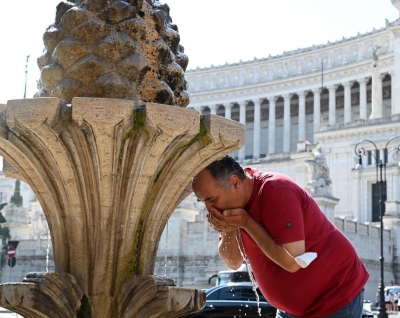
The extreme temperatures witnessed in Europe during the last fortnight, are the results of our own making, and maybe this is a wake-up call for the humans to stop playing with nature.
When we think of Europe, we mostly think of cold and enjoyable weather, as compared to our scorching heat and humid weather. But in 2022, the European continent is facing one of the worst summers.
Usually, by Indian standards even the European summers were considered to be much better than our winters, but record-breaking heat affecting parts of Western Europe during the fortnight, with UK temperatures exceeding 40 degrees Celsius for the first time since record-keeping began in 1772, has proved us wrong.
Temperatures dived in many other countries in Europe, with 64 different areas in France experiencing record highs and temperatures in Portugal reaching 47 degrees Celsius.
The dangerously high temperatures have had other additional consequences, too, with Portugal reporting more than 1,000 heat-wave-related deaths in the last fortnight. At least 13 people have died in open water-related incidents in the UK.
Extreme heat-wave warnings were issued in France and record July temperatures were reported in the Netherlands. In Paris, the thermometer crossed the 40 degrees Celsius for the third time this summer.
In addition, wildfires continue to sweep across parts of Southwest Europe. As well as increased ozone pollution, the European heat wave is also exacerbating the scale and intensity of wildfires currently raging across southern Europe, especially in south-western France, Spain and Portugal. The worst affected regions to date include the Gironde region south of Bordeaux, Extremadura and Galicia in Spain, and parts of Portugal.
This is also accompanied with the fact that Europe is witnessing more and more floods in the regions where they were unheard of like in Germany and the UK. Experts blame Climate Change for the soaring temperatures across the world, especially Europe, and have warned that worse is yet to come.
Scientific View
The Guardian reported Prof. Richard Allan, of the University of Reading as saying that Climate Change is intensifying these heat waves as greenhouse gas increases raise temperatures and a warmer, more thirsty atmosphere dries out the soil, so that more of the sun’s energy is available to heat the ground rather than evaporating water.
The Politico quoted Mariam Zachariah, climate scientist at Imperial College London, as saying that build-up of CO2 from burning fossil fuels has made heat waves more intense and more frequent across the globe, including in Europe.
The World Meteorological Organisation (WMO) warned last week that Europe’s heat wave could persist into the middle of next week, whereas the negative impacts of climate change are bound to continue at least until 2060s.
Robert Stefanski, chief of Applied Climate Services at the WMO, at a joint press briefing with the World Health Organisation (WHO), also said that record heat waves are becoming more frequent because of climate change.
The Copernicus Atmosphere Monitoring Service (CAMS) scientists are predicting very high levels of surface ozone pollution across a large region of Europe as temperatures soar. They also warn about very high levels of ozone pollution in southern Europe caused by the heat wave could now affect north-western regions in the coming week. The prediction comes after extremely high surface ozone pollution was experienced across western and southern Europe, particularly along the west Coast of Portugal and parts of northern Italy.
Mark Parrington, Senior Scientist from the CAMS, says the potential impacts of very high ozone pollution on human health can be considerable both in terms of respiratory and cardio-vascular illness. Higher values can lead to symptoms such as sore throat, coughing, headache and an increased risk of asthma attacks. The Climate and Clean Air Coalition estimates that ozone pollution causes approximately one million additional deaths per year. This is why it is crucial that we monitor surface ozone levels.
Recently BBC has published a revealing report, which highlights how the major culprits responsible for environmental degradation had planned and executed a bold campaign 30 years ago, to spread doubt and persuade the public that Climate Change was not a problem. The tie-up between some of America’s biggest industrial players and a PR genius – forged a devastatingly successful strategy that endured for years, and the consequences of which are all around us.
Climate Change and Big Business
The Global Climate Coalition (GCC), which represented the oil, coal, auto, utilities, steel, and rail industries, hired a communications partner to change the narrative on Climate Change. The strategy was implemented through an extensive media campaign, including placing quotes and pitching opinion pieces. The groundwork was laid meticulously for the industry’s biggest campaign to date – opposing international efforts to negotiate emissions reductions in Kyoto, Japan, in December 1997.
This makes us wonder where we have gone wrong. It is indeed true to say that during the last 100 years humans have wrecked the earth so much that nature is turning back on them.
We hear constant talk of environment planning and tackling Climate Change effects, but find most governments wanting in fulfilling their pledges committed at different environment foras, such as COP26 and other international bodies.
The basic requirement is that we’ll have to change our lifestyles too, to cope with the climate challenges. We’ll have to change the way we are constructing our commercial and residential buildings, all clad in either glass or aluminium cladding requiring more heat intensive mechanisms to maintain cooler temperature. In hotels worldwide it is a normal practice to maintain the building temperature at 17 degrees Celsius, why can’t we make it a more reasonable 21 degrees Celsius? In addition we also need to change our style of construction using a judicious mix of stone, cement and wood, not just relying on one particular product, besides ensuring less usage of wood.
If we humans don’t act now instead of just preaching and making hollow promises then we could just look forward to our own extinction much earlier than envisaged by nature.
(Asad Mirza is a political commentator based in New Delhi. He writes on Muslims, educational, international affairs, interfaith and current affairs. The views expressed are personal)
––IANS

Big cats taken to Kuno in helicopters after 8 cheetahs from Botswana arrive at Gwalior
Gwalior: A special Indian Air Force (IAF) aircraft carrying eight cheetahs from Botswana arrived at Gwalior airport on Saturday morning. After a formal inspection of the cheetahs which had travelled...

CAQM issues statutory direction proposing stricter PM emission norms for industries across Delhi-NCR
New Delhi: In a move to strengthen industrial emission control measures across the National Capital Region (NCR), the Commission for Air Quality Management in NCR and Adjoining Areas (CAQM) on...

January 2026 — 5th warmest on record: EU climate monitor
Brussels: January 2026 was the fifth-warmest on record globally, with contrasting temperature extremes seen in both hemispheres, the EU-funded Copernicus Climate Change Service (C3S) reported on Tuesday. The global average...

Australian heatwave five times more likely due to climate change: Study
Melbourne: Climate change made early January's southeastern Australia heatwave five times more likely, scientists say, as the country braces for another 50 degrees Celsius scorcher on Saturday. The Bureau...

For every $1 world invests in nature, it spends $30 on destroying it: UN report
New Delhi: For every $1 the world invests in protecting nature, it spends $30 on destroying it. This stark imbalance is the central finding of a new UN Environment Programme...

Pakistan’s Lahore ranked world’s most polluted city
Islamabad: Lahore has been ranked at the top of global pollution charts with an Air Quality Index (AQI) of more than 450, according to the Swiss air quality monitor IQAir,...

Delhi-NCR chokes under ‘severe’ pollution as AQI soars past 450
New Delhi: Air pollution levels in the National Capital Region (NCR) have shattered previous records over the past few days, with the Air Quality Index (AQI) across the entire NCR,...
Sudden rain spell freezes Delhi, Air quality remains ‘Very poor’
New Delhi: Residents of Delhi and the National Capital Region (NCR) were caught off guard early Friday morning as an unexpected spell of rain swept across the region, deepening the...

India to continue support for International Solar Alliance despite US pull-out
New Delhi: India will continue to work with member countries of the International Solar Alliance, one of the 66 international organisations from which the US announced its withdrawal on Thursday....

Glowing waters in Australia’s Tasmania linked to climate change, not fish-farm waste: Scientists
Melbourne: Scientists say a bioluminescent bloom lighting up the southeast coastline of Australia's island state of Tasmania, with red tides by day and blue glows by night, stems from climate-driven...

Delhi’s pollution levels increase significantly in Dec, despite no farm fires: CSE
New Delhi: A new analysis by the Centre for Science and Environment (CSE) on Wednesday shed light on the shifting air quality trends in Delhi and the National Capital Region...
Dense fog leads to 128 flight cancellations at Delhi airport, trains delayed in several parts of country
New Delhi: Flight and train operations across several parts of the country were severely affected on Monday due to dense fog, with Delhi Airport witnessing large-scale disruptions, leaving thousands of...


