



 by Nilova Roy Chaudhury

Prime Minister Narendra Modi left India on Wednesday for a series of meetings in the United States and at the United Nations, marking a resumption of high level, high stakes international diplomacy after an 18-month hiatus for the Covid pandemic, during which there have been major changes in the global security situation; from the Taliban takeover of Afghanistan to China’s overt aggressive posturing on land and sea.
Among other important meetings, he will participate in the first ever in person Leader’s Summit of the Quadrilateral Framework (Quad) in Washington on September 24, Mr Modi will be aiming to clearly establish India’s strategic imperatives. Particularly reaffirming India’s position on the issues of counter-terrorism and maritime security.
Along with leaders of three other leading democracies, Prime Minister Scott Morrison of Australia, Prime Minister Yoshihide Suga of Japan and US President Jo Biden, who will be the host for this Quad summit, Mr Modi will, at the global level, make India’s foreign policy positions very clear; that the Taliban in its present format is not acceptable and should not be accorded global recognition until it walks the talk on its pledged commitments and that the oceans must be free for navigation for all so that the global economy can revive after the devastation caused by the pandemic.
Meanwhile, the US and United Kingdom have just concluded the Australia, UK, US alliance (AUKUS), by which Australia will be provided, by the US and UK, with nuclear armed submarines for its security. This is clearly intended to send a message to China. Beijing, incidentally, has also strongly criticised the Quad summit.
Commenting on how the Quad, also a group of democracies, is different from AUKUS, Indian Foreign Secretary Harsh Vardhan Shringla categorised the latter as a “security alliance” which, he emphasized, the Quad was not.
“The QUAD is a plurilateral grouping, a group of countries that have a shared vision of their attributes and values. They also have a shared vision of the Indo Pacific region as a free, open, transparent, inclusive region. The QUAD has adopted a positive proactive agenda, with a wide range and varied array of initiatives at the global level, to address some of the issues of the day. This includes dealing with the COVID-19 pandemic, including the supply of vaccines to the Indo Pacific region, it includes working on new and emerging technologies, it includes working on issues like climate change, infrastructure, maritime security, education, humanitarian assistance and disaster relief. There’s a wide array of initiatives that the QUAD has undertaken, which is designed to cater to the requirements of the Indo- Pacific region. On the other hand, AUKUS is a security alliance between three countries,” the foreign secretary specified.
Quad leaders will review the progress made since their first virtual Summit, on 12 March 2021, and discuss regional issues of shared interest. With India now lifting its embargo on vaccine exports, with a much improved availability of Covid-19 vaccines, the widely acclaimed initiative to produce a provide over a billion doses of the vaccine to other countries will serve as a boost to the Quad’s credibility. They will also aim to maintain supply chains and ensure that the near total dependence on China for these supplies is gradually reduced.
This quadrilateral of democracies has raised its profile over the past year and, after conducting a series of military exercises, including the flagship ‘Malabar’ naval exercise, jointly, appears set to become a powerful bloc to promote multilateral cooperation and check some of China’s overt aggression.
India has now raised the level of individual engagement with each Quad member to an annual 2+2 format of meetings between the defence and foreign ministers, providing a strong strategic component to the group. In fact, the first such 2+2 meeting with Australia was recently held in New Delhi, provoking negative Chinese commentary. An important component of the bilateral, Quad and multilateral engagements is Beijing’s aggressive attitude and overt attempts to expand its global footprint. The way China has backed Pakistan and the Taliban takeover in Afghanistan has worried and even threatened the entire global community. For India, the threat is immediate and very real.
India has thwarted attempts by Pakistan to hold a meeting of SAARC foreign ministers, including Taliban representative Sultan Shaheen for Afghanistan, in New York. As India chairs the UN Sanctions Committee, it will ensure that UN sanctions on the Taliban, as a non-state terrorist group, in Afghanistan are not lifted until that group meets its stated commitments.
In all of Mr Modi’s bilateral engagements, including with each Quad member, he will also aim to emphasize the issue that the Taliban must cut all ties with terrorist organisations before getting global diplomatic recognition and, very critically for them to control Afghanistan, access to funds.
Mr Modi will also address the UN General Assembly’s High-Level Segment on 25 September. The theme for this year’s debate is ‘Building Resilience through hope to recover from COVID-19, rebuild sustainably, respond to the needs of the planet, respect the rights of people, and revitalise the United Nations’. – India News Stream
India, Seychelles sign pacts to strengthen trade, digital payments, farm ties
New Delhi: India and Seychelles on Sunday signed agreements to strengthen bilateral ties across trade, digital technology and agriculture following talks between Prime Minister Narendra Modi and Seychelles President Patrick...
Security in Indian Ocean remains central to India-Seychelles relationship: Seychelles President Herminie
Victoria: Seychelles President Patrick Herminie said on Sunday that security in the Indian Ocean remains central to the relationship between his country and India and announced that both nations have...
Passage of 50 years has not changed our commitment to one another: PM Modi in Seychelles’ parliament
Victoria: Prime Minister Narendra Modi on Sunday said that the passage of 50 years of diplomatic relations has not changed the mutual commitment between India and Seychelles. "This year offers...
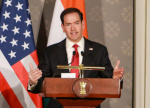
Rubio sees bigger US role in India’s energy
Washington: US Secretary of State Marco Rubio has said the United States wants to play a bigger role in meeting India's growing energy needs, backing New Delhi's strategy of diversifying...
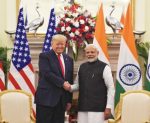
Rubio eyes Trump’s India visit next year
Washington: US Secretary of State Marco Rubio has said the Trump administration is working towards President Donald Trump's visit to India in the early part of next year, underscoring the...

Despite positive developments, India advises citizens to avoid non-essential travel to Iran
Tehran: India on Wednesday issued a revised advisory for its nationals, urging them to continue avoiding non-essential travel to Iran despite recent improvements in the security situation in the Gulf...
South Africa eyes stronger economic relations with India as US ties sour
New Delhi: South Africa is looking at strengthening economic ties with India amid the rough patch that Pretoria has hit in its relations with the US, according to an article...
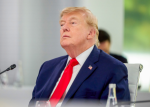
Trump unveils Iran deal, eyes wider Middle East pact
Evian (France): US President Donald Trump on Wednesday unveiled the details of a new agreement with Iran that, he said, would prevent Tehran from obtaining a nuclear weapon, reopen the...
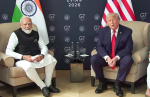

‘PM Modi, Trump meet at G7 Summit in France
Evian (France): Prime Minister Narendra Modi and US President Donald Trump met and exchanged greetings on the sidelines of a G7 Summit outreach session in France's Evian on Tuesday....

PM Modi finds Banaras connection in Bratislava, says ‘art, culture bring people closer’
Bratislava: Prime Minister Narendra Modi on Tuesday highlighted a unique cultural connection between India and Slovakia after witnessing an exhibition on Varanasi at the Presidential Palace in Bratislava, saying...
India, Slovakia elevate ties to comprehensive partnership: MEA
Bratislava: In a landmark diplomatic achievement, India and Slovakia have elevated their bilateral relationship to the status of a "Comprehensive Partnership," with the Ministry of External Affairs (MEA) asserting...


