




By Saeed Naqvi
Aug 30, 2020
New Delhi: The late R.K. Mishra, editor of Patriot, founder of Observer Research Foundation, used to tell a delicious story about Indira Gandhi whom he knew well. Once Dev Kant Baruah, Congress President during the Emergency, furtively handed Mishra a crumpled piece of paper with names of three Congress leaders scribbled on it. Barua led him onto the lawn for secrecy. Indira Gandhi suspected the three of being American moles.
She was keen that, after scouring the grapevine, Mishra share his appraisal with her. Just when Mishra was about to visit Baruah, his mouth full of news, the morning newspapers gave him a shock. On page 1 were photographs of the three named in that crumpled paper. They had been inducted into the Union Cabinet. Why had he been sent on a wild goose chase? The mist lifted after a call from Baruah.
What had happened was this. A parallel investigation, though inconclusive, had caused Indira Gandhi sufficient anxieties to take quick action. She slotted the three in her cabinet. Moral of the story: the best way to keep powerful political colleagues under surveillance is to bring them into the cabinet ‘system’.
During the Cold War, the East-West affiliations of Congressmen made a material difference. In the post Cold War messy capitalism, an eye has to be kept on the party smart-alecs and their links with corporate houses. Prior to this phase Left-Right, East-West were the salient terms of affiliation. Peter Hazelhurst, The Times of London correspondent, described Indira Gandhi herself as “slightly left of self-interest”. In his time, Nehru had been “sanctioned” a free hand in the foreign office, but even here the “jute press”, were tardy in their endorsement of friendship with Moscow.
Werner Adam, who retired as Foreign Editor of Frankfurter Allgemeine, after excellent stints in various western capitals, New Delhi and Moscow, was aghast at the absence of the Indian press in Moscow. Some of Adam’s many friends from his innings in New Delhi came in handy during his Moscow posting. Once he found himself interviewing the Indian Ambassador who, in the middle of the interview, received a call from Anatoly Dobrynin, former Soviet Ambassador in Washington during the Cuban missile crisis and possibly the most powerful official in the Soviet Foreign office. The brief exchange with Dobrynin, though guarded, was “chummy”. Adam’s point was that an Indian press contingent with its easy access would be the most well informed in the Soviet capital. The world media parked in Moscow would be eating out of Indian hands. But the “jute press” had their abiding preferences: they posted correspondents to London and Washington.
Days when Prime Ministers needed trusted friends to keep a steady gaze on East-West affiliations of colleagues are over. In such circumstances, what kind of information does the “interim” Congress President, Sonia Gandhi need from her confidant about, say, the 23 “rebellious” letter writers?
She may, for instance, like to refresh her memory with brief thumbnail sketches of the 23 so called rebels who shook the teacup? Her informants do not have to go far back into history — just October 2011 when the Niira Radia tapes erupted. A simple read of the tapes transcript will be revealing. Which “rebel” is looking for life after the Rajya Sabha?
A brief flashback: When Indira Gandhi split the Congress in 1969, the Cold War mentioned at the outset, was entering its fiercest phase. Détente was giving negative returns. Détente, according to Washington standup comedians, was like going to a wife swapping party and returning alone. The presence of ex-Communists like Mohan Kumaramangalam in the government, the Communist party’s external support to the Congress, was galling for the West as well as its supporters within. Further, the Soviet Union loomed larger than life during the 1971 Bangladesh operations. This warranted the appearance of the US 7th fleet in the Bay of Bengal. There was corresponding interplay within. Powerful Congress party bosses discarded by Indira Gandhi in 1969 linked up with Socialists, viscerally anti Communist, and the RSS — this was the amalgamation which became the Bihar or JP movement of 1974. It eventually led to the Emergency and the first non-Congress government in 1977.
The 70s and 80s were a period of intense East-West grappling. In India, it turns out the Communists remained relevant well beyond that time frame. It is unfashionable to say so, but 2004 to 2009 was the finest Sonia-Manmohan Singh spell in office. This is when they had the support of 61 Communist MPs who were instrumental in pushing through MGNREGA, Forest Rights Act, National Food Security Act, Right to Information Act. Somewhere, here is salvation for the troubled Congress. The sole superpower moment is over and Joe Biden and Bernie Sanders teams are together hammering out a document for social justice. Instead of bursting its guts to “revive”, the Congress must be prepared even to lose on a platform of equality and justice, keeping faith in the Biblical dictum that he who loses shall win.IANS
J&K L-G orders magisterial probe into Ganderbal encounter
Srinagar: Amid allegations by the family that the person killed in an encounter in J&K’s Ganderbal district on March 31 was an innocent civilian, Lt Governor Manoj Sinha on Friday...
US Defence Secretary ousts Army Chief amid Iran War turmoil
Washington: The Chief of Staff of the US Army, General Randy George, has stepped down and retired with immediate effect after being asked to do so by Secretary of Defence...
US intel finds Iran retains significant strike capacity: Report
Washington: Latest US intelligence assessments show that roughly half of Iran's missile launchers are still intact and thousands of one-way attack drones remain in Iran's arsenal more than one month...
Trump leaves key Iran war questions unanswered: US media
Washington: US President Donald Trump stated during a prime-time address that the conflict with Iran was "nearing completion", but left critical questions regarding strategy, escalation, and the endgame of the...
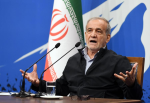
No enmity towards American people: Iran’s president in open letter to US
Tehran: Iran's President Masoud Pezeshkian said that Iranian people harbour no enmity towards the American people, accusing the US administration of fighting Iran as a "proxy for Israel." He made...
Buy from US or build courage, protect Hormuz yourselves: Trump tells oil-dependent nations
Washington: US President Donald Trump has said countries dependent on Middle East oil should take responsibility for securing the Strait of Hormuz, as he blamed Iran for disruptions and rising...
Will bring them back to Stone Age if no deal is reached: Trump warns Iran
Washington: President Donald Trump has warned Iran that US forces could “bring them back to the Stone Ages” within weeks if no deal is reached, declaring the country’s military “decimated”...

Trump says Iran seeks ceasefire, will consider when Hormuz Strait is open
Washington: US President Donald Trump Wednesday said Iran’s new leadership has sought a ceasefire with the United States, even as he signalled continued military pressure until key maritime conditions are...
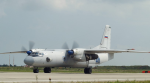
29 dead after Russian An-26 military transport plane crashes in Crimea
Moscow: Six crew members and 23 passengers were killed when a Russian An‑26 military transport plane crashed in Crimea, the Russian Ministry of Defence confirmed early Wednesday. The aircraft collided...
US says having ‘serious discussions’ with Iran, ignores China-Pak call for immediate cessation of hostilities
Washington: The White House said it was making “serious discussions” with Iran’s new leadership and was confident a deal could be reached soon, even as China and Pakistan called for...

US signals action to keep Hormuz open
Washington: US Defence Secretary Pete Hegseth on Tuesday said that Washington has already taken steps to “set the conditions” to keep the Strait of Hormuz operational, even as military operations...
Trump ‘interested’ in asking Arab countries to help pay for US-Israeli war with Iran: White House
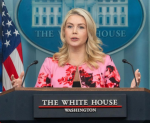
Washington: US President Donald Trump "would be quite interested" in calling on Arab countries to help pay for the costs related to the ongoing US-Israeli war against Iran, White House...


