



By Shivaji Sarkar
April 15, 2020
New Delhi:The world is in a lockdown. India is competing with others to force its people to stay home. Where it fails, the cops step in and become the bad boys. No nation, rich or poor, knows how to control it. It is almost a month. People, rulers, administration all want a way out. The Governments are concerned. They do have to open up. However, neither imposing lockdown was easy nor is the decision to withdraw it.
Despite all pessimism, India can remain assured that the lockdown is unnatural and nation would open up gradually, in phases from transport to tea gardens to farm goods sell, for sheer survival. Even highway dhabas, the largest consumers of potato have to open up to boost potato cultivators, says Ravindra Kumar Srivastava, one of the biggest potato growers in Kannauj, UP.
Panic can put one off for sometime but not all. Hope floats from the ending of the 76-day-lockdown of the worst corona-hit Wuhan in China. Others are also seeing the disease at a plateau or recovery rates increasing. But caution may be applied here as Indian Council for Medical Research (ICMR) points to possible community spread.
The latest Reserve Bank of India assessment are not rosy either for the globe or for the home front. There are reports that growth may succumb to 1.6 per cent predicting not an easy future. But goods and capital globalisation started sliding since 61 per cent in 2008 to 59 per cent in 2018 and is likely to slump further.
What may be positive for India is revival of domestic production a la late 1970s. It may boost local economy in the next two years. Similarly, many other manufacturing of goods now being imported from China have also to be made here – one reason the latest Chinese imports becoming expensive.
That is vital to create jobs. And this opening up reminds the world of its problems – joblessness, 17 million (1.7 crore) in the US to over 5 crore in India as migrant population is out of job and industrial workers remain in uncertainty.
The Centre for Monitoring Indian Economy (CMIE) says it has shot up from 8.7 per cent in early March to 23.8 per cent by month end. The International Labour Organisation (ILO) says India’s urban joblessness is at 31 per cent and rural 20 per cent – staggering 50 per cent. The salaried employees are a mere 10 per cent. They also are facing huge wage cuts.
It virtually may wipe out India’s seven decades record of poverty alleviation. The ILO says that 40 crore people are to slip deeper into poverty with a share of 90 per cent of people working in the informal sector. The delivery man, the loaders, vendors, couriers and small earners are all hit.
This remains an official concern. A new package of at least Rs 75000 crore is being mulled over for the informal sector, MSMEs and the most distressed. Factories too are supposed to open in phases with reduced workforce to maintain physical distancing to keep corona under check.
Even the IT sector has its problems. About one million in business process management (BPM) are in trouble. Most of them have been benched –euphemism for not having work. The National Association of Software and Service Companies (NASSCOM) has sought help for them. It wants that government pays 50 per cent wages for the benched workers as also bear their provident fund obligations. Not an easy order, for the government is suffering severe revenue crunch.
As hordes of migrants holding H1B visas are ordered to leave the US, the domestic market may see wage drop too. The rural markets have seen it partially during the past two weeks as rural workers return home from cities.
This is a big problem and may be a solution emerges in the next few years. As imports come down, substitutes have to be manufactured nationally. There may be return of the swadeshi. If it happens it could eventually be ‘Made in India’– much more than what Prime Minister Narendra Modi has been trying at ‘Make in India’.
Experts see the possibility in the post-COVID-19, revival of nationalism as opposed to three decades of globalisation. It may reflect first in tourism. The number of international tourists globally touched 1.4 billion in 2018, rising from 900 million in 2008. National governments may weigh risks of infectious/contagious diseases vis-a-vis free travel and put restrictions.
As more workers go back home internationally and nationally, the global finance model, in many cases dependent on remittances, is likely to have a sea change. Incentivisation at home, partially now being seen in India too, may check international or transnational capital flows. The international migrant population that increased to 243 million in 2018 from 190 million a decade back may see sizeable drop as big nations turn protectionist.
And they have good reasons to be. Their economy is at the worst, New York Governor Andrew Cuomo says that the corona crisis is worse than 9/11 World Trade Centre attack. Staggering unemployment figures and production losses in the US and Europe would see drop in labour demand, poor finance and structural problems. The lockdown may lead to many lock-outs. Protectionist trends are natural.
Re-nationalisation may be the global cry. India will have problems as Persons of Indian Origin (PIO) return as they did after 9/11 and the 2008 Lehman crises. It will also bring in opportunities such as India emerging as a global drug supplier in a new jacket– Gandhian swadeshi. It may not be rigid but strong enough to create a new India, if planned in right perspective.
The Indian transport sector is in difficult situation. As truckers are locked up, essential commodity supplies are drying up raising prices. Supplies have to smoothen to help the sagging economy. The highways have become a source of exploiting irrational tolls. In a flailing global market even as crude hovers around $30 a barrel or less (sharp drop from $69), to give boost to the sector, the cess and other duties on petroleum must be cut.
India also has to realise that 10-year old car junking is not a solution to fight supposed pollution. This is the time people cannot give up their hard earned lifetime purchases. Empathy in decisions is a must. India has to adopt pro-people, pro-society policies. — INFA
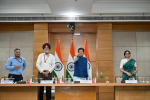
India’s 7.7 pc GDP growth driven by a decade of economic reforms: Piyush Goyal
New Delhi: Commerce Minister Piyush Goyal on Monday said India's 7.7 per cent GDP growth reflected sustained policy interventions and economic reforms undertaken by the government over the past decade,...
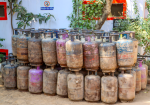
Domestic LPG prices raised by Rs 29 per cylinder; 2nd hike since West Asia conflict began
New Delhi: Domestic cooking gas prices have been increased by Rs 29 per cylinder, marking the second hike in three months as state-owned oil marketing companies continue to face pressure...

RBI hikes equity investment limits for NRIs, OCIs
Mumbai:The Reserve Bank of India (RBI) Governor Sanjay Malhotra on Friday announced that the limits for investment by NRIs and OCIs in equity instruments traded on the stock market without...
RBI pegs real GDP growth at 6.6 pc for FY27, inflation at 5.1 pc amid global disruptions
Mumbai:The Reserve Bank of India (RBI) on Friday projected real GDP growth for 2026-27 at 6.6 per cent -- with Q1 at 6.6 per cent; Q2 at 6.3 per cent;...
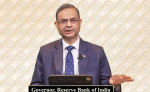
RBI keeps repo rate unchanged at 5.25 pc, maintains ‘Neutral’ stance
Mumbai:The Reserve Bank of India’s (RBI) Monetary Policy Committee (MPC) on Friday unanimously decided to keep the policy repo rate unchanged at 5.25 per cent, in line with the expectations...

India-US trade deal 99 pc finalised, remaining issues being resolved: Sergio Gor
Mumbai: The proposed India-US trade agreement is “99 per cent there”, with only a few remaining issues left to be resolved, US Ambassador to India Sergio Gor said on Wednesday,...
Commercial LPG prices hiked again; Delhi rate up by Rs 42, Kolkata sees Rs 53.50 increase
New Delhi: Commercial LPG prices have been increased once again, adding to the cost burden faced by restaurants, hotels, caterers and small businesses across the country that rely heavily on...

El Nino likely to add to existing inflationary pressures, buffer stocks well-positioned: Eco Review
New Delhi: If rainfall is deficient due to the development of El Nino in June, the transmission to food inflation, rural demand and aggregate growth could be swift, adding...

India, US ink pact on critical minerals to break China’s monopoly
New Delhi: India and the US on Tuesday signed a strategic agreement to deepen cooperation in critical minerals and rare earths which constitute key materials for making semiconductors, electric vehicles,...

NITI Aayog sets ball rolling for big push to services sector
New Delhi: The first meeting of NITI Aayog's high-powered ‘Education to Employment and Enterprise’ Standing Committee has decided to identify actionable recommendations to enhance employability, foster entrepreneurship, strengthen industry-relevant skilling,...

Karnataka govt hikes minimum wages by 60 per cent; over 1 crore workers to benefit
Bengaluru: The Chief Minister Siddaramaiah-led Karnataka government has issued a notification on Saturday increasing minimum wages for workers by an average of 60 per cent, a move expected to benefit...

No evidence of bribery, case outside US jurisdiction: Top biz leaders back closure of Adani case
Washington: Indian-American business leaders and policy voices on Friday welcomed the closure of the case against the Adani Group in the US, arguing that the matter was outside the...


