


Kinshasa: The number of confirmed Ebola cases in the Democratic Republic of the Congo (DRC) has risen to 452, including 82 deaths, according to the latest situation report released by the country’s health ministry.
According to the report, health authorities reported 71 new confirmed cases on June 4, including 21 deaths, in Ituri and North Kivu provinces, a sign of rapid and continuing community transmission amid the outbreak caused by the Bundibugyo strain of the virus.
A total of 258 patients are in isolation or hospital care, while eight people have recovered, reports Xinhua news agency.
Contact tracing remains a major gap, the report said, noting that of 4,766 contacts under follow-up across the three provinces, only 2,755 have been seen, representing an overall follow-up rate of 57.8 per cent.
The DRC health authorities listed the main challenges facing the response, including resistance to post-mortem swabbing, insufficient standardised Ebola treatment capacity, weak contact tracing, shortages of essential medicines, inadequate infection-prevention supplies in North Kivu, poor alert reporting and a 21.5-million-US-dollar funding gap.
Uganda has also confirmed three new Ebola cases, bringing the cumulative number of infections to 19, the Ugandan Ministry of Health said on Friday.
The Africa Centers for Disease Control and Prevention (CDC) and the World Health Organization (WHO) on Friday launched a continental Ebola outbreak preparedness and response plan, aiming to raise 518 million US dollars to support African countries in preparing for, rapidly detecting and responding to the outbreak for the period between June and November.
According to the Africa CDC and WHO, a total of 34 health workers have been infected with the Ebola virus so far, among whom seven died and six recovered.
Africa CDC and WHO have also highlighted major operational challenges, including a lack of available medical countermeasures to the Bundibugyo Ebola strain, weak health infrastructure, and pressure on health systems already battling multiple health emergencies, with resource constraints, high population mobility, insecurity and displacement, health worker infections, and misinformation and mistrust further compounding the situation.
To better coordinate efforts to contain the outbreak, the two institutions, during the press conference, launched a continental Ebola outbreak preparedness and response plan, aiming to raise 518 million U.S. dollars to support African countries to prepare for, rapidly detect and respond to the outbreak for the period between June and November.
WHO chief appeals against travel bans as Ebola cases surge in DRC, Uganda
Bunia: World Health Organization (WHO) Director-General Tedros Adhanom Ghebreyesus called on countries that have imposed travel bans or closed borders in response to the Ebola outbreak in the Democratic Republic...
Govt closely monitoring Ebola situation; no confirmed case in India
New Delhi: The Union Ministry of Health and Family Welfare has said it is closely monitoring the evolving situation of Ebola Virus Disease following recent outbreaks reported in parts of...
Over 900 suspected cases identified in Congo Ebola response: WHO chief
Geneva: World Health Organization (WHO) Director-General Tedros Adhanom Ghebreyesus said that as the Democratic Republic of the Congo (DRC) scales up surveillance in its Ebola response, more than 900...
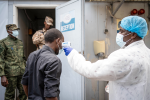
Ebola outbreak: India advises citizens to avoid non-essential travel to Congo, Uganda
New Delhi: The government on Sunday advised Indian citizens, currently residing in or travelling to Congo, Uganda and South Sudan, to strictly follow public health guidance issued by local authorities...
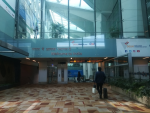
Delhi Airport issues public health advisory amid Ebola concerns
New Delhi: Indira Gandhi International Airport on Thursday issued a public health advisory for passengers arriving from or transiting through Ebola-affected countries, asking travellers showing symptoms of the disease to...
WHO declares Ebola outbreak in Congo, Uganda global public health emergency
Geneva: The World Health Organisation on Sunday determined that the Ebola outbreak in the Democratic Republic of the Congo and Uganda constitutes a "public health emergency of international concern." The...
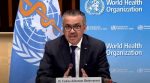
WHO says more hantavirus cases may emerge in coming weeks after cruise evacuation
Madrid: The World Health Organisation (WHO) Director-General Tedros Adhanom Ghebreyesus on Tuesday said additional hantavirus cases could still emerge in the coming weeks following the evacuation of passengers from the...
WHO calls everyone aboard hantavirus-hit ship ‘high-risk’ contacts
Geneva: The World Health Organization (WHO) said that all people aboard a cruise ship affected by a hantavirus outbreak should be considered "high-risk" contacts and actively monitored for 42 days....
Hantavirus outbreak not another COVID pandemic, public health risk remains low: WHO
New Delhi: The World Health Organization (WHO) on Saturday said the hantavirus outbreak is not another COVID pandemic, and the current public health risk remains low. WHO Director-General Dr...
Bihar Cabinet: Portfolios allocated in Samrat Choudhary govt; Nishant Kumar gets Health
Patna: A major political development unfolded in Bihar on Thursday as the NDA government led by Chief Minister Samrat Choudhary underwent a massive Cabinet expansion at Gandhi Maidan. In a...
WHO confirms 5 hantavirus cases, 12 countries informed
New Delhi: Amid the global alarm, the World Health Organization (WHO) on Thursday confirmed five hantavirus cases linked to cruise ship outbreak, while three additional cases remain suspected. Eight severe...

Why incidence of heart attack is rising in youth
Aligarh: Heart diseases in India are taking a pandemic form, with disturbing fact of people below 45 years, or even below forty years of age, farming a major chunk of...