




Washington: The United States has warned that outer space is rapidly emerging as a contested military domain, with China and Russia expanding capabilities that could threaten global security, satellite infrastructure and international stability.
Eminent lawmakers and experts, during a Congressional hearing, described a shifting strategic landscape in which competition is intensifying across military, commercial and diplomatic fronts.
“Space is now a congested and contested domain, one that the US Space Force characterises as a warfighting domain,” said Congressman Keith Self, chairing the House subcommittee hearing. He added that “the realities in outer space are very much different today than when they were 50 years ago.”
China emerged as the central concern throughout the hearing, with officials describing it as the most significant long-term challenger to US leadership in space.
“China is the most consequential threat and competitor in space,” said Kari Bingen, director of the Aerospace Security Project at the Center for Strategic and International Studies. She pointed to Beijing’s rapid buildup of satellites, launch capabilities and global partnerships.
Bingen said China is “using space as a tool of diplomacy and influence, expanding its partnerships across the global South,” warning that the long-term implications extend beyond technology to control over global standards and information networks.
Lawmakers also raised concerns about China’s activities in orbit, including what the US Space Force has characterised as aggressive manoeuvres.
“China… has engaged in aggressive manoeuvres in space from pushing defunct satellites out of orbit to close proximity operations that the US Space Force has characterised as dogfighting in orbit,” Self said.
Russia, meanwhile, remains a significant threat, particularly in the development of advanced anti-satellite weapons.
“For years, the Russians have been deploying a nuclear-capable anti-satellite weapon that, if employed, would have devastating impacts on satellite operations in low Earth orbit,” Self said.
Experts warned that such capabilities could disrupt not only military systems but also civilian infrastructure worldwide, including communications, navigation and financial networks.
The hearing underscored how modern warfare is increasingly dependent on space-based assets. Bingen noted that satellites now underpin military operations by providing “connectivity across dispersed forces, intelligence in denied areas, and are critical to missile warning, precision targeting, battle damage assessment and weather.”
“In Ukraine, we have seen how a militarily overmatched nation can use space-based assets to level the playing field,” she said, citing satellite communications and imagery as key tools in the conflict.
At the same time, the growing number of satellites and actors in space is complicating the strategic environment. More than 80 per cent of satellites are now commercial, and over 100 countries operate in space, intensifying global competition.
“This is a very timely opportunity to consider American space enterprise,” said Scott Pace, director of the Space Policy Institute at George Washington University. He described the emerging environment as a “heteropolar world order… where the United States and China hold dominant but asymmetric influence.”
Officials highlighted initiatives such as the Artemis Accords, which now include more than 60 countries, as part of a broader effort to maintain leadership through partnerships.
“We don’t lead in space alone, we lead by bringing others with us,” said Congressman Gabe Amo, pointing to growing international cooperation in exploration and governance.
Experts stressed that alliances are critical not only for technological collaboration but also for setting rules of behaviour in space.
“If the United States does not lead in shaping the rules of behaviour in outer space, others will,” said Mallory Stewart, chief executive of the Council on Strategic Risks.
She warned that without stronger norms and coordination, the risks of conflict and miscalculation would rise sharply. “As space becomes more congested and contested… the risks of miscalculation and conflict will grow,” Stewart said.
A key area of concern is the potential for an arms race in space, particularly involving anti-satellite weapons and cyber capabilities targeting critical systems.
“I think the arms race in outer space will continue unabated with no guardrails,” Stewart cautioned, warning of long-term damage to the space environment.
Lawmakers also highlighted the strategic competition playing out beyond orbit, particularly in developing countries where China is expanding its footprint through infrastructure and financing.
China is “rapidly expanding space partnerships in developing countries, investing in ground infrastructure to improve tracking, monitoring and launch capabilities,” Self noted.
Responding to questions, officials called for a more coordinated diplomatic and economic strategy to compete globally, including support for American commercial space companies and closer engagement with allies in regions such as the Indo-Pacific.
Pace emphasised the importance of deeper collaboration with partners, including India. The US should “include space security in annualised dialogues with priority allies, especially in the Indo-Pacific region, such as Japan, Australia, India and South Korea,” he said.
India’s growing space capabilities and its role in the Indo-Pacific security architecture make it a key partner in shaping future space governance and ensuring stability.
“It is difficult to distinguish between benign and aligned actions in space because so many space systems are dual use,” Self said, noting that technologies designed for repair or maintenance could also be used to disable satellites.
As competition intensifies, experts said the outcome will determine not just technological leadership but the future rules governing space.
“The winner will not just supply technology, it will set the terms by which information flows, networks interoperate, and how the world is seen,” Bingen said.
IANS
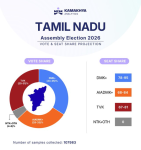
Kamakhya exit poll signals three-way battle in Tamil Nadu, no clear majority in sight
Chennai: The latest Kamakhya exit poll on Wednesday injected fresh uncertainty into Tamil Nadu's political landscape, predicting a tightly contested three-way battle among the DMK-led alliance, the AIADMK-led bloc, and...
BJP’s Pravesh Wahi elected Delhi Mayor with sweeping mandate
New Delhi: Pravesh Wahi, BJP councillor from Rohini E ward, was elected as the new Mayor of Delhi on Wednesday, securing a decisive victory with a landslide margin. The...

Bengal Phase 2 polling hit by violence, EVM tampering allegations; BJP slams Trinamool
Kolkata: Allegations of violence and claims of EVM tampering marked the second phase of the West Bengal Assembly elections on Wednesday, intensifying the political contest between the Bharatiya Janata Party...

Bengal polls: Central forces baton charge agitated Trinamool activists targeting Suvendu Adhikari
Kolkata: The central forces deployed at Bhabanipur Assembly constituency in South Kolkata, which is witnessing the electoral battle between West Bengal Chief Minister Mamata Banerjee and Suvendu Adhikari, the Leader...
Trump, King Charles emphasise US-UK alliance amid global strain at White House event
Washington: At a formal and ornate ceremony at the White House on Tuesday night, President Donald Trump and King Charles III underscored that the US-UK alliance remains central amid rising...
India condemns attacks on Hormuz Shipping at UNSC, calls for restoration of free navigation
United Nations: India has condemned the attacks on commercial shipping in the Strait of Hormuz, which is vital to its energy and economic security, and called for restoring free navigation....
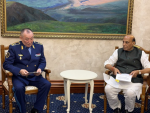
Rajnath Singh discusses defence cooperation with counterparts from Kyrgyzstan, Kazakhstan
Bishkek: Defence Minister Rajnath Singh held meetings with his counterparts from Kyrgyzstan and Kazakhstan on the sidelines of Shanghai Cooperation Organisation (SCO) Defence Ministers' Meeting in Bishkek on Tuesday. ...

Justice Swarana Kanta Sharma recuses from Karti Chidambaram plea in Diageo Scotland-linked CBI case
New Delhi: Justice Swarana Kanta Sharma of the Delhi High Court on Tuesday recused herself from hearing a plea filed by Congress MP Karti P. Chidambaram seeking quashing of a...

Gangster Dawood Ibrahim’s aide Salim Dola deported to India, will be handed over to NCB
New Delhi: In a significant breakthrough for Indian law enforcement and intelligence agencies, Salim Dola, a close aide of fugitive gangster Dawood Ibrahim and a key figure in an international...
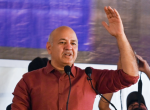
After Kejriwal, Manish Sisodia on ‘Satyagraha’ in Delhi liquor case
New Delhi : AAP leader and former Delhi Deputy Chief Minister Manish Sisodia has joined his party's national convener, ex-CM Arvind Kejriwal, in escalating their legal and political fight in...
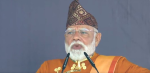
PM Modi launches Rs 4,000 crore projects in Sikkim, says Northeast is India’s ‘Ashtalakshmi’
Gangtok: Prime Minister Narendra Modi on Tuesday inaugurated and laid the foundation stones for multiple development projects worth around Rs 4,000 crore in Sikkim, asserting that the Northeast region is...

Gujarat local poll results: BJP takes early lead across civic, rural bodies
Gandhinagar :Early trends in the counting of votes for Gujarat’s local body elections on Tuesday showed the Bharatiya Janata Party (BJP) taking a decisive lead across urban and rural bodies,...


