




Washington: The United States and India announced a framework for an Interim Agreement on reciprocal, mutually beneficial trade, a step aimed at advancing talks toward a broader bilateral trade pact, as the White House formally announced to reduce the tariff on imports of Indian products from 25 per cent to 18 per cent.
According to a joint statement, the framework reaffirms both sides’ commitment to negotiations on a US-India Bilateral Trade Agreement. Those talks were launched by President Donald J. Trump and Prime Minister Narendra Modi on February 13, 2025. The interim deal is designed to deliver early results and support more resilient supply chains, officials said.
“The Interim Agreement between the United States and India will represent a historic milestone in our countries’ partnership, demonstrating a common commitment to reciprocal and balanced trade based on mutual interests and concrete outcomes,” the announcement said.
Earlier this week, Trump spoke with Prime Minister Narendra Modi and wrote on Truth Social that the two countries have agreed on a trade deal. He pointed to reciprocity, expanded market access, and efforts to address long-standing trade imbalances as core goals, while highlighting the broader strategic importance of economic ties with New Delhi.
Under the framework, India will eliminate or reduce tariffs on all US industrial goods and on a wide range of US food and agricultural products. These include dried distillers’ grains, red sorghum for animal feed, tree nuts, fresh and processed fruit, soybean oil, wine and spirits, and other products.
The United States will apply a reciprocal tariff rate of 18 per cent on originating goods of India under an executive order aimed at addressing large and persistent US goods trade deficits. The tariff will apply to products such as textiles and apparel, leather and footwear, plastic and rubber, organic chemicals, home décor, artisanal products, and certain machinery.
If the Interim Agreement is successfully concluded, the United States said it will remove the reciprocal tariff on a wide range of goods identified for aligned partners. These include generic pharmaceuticals, gems and diamonds, and aircraft parts.
The framework also removes US tariffs on certain aircraft and aircraft parts from India that were imposed under national security proclamations covering aluminum, steel, and copper imports. In a related move, and consistent with US national security requirements, India will receive a preferential tariff-rate quota for automotive parts subject to tariffs on automobile and auto parts imports.
India will also receive negotiated outcomes on generic pharmaceuticals and pharmaceutical ingredients. That provision is contingent on the findings of a US Section 232 investigation.
Both countries agreed to provide each other with preferential market access in sectors of interest and to establish rules of origin. These rules are intended to ensure that the benefits of the agreement accrue mainly to the United States and India.
As per the joint statement, the framework also addresses non-tariff barriers. India has agreed to address long-standing barriers affecting US medical devices. It will eliminate restrictive import licensing procedures that delay or limit access for US information and communication technology goods. India also agreed to determine within six months whether US-developed or international standards are acceptable for exports in identified sectors, and to address barriers affecting US food and agricultural products.
The two sides also outlined cooperation on standards, conformity assessment procedures, digital trade, and economic security. This includes work on supply chain resilience, investment reviews, and export controls. India said it intends to purchase $500 billion of US energy products, aircraft and aircraft parts, precious metals, technology products, and coking coal over the next five years. Both sides also plan to expand trade and cooperation in technology products used in data centers.
The United States and India said they will promptly implement the framework and work toward finalizing the Interim Agreement, to conclude a mutually beneficial Bilateral Trade Agreement consistent with the agreed roadmap.
IANS

Oil shock to drag growth, raise inflation: IMF
Washington: A global oil shock linked to the Middle East conflict is set to hit growth and stoke inflation across energy-importing economies, the International Monetary Fund (IMF) Managing Director Kristalina...
RBI holds repo rate at 5.25 pc, maintains neutral instance amid global uncertainty
New Delhi: The Reserve Bank of India (RBI) on Wednesday kept the repo rate unchanged at 5.25 per cent, and maintaining the status quo in its latest Monetary Policy Committee...

Oil falls after Trump signals Iran pause
Washington: Oil prices dropped sharply after US President Donald Trump said he would pause planned military strikes on Iran for two weeks, easing fears of a wider conflict in the...
Trump imposes 50 per cent tariffs on steel, aluminum, and copper
Washington: US President Donald Trump signed a sweeping proclamation imposing steep tariffs on imports of steel, aluminium and copper, tightening trade controls in the name of national security. The order...
Trump admin raises concerns over birth tourism in citizenship case
Washington: The US government flagged concerns over “birth tourism,” particularly from China, as it urged the Supreme Court to curb automatic citizenship for children born on American soil. Arguing for...
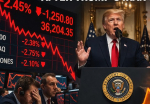
Stocks fall, oil prices jumps after Trump’s Iran speech
Washington: Global markets fell, and oil prices rose after US President Donald Trump signalled the Iran conflict would continue for weeks, raising concerns about supply disruptions and prolonged economic fallout,...

US moves to curb offshore call centres
Washington: The Federal Communications Commission has launched a sweeping proposal to push call centre jobs back to the United States, tighten customer service standards, and crack down on illegal robocalls...

Centre slashes excise duty on petrol and diesel by Rs 10 per litre each
New Delhi: The government on Friday slashed excise duties on petrol and diesel by Rs 10 per litre each, bringing them down to Rs 3 per litre for petrol and...
India’s growth to remain resilient at 7.1 pc in FY27 despite geopolitical tensions: S&P Global
New Delhi: India’s growth remains resilient at an estimated 7.1 per cent for FY27, even as geopolitical tensions in the Middle East pose challenges to the broader Asia-Pacific region, according...

Oil markets volatile amid conflict fears, diplomacy hopes
Washington: Oil markets swung sharply as investors weighed fears of a prolonged Middle East conflict against signs of possible diplomatic progress, with prices briefly topping $100 before retreating. Wall Street...
Delhi CM Rekha Gupta presents Rs 1,03,700 crore Budget for 2026-27
New Delhi: Chief Minister Rekha Gupta presented the annual budget for the 2026-27 financial year in the Delhi Assembly on Tuesday, proposing a total outlay of Rs 1,03,700 crore. This...

Gold and silver prices tumble over 4 pc as West Asia tensions ease
Mumbai: Gold and silver prices witnessed a sharp decline on Tuesday, even as hopes of de-escalation in the West Asia conflict weighed on safe-haven demand after the US President announced...


