




Chennai: In a major political development within the Pattali Makkal Katchi (PMK), the party’s Executive Committee and General Council on Monday unanimously passed a resolution removing Anbumani Ramadoss from the party’s leadership and restoring founder Dr S. Ramadoss as the supreme leader of the organisation.
The crucial meeting is being held in Salem under the leadership of Dr Ramadoss, amid growing internal differences within the party.
The gathering marked a turning point in PMK’s internal power structure, with the party formally acknowledging Dr Ramadoss as its undisputed leader and vesting him with full authority over organisational and electoral decisions.
Addressing party functionaries, Dr Ramadoss stated that the dual leadership structure — under which both he and his son Anbumani Ramadoss functioned simultaneously — had created confusion within the party. He asserted that a clear and unified leadership was necessary to strengthen the party and prepare it for upcoming political challenges.
The Executive and the General Council unanimously endorsed this view, passing a resolution to empower Dr Ramadoss to take all key decisions, including alliance formation and candidate selection for upcoming elections.
The meeting also witnessed a significant organisational shake-up. A resolution was passed removing Anbumani Ramadoss from the party, marking a decisive break in the long-standing internal rift.
In addition, Soumya Anbumani was removed from her position as the leader of the Green Homeland (Pachai Thayagam) wing of the party.
In her place, Dr Ramadoss’ elder daughter, Srikanti, was appointed as the new head of the environmental wing.
Party leaders stated that these decisions were taken to restore discipline, unity, and clarity of leadership within the PMK. They emphasised that the party would now move forward under the guidance of its founder, focusing on organisational strengthening and political strategy ahead of future elections.
The developments mark a significant turning point in the history of the PMK, signalling the consolidation of power around its founder and the end of internal dual leadership that had dominated party affairs in recent years.
IANS
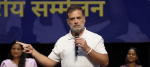
‘Hugging world leaders is not foreign policy’: Rahul Gandhi targets PM Modi
New Delhi: Congress leader Rahul Gandhi on Thursday mocked Prime Minister Narendra Modi's foreign policy, questioning what he described as an excessive focus on personal ties with world leaders. ...
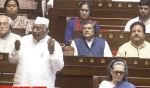
RS: Kharge flags ‘stage purification’ after Ramlila speech; Nadda assures probe
New Delhi: A heated exchange over an alleged “purification” of a Ramlila stage after Leader of Opposition Mallikarjun Kharge’s speech the other day in Haldwani (Uttarakhand) dominated the Rajya Sabha...

‘No space for Dalits in this country’: Kharge condemns ‘shuddhikaran havan’ in Haldwani
New Delhi: Congress President Mallikarjun Kharge on Thursday condemned the 'shuddhikaran havan' performed at Haldwani's Ramlila Maidan following his rally, alleging that the incident reflected discrimination against Dalits and efforts...

Lok Sabha adjourned sine die after Vande Mataram recitation
New Delhi: The Lok Sabha, on its last working day of the Monsoon Session, was adjourned sine die on Thursday. The adjournment followed the recitation of Vande Mataram in the...
Tamil Thaai Vazhthu to be sung first at all official events in Tamil Nadu
Chennai: The Tamil Nadu government has directed that Tamil Thaai Vazhthu, the official State song, must be rendered first at all government, public and educational functions across the State. A...
Messi deal: Pinarayi Vijayan’s ‘hands-off’ claim faces fresh test
Thiruvananthapuram: Former Chief Minister, Pinarayi Vijayan’s, claim of having little knowledge of the controversial Messi deal is facing fresh questions after official records revealed that his government had actively intervened...
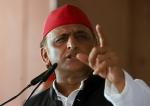
Akhilesh Yadav alleges FCRA Bill aimed at targeting minorities; Opposition demands withdrawal
New Delhi: Samajwadi Party chief and MP, Akhilesh Yadav, on Wednesday alleged that the proposed amendments to the Foreign Contribution Regulation Act (FCRA) were aimed at targeting minorities and accused...
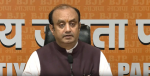
Don’t panic, don’t run away; listen to HM Shah’s reply: BJP sharpens attack on Rahul Gandhi
New Delhi: Amid the ongoing Parliament stand-off, the Bharatiya Janata Party (BJP) on Tuesday launched a scathing critique of Rahul Gandhi and the Congress party, accusing them of holding the...
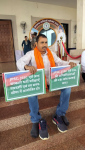
Huge uproar in Jharkhand Assembly over JPSC-JSSC recruitment row, NDA demands CBI probe
Ranchi: The issue of alleged irregularities in recruitment examinations conducted by the Jharkhand Public Service Commission (JPSC) and the Jharkhand Staff Selection Commission (JSSC) dominated proceedings inside and outside the...
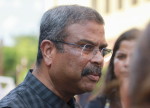
Congress’ democracy is selective: Dharmendra Pradhan on police action against Jharkhand students
New Delhi: Former Union Education Minister and Sambalpur MP Dharmendra Pradhan on Tuesday launched a sharp attack on Congress, alleging that the party’s commitment to democracy is 'selective'. He...
NDA, Oppn face off at Makar Dwar over Jharkhand students’ protests, Parliament disruption issue
New Delhi: The NDA and Opposition MPs came face to face on Tuesday as both sides staged separate protests outside Makar Dwar of Parliament over various issues, ranging from Opposition's...
Congress writes to LS Speaker, seeks HM Shah’s statement over police action on NEET protesters
New Delhi: Congress MP K.C. Venugopal wrote to the Lok Sabha Speaker Om Birla on Monday, urging him to "direct" the Union Home Minister Amit Shah for making a statement...


