



 by Nilova Roy Chaudhury
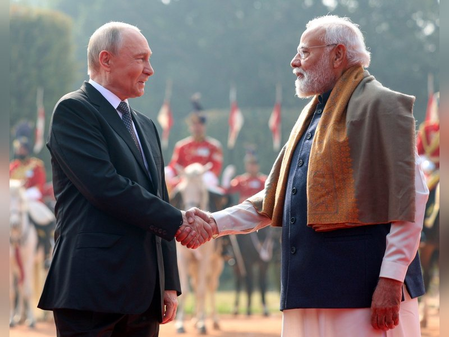
New Delhi: The optics during the visit of Russian President Vladimir Putin to India on December 4 & 5 were picture perfect, from Prime Minister Narendra Modi being present at the airport to personally receive, and hug, the visiting dignitary, to riding with him to his residence for a private dinner. The other, usual, paraphernalia of a state visit were also there, including the formal reception at the forecourt of Rashtrapati Bhavan, the day-long meeting of the principals and their delegations and, of course, Indian President Draupadi Murmu’s state banquet for the Russian president.
Putin’s visit, which was the cynosure of many eyes across world capitals, marked the 25th anniversary of the Declaration on Strategic Partnership between India and Russia, established during his first state visit to India in October 2000, had critical symbolic and strategic relevance for both countries, although the outcomes did not quite live up to the optics.
For Russia, the 23rd annual India Russia summit indicated a more strategic pivot towards Asia while showing that it has friends despite western sanctions and efforts at international isolation. For India, the visit highlighted its policy of strategic autonomy, while affirming that it would conduct its foreign policy based on its national interests and not the dictates of others.
Exchanges between leaders of India and Russia are usually staid, somewhat stodgy affairs in which everything goes by the script and the principals profess themselves to be in a “special” relationship before returning to their more pressing concerns. After the initial expectation of Putin possibly outlining what his ‘red lines’ would be to reach a settlement to end the hostilities in Ukraine and the bonhomie between the principals, the joint statement issued at the end of the visit returned to the old phraseology, testifying the India-Russia relationship “as a time-tested, progressive partnership that is anchored in trust and mutual respect. It reflects the very special nature of our ties, and provides a comprehensive framework for further deepening our multifaceted bilateral partnership,” Foreign Secretary Vikram Misri said.
“Economic cooperation,” he said, was “the driving impulse and the most important focus of this particular visit; expanding bilateral trade and strengthening economic cooperation requires swiftly addressing non-tariff barriers and regulatory impediments. Enhancing Indian exports to Russia in sectors such as pharmaceuticals, agriculture, marine products, and textiles is important to correct the trade imbalance,” Misri explained.
Russia and India did sign 16 strategic and economic agreements, ranging from health to maritime cooperation, fertilizer to customs, academic to media collaboration. The new economic cooperation programme, covering trade and investment, will continue through to 2030 and form the foundation for an FTA with the Eurasian Economic Union. As part of the agreement, Russia promised to supply India with fuel continuously for an indefinite period. Both countries agreed to deepen their energy and critical minerals relationship by developing small modular reactors and floating nuclear power plants, and by establishing shipping routes through the Arctic.
Putin, on his first visit to India since he launched hostilities against Ukraine in February 2022 and coming right after holding talks with US interlocutors about a possible peace agreement with Kyiv, said in an interview to ‘India Today’ that he would not like to make public the nature of his discussions for arriving at a peace settlement, but explained that he had gone into Ukraine to protect Russian interests and he had no interest in reviving the Soviet Union “empire”. Modi reiterated that India only sought peace.
While the visit provided an opportunity for Putin to review the progress of the India – Russia relationship with Modi, and chart the course to navigate and bolster the bilateral ‘Special and Privileged Strategic Partnership,’ the conversation about Ukraine, and the outcomes in the energy and defence sectors which were closely monitored in major world capitals.
In an unusual and even undiplomatic public comment days before Putin’s visit, three European envoys to India, wrote about it in a joint op-ed piece for the Times of India newspaper. Britain’s High Commissioner Lindy Cameron, French Ambassador Thierry Mathou and German Ambassador Philipp Ackermann accused Russia of escalating the Ukraine war even while peace talks were underway and said Putin could, if he wanted, immediately end the war. Russian Ambassador Denis Alipov countered their comments with a detailed defence of the Russian position on Ukraine.
That such comments appeared in a newspaper with close links with the government was a clear indication that New Delhi, which also has close ties with the European countries, was being neutral in its approach and was keen to enhance its global stature by being involved in trying to facilitate a peace settlement on Ukraine.
While not earth-shaking, the visit reiterated the crucial nature of the India – Russia relationship, which will continue to add ballast incrementally, bilaterally and at multiple forums where both countries feature prominently, like the BRICS and SCO.
INDIA NEWS STREAM
Entry of Nitish Kumar’s son Nishant in politics finalised, will be given bigger responsibility: JD(U) Minister
New Delhi: Bihar Chief Minister Nitish Kumar’s son, Nishant Kumar, is set to enter active politics, with the formal announcement expected soon, senior JD(U) leader and state minister Shrawan Kumar...

No boots, no nukes in Iran: Hegseth
Washington: U.S. Secretary of War Pete Hegseth on Monday said Operation Epic Fury will not be a short campaign, ruled out American ground troops for now, and reiterated that Iran...
Khamenei was fiercely self-respecting leader, stood firm against global superpowers: Shiv Sena(UBT) in Saamana
Mumbai:The Shiv Sena Uddhav Balasaheb Thackeray (UBT) on Monday stated that a true leader does not "surrender"; instead, they stand firm during times of war, in reference to the death...
US split over Iran strike, killing of Ayatollah Khamenei
Washington: The United States' political establishment was sharply divided on Sunday over President Donald Trump's decision to strike Iran and the reported killing of its Supreme Leader, Ayatollah Ali...
Haley backs US-Israel strikes, Mamdani warns of war
Washington: Indian American leaders sharply diverged after US and Israeli military strikes on Iran, with former US ambassador to the United Nations Nikki Haley calling it a “history-defining moment” and...
Khamenei erased from pages of history: Reza Pahlavi
Washington: Reza Pahlavi, the exiled son of Iran’s last Shah, declared that his country’s Supreme Leader Ali Khamenei "has been erased from the pages of history", asserting that the...
US Secretary of War Hegseth vows to ‘finish’ conflict with Iran
Washington: US Secretary of War Pete Hegseth declared that the United States has launched “OPERATION EPIC FURY”, calling it “the most lethal, most complex, and most-precision aerial operation in history”...
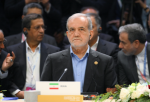
Will respond to ‘aggressors’ with authority and strength: Iran after Israel-US strikes
Tehran: Iran on Saturday declared that it would respond to the United States and Israel with “authority and strength,” asserting its right to defend itself against what it described as...
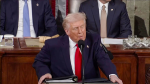
US backs Pakistan as border fighting with Taliban escalates
Washington: The United States (US) has backed Pakistan’s right to defend itself against Taliban attacks, even as border fighting escalated between Islamabad and the Afghan Taliban, with President Donald Trump...
India, EU agree to grant each other MFN status for 5 years under trade deal
Mumbai: India and the European Union have agreed to give each other Most-Favoured-Nation (MFN) treatment for five years after their proposed free trade agreement (FTA) comes into force. The move...
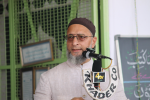
Owaisi questions PM Modi over Israel visit
Hyderabad: AIMIM president Asaduddin Owaisi on Friday alleged that Prime Minister Narendra Modi’s ‘love’ for Israel is based on ideology. The Hyderabad MP claimed that the ideology of both Zionists...
UN chief voices concern over Afghanistan-Pakistan clashes, urges resolution through dialogue
Kabul: UN Secretary-General Antonio Guterres has warned that escalating clashes between Pakistan and Afghanistan risk regional instability and urged two nations to hold dialogue and protect civilians, local media reported...


