



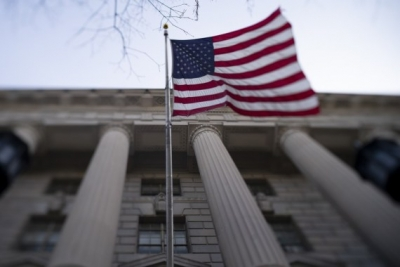
Washington: The 2026 US defence bill intensifies Washington’s pushback against China, tightening restrictions on Chinese military-linked companies and expanding political, economic, and military support for Taiwan.
Congressional leaders on Sunday released the compromise National Defence Authorisation Act (NDAA), which frames Beijing as America’s primary strategic challenge across military, industrial, diplomatic, and global economic domains. The bill moves to the House floor later this week.
A major section of the NDAA strengthens prohibitions against “Chinese military companies in third-party countries,” expanding the legal definition of entities tied “directly or indirectly” to the People’s Liberation Army, Chinese security forces, the Ministry of State Security, the People’s Armed Police, and organizations subordinate to the Central Military Commission. These restrictions apply to such companies whether operating “inside or outside of China,” reflecting congressional concern that Beijing increasingly uses foreign subsidiaries and joint ventures to evade US controls and gain access to sensitive technologies.
Taiwan receives some of the most robust support in years.
The NDAA creates the Taiwan Non-Discrimination Act of 2025, directing the United States to “vigorously support” Taiwan’s admission to the International Monetary Fund should Taipei seek membership.
The bill underscores Taiwan’s economic strength as the world’s 21st-largest economy and asserts that US law should not be interpreted to support Taiwan’s exclusion from international organizations.
The legislation also requires Washington to support Taiwan’s participation in IMF surveillance activities and to ensure employment opportunities for Taiwanese nationals at the Fund, challenging decades of Chinese pressure to limit Taiwan’s presence in global financial institutions.
On the security front, the NDAA expands the Taiwan Security Cooperation Initiative, adding support for medical contingency care, combat casualty capabilities, and other defence-related equipment. For fiscal year 2026, Congress authorizes up to $1 billion specifically for Taiwan’s security needs. In addition, the bill directs the Pentagon to launch a joint program with Taiwan “to enable the fielding of uncrewed systems and counter-uncrewed systems capabilities,” including co-development of new platforms suited for asymmetric defence.
These provisions signal the US intent to harden Taiwan’s ability to deter or withstand a potential PLA offensive through dispersed, resilient, high-volume capabilities, which are seen as central to a modern island-defence strategy.
The NDAA’s Indo-Pacific posture sections reaffirm Congress’s view of China as the central strategic competitor. The bill directs the Pentagon to develop a detailed five-year strategy to strengthen multilateral defence across the region, expand joint exercises, and increase combined maritime operations “through the Taiwan Strait and in the South China Sea.” Congress also extends the Pacific Deterrence Initiative, sustaining investments in forward posture, integrated air defences, prepositioned munitions, and logistics networks designed to counter PLA power projection.
Industrial competition with China is another major pillar. The NDAA establishes the Partnership for Indo-Pacific Industrial Resilience, empowering the Pentagon to build a hardened defence industrial network, coordinate with allied industry, mitigate supply-chain vulnerabilities, expand production capacity, and accelerate development of advanced systems. These steps address concerns about China’s dominance in critical materials, manufacturing infrastructure, and defence-relevant technologies.
Diplomatically, the bill creates a new Ambassador-at-Large for the Indian Ocean Region, tasked with identifying US strategic priorities and directly countering “malign People’s Republic of China influence activities in the Indian Ocean region.” Congress views the Indian Ocean as a rising area of Chinese naval and political activity, including dual-use port development and expanded PLA Navy logistics.
Other provisions address maritime awareness, cyber cooperation in Southeast Asia, restrictions on PRC-linked entertainment partnerships, and reporting requirements for Chinese influence operations worldwide.
Taken together, the NDAA 2026 marks one of Washington’s most comprehensive legislative efforts to confront China’s expanding reach and reinforce Taiwan’s political, economic, and military resilience. As US–China competition deepens across the Taiwan Strait, the South China Sea, and the Indian Ocean, the bill lays out a blueprint for long-term strategic pressure on Beijing and sustained support for Taipei across every major domain.
IANS

Whatever happening is immoral, unethical, says Saugata Roy amid growing crisis in Trinamool
Kolkata: Amid the growing rift in the Trinamool Congress, party MP Saugata Roy on Friday said that some of his fellow lawmakers are claiming they did not sign any document,...
AI race with China takes centre stage in US Senate hearing
Washington: US lawmakers from both parties warned that America risks losing its technological edge to China unless it strengthens safeguards around artificial intelligence, as a Senate hearing highlighted growing concerns...
Trump signals political shift in Iran
Washington: US President Donald Trump suggested that recent US military action had reshaped Iran's leadership structure, saying a new group of leaders had emerged in Tehran and was proving more...
Gulf war hitting South Asia through oil shock: World Bank
Washington: The conflict in the Middle East is emerging as a major economic threat to South Asia through rising oil, gas and fertiliser prices, with the World Bank warning that...

Won’t beg anyone to join our statehood movement: Dr Farooq Abdullah
Srinagar: National Conference (NC) President and former J&K Chief Minister Dr Farooq Abdullah said on Thursday that his party won’t beg anyone to join its protest in New Delhi for...
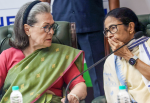
‘No political, alliance-related talks’: Cong says Sonia-Mamata meeting was cordial, personal
New Delhi: Senior Congress leader Sonia Gandhi and Trinamool Congress chief Mamata Banerjee have strongly refuted media speculation surrounding their recent private meeting, describing some news reports as inaccurate and...
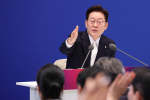
South Korea: Lee says Iran war makes North Korea less likely to give up nukes
Seoul: The US-Iran war has made North Korea even less likely to give up its nuclear weapons program, South Korean President Lee Jae Myung said in an interview published on...

‘Political and personal reasons’ : Sushmita Dev on quitting Trinamool and Rajya Sabha
New Delhi: Sushmita Dev, who announced her resignation from the Trinamool Congress as well as from the Rajya Sabha on Wednesday, cited "political and personal" reasons for her decision, while...

A century and a half on, the Ishavasya Upanishad returns to Oxford, this time in Acharya Prashant’s voice
Oxford (UK): In 1879, Professor Max Muller carried the Ishavasya Upanishad to the West, publishing its first English translation through Oxford University Press as the opening volume of the ‘Sacred...
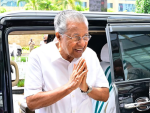
Pinarayi Vijayan accuses UDF govt of enabling ‘RSS push in MG University
Thiruvananthapuram: Former Chief Minister and CPI(M) leader Pinarayi Vijayan on Tuesday accused the Congress-led UDF government of facilitating attempts to “saffronise” Mahatma Gandhi University (MGU) in Kottayam, alleging the involvement...

Praful Patel, Tatkare regain clout in NCP amid leadership tussle
Mumbai: The nomination of Rajendra Jain to the Rajya Sabha and Aniket Tatkare’s election to the state council have enabled Praful Patel and Sunil Tatkare to reassert their authority within...
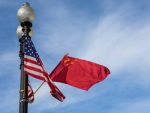
Chinese patents face US crackdown bill
Washington: A group of senior House lawmakers has introduced legislation aimed at preventing Chinese entities identified as national security threats from obtaining US patents, arguing that Beijing has used America's...


