



Gyirong: A total of 261 foreign nationals from 23 countries have been identified as unaccounted for after a mudslide struck Gyirong Port on the Tibet-Nepal border in Xizang on August 26, local authorities said on Sunday.
Officials said that 49 Indians are among the 261 missing foreigners.
The figure was announced at a press conference held by the information office of the regional government, following a joint search and cross-checking of information by foreign affairs, public security, culture and tourism, and emergency management authorities.
Those unaccounted for include 104 people from Nepal, 49 from India, 33 from Latvia, 18 from the United States, 15 from Britain, six from Canada, six from Australia, four from South Africa, three from Malaysia, three from Germany, three from Russia, two from Ireland, two from Estonia, two from France, two from the Netherlands, two from New Zealand, and one each from Kazakhstan, Finland, Lithuania, Portugal, Ukraine, Spain and Hungary.
Chinese authorities have notified the countries’ embassies and consulates in China, according to the press conference, reports Xinhua news agency.
Following multiple rounds of searches, site inspections and checks of individuals at the port, no foreign tourists are currently stranded in Gyirong County, the authorities said.
Meanwhile, in Nepal, 675 bodies have been recovered from affected areas, with 2,498 people still missing, the country’s National Disaster Risk Reduction and Management Authority confirmed.
According to Nepal’s Department of Tourism under the Ministry of Culture, Tourism and Civil Aviation, a total of 753 tourists had lost contact as of 17:30 local time on Saturday, including 589 foreign nationals.
Kathmandu District Administrative Office issued an urgent notice on Saturday, calling on various associations, institutions, enterprises and individuals in Kathmandu to donate relief supplies to assist the victims in Rasuwa, Nuwakot and Dhading districts.
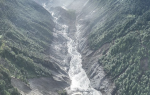
The floods, triggered by a sudden surge in the Bhote Koshi River, caused widespread loss of life and extensive damage to hydropower projects, roads, bridges and other infrastructure in the affected areas.
IANS
Nepal issues fresh flood warning as Bhote Koshi water level rises
Kathmandu: Nepal's National Disaster Risk Reduction and Management Authority (NDRRMA) has issued a fresh flood warning, saying the flood level in the Bhote Koshi River in Rasuwa has risen further....

US controls Hormuz: White House
Washington: The White House has declared that the United States controls the Strait of Hormuz, claiming American forces have cleared Iranian mines, protected nearly 1,500 commercial vessels and prevented Tehran...

US judge again rejects Trump’s bid to overturn hush money conviction
Washington: A federal judge has once again rejected US President Donald Trump's attempt to move his hush money case from New York state court to federal court, dealing another setback...

IGL hikes CNG prices by Rs 3.89/kg in Delhi-NCR as LNG costs surge
New Delhi: Indraprastha Gas Limited (IGL) has increased compressed natural gas (CNG) prices by Rs 3.89 per kg across Delhi-NCR, citing a sharp rise in the cost of imported liquefied...
Nepal authorities issue fresh flood alert as debris-laden water flow rises in Bhote Koshi
Kathmandu: Nepali authorities on Friday issued a fresh warning about the risk of another flood, stating that they had received a report of a lake outburst in the Tibetan region...
579 confirmed dead, 1924 still missing as Nepal waives trekking fee for Kailash Mansarovar pilgrims returnees
Kathmandu: Nepal has waived the trekking fee for foreign nationals returning from the Kailash Mansarovar pilgrimage through the western Hilsa border point in Humla district for one week, amid disruptions...

Mamdani’s RSS criticism has truth: Pitroda
New York: Senior Congress leader Sam Pitroda has backed New York City Mayor Zohran Mamdani’s criticism of the Rashtriya Swayamsevak Sangh (RSS), saying his remarks contain “some truth” and reflect...
300 Indians missing after flash floods, confirms Nepal Foreign Minister
Kathmandu: Nepal Foreign Minister Shisir Khanal has confirmed that at least 300 Indian nationals, most of them pilgrims travelling to the Kailash Mansarovar Yatra, have been reported missing following the...
Nepal flood death toll reaches 270, more than 800 still out of contact
Kathmandu: The death toll from Wednesday's tragic Bhote Koshi floods has reached 270, with bodies still being recovered from several downstream districts, Nepal Police confirmed on Thursday afternoon. The...

Trump says Iran war may end ‘fairly soon’, believes Mojtaba Khamenei alive but ‘seriously wounded’
Washington: US President Donald Trump has said the war with Iran could end “fairly soon”, while asserting that Iranian Supreme Leader Ayatollah Mojtaba Khamenei was seriously wounded but remained alive....
Nepal flood leaves 95 dead, dozens of security personnel and tourists still missing
Kathmandu: The death toll from a massive flash flood in Nepal’s Bhote Koshi River reached 95 by Wednesday evening, as the country witnessed widespread loss of life and damage to...

Nepal flash floods: Over 100 Indians among 384 tourists missing in affected areas
Kathmandu: More than 100 Indians are among 384 tourists reported missing in Nepal after flash floods in the Bhote Koshi River hit the Rasuwa region on Wednesday morning, according to...