




Patna: A devastating flash flood in Nepal’s Rasuwa district has raised concerns in Bihar because of the interconnected river system linking the two regions. The floodwaters entered the Bhote Koshi River from the Tibet region before flowing into the Trishuli River and eventually the Narayani, which is known as the Gandak after entering India.
The Nepal flood occurred around 9 a.m. on Wednesday, causing extensive damage in areas including Timure, Syaphrubesi and Rasuwagadhi. Roads, bridges and other infrastructure were washed away, while a large number of people were reported missing.
Nepali authorities said the sudden surge originated in Tibet, with preliminary assessments suggesting that an obstruction caused by glacial debris may have given way suddenly.
According to an official, the river route can be broadly traced as the Tibet, Bhote Koshi, Trishuli, Narayani, Gandak, and Ganga Rivers.
“The development has prompted increased monitoring of the Gandak River in Bihar. However, the occurrence of flooding in Nepal does not automatically mean that Bihar will face immediate flooding. The impact will depend on the volume of water moving downstream, rainfall, contributions from other rivers and the manner in which barrages regulate the flow,” an official said.
The Gandak enters Bihar through Valmikinagar in West Champaran, making the Valmikinagar Barrage particularly important in regulating the river’s flow.
The official further said that the districts requiring close monitoring include West Champaran, as the areas around Valmikinagar and the Gandak basin could face increased pressure if water levels rise.
In East Champaran, low-lying and riverside areas may face greater risks of flooding and erosion.
The Gopalganj district, which is adjoining the West and East Champaran, could face a flood threat due to a sudden increase in Gandak water discharge.
The low-lying areas connected to the Gandak system require monitoring in the Siwan district, as it is adjoining the Gopalganj district.
The official further highlighted that the western parts of the Muzaffarpur district could experience increased waterlogging or erosion if the river rises substantially.
The Gandak River passes through the Saran district before reaching the Ganga, making monitoring around Chhapra important.
The Gandak ultimately joins the Ganga near the Sonepur-Hajipur region in Saran and Vaishali districts, respectively, placing riverside areas under watch.
“As the flood wave moves through the river system, its intensity may change because of distance, river capacity, additional inflows and other hydrological factors,” he said.
“The Valmikinagar Gandak Barrage, therefore, remains a critical point for monitoring and regulating the flow entering Bihar. For now, it would be premature to describe the Nepal flash flood as an immediate flood threat to Bihar,” he further said.
However, given the direct river connection, authorities are maintaining heightened vigilance, particularly along the Gandak’s banks and in vulnerable low-lying areas.
IANS

Student found hanging in NIMS University Hostel in Jaipur; second fatality in two days
Jaipur: A 20-year-old student was found hanging inside a hostel room at NIMS University near Jaipur, Rajasthan, police said on Thursday. The incident came to light after fellow students noticed...
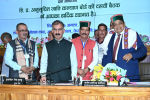
Himachal removes caste column from school admission forms
Shimla: Himachal Pradesh Chief Minister Sukhvinder Sukhu on Wednesday directed that the caste column be removed from admission forms in schools from the next session. Chairing the meeting of...

Mother, five minor children found dead in Bhootanala Lake in Karnataka’s Vijayapura
Vijaypura (Karnataka): A mother and her five children were found dead in Bhootanala Lake on the outskirts of Vijayapura city in north Karnataka on Wednesday, in a suspected case of...

Karnataka CM does not rule out Minister Nagendra’s resignation, says all leaders are disciplined soldiers of party
Bengaluru: Karnataka Chief Minister, D.K. Shivakumar, on Wednesday did not rule out the possibility of Minister for Planning and Statistics B. Nagendra’s resignation amid mounting pressure on his government over...
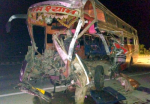
Six killed as bus rams into truck in Telangana
Hyderabad: Six people, including five women, were killed and 20 others injured after a private bus rammed into a container truck in Telangana's Suryapet district in the early hours of...

Bihar: Patna student protest turns violent, DSP injured
Patna:A student protest in Patna over demands including a single‑stage BPSC TRE‑4 examination and removal of negative marking turned tense on Tuesday, with police using water cannons and a lathi‑charge...

DoE issues advisory to Delhi schools over swine flu spike; Minister Sood says no need to panic
New Delhi: The Directorate of Education (DoE) on Tuesday issued an advisory to all government, government-aided, and private unaided recognised schools, urging them to reinforce health awareness and respiratory hygiene...
Noida schools on alert amid spike in swine flu, dengue cases; parents advised to keep sick children home
Noida: In view of the reported increase in cases of swine flu and dengue in Uttar Pradesh's Gautam Buddha Nagar, several schools across the district have stepped up precautionary measures...
CRPF jawan injured in gunfight, houses torched in Manipur’s Senapati
Imphal: A CRPF jawan was injured in a gunfight between two groups and at least two houses were torched in Manipur's Senapati district on Monday, triggering protests and a blockade...

Haryana woman kills husband, cuts open abdomen; puts intestines in bag
Kurukshetra: In a gruesome incident in Haryana's Kurukshetra, a woman allegedly killed her husband and severely mutilated his body before jumping from the terrace of their rented home after being...

Freeze on Abhishek Banerjee’s account lifted; Calcutta HC has word of advice for bank
Kolkata: The bank, which had imposed debit restrictions on the personal bank account of Trinamool Congress general secretary and Diamond Harbour Lok Sabha member Abhishek Banerjee, informed the Calcutta High...
Vijay govt scraps Parandur airport project, to identify alternative site
Chennai: Tamil Nadu Chief Minister C. Joseph Vijay on Monday announced that the state government would abandon the proposed greenfield airport project at Parandur and identify an alternative site that...


