




Tehran: In an irony of sorts, Iran has reiterated an offer to mediate between Pakistan and Afghanistan to sit across the negotiating table and resolve the neighbours’ ongoing border clashes and occasional raids into each other’s territory.
Irony, because earlier Pakistan offered to help reconcile Iran and the United States; that effort began with considerable ambition, but the effective efforts later came from Qatar. The Islamabad Memorandum of Understanding, a provisional arrangement intended to end the war, served as an impressive diplomatic menu that failed to meet the diners’ taste.
Meanwhile, Pakistan itself has been slipping further into domestic chaos, its global ambitions marred by internal pressures. Economic distress, political dysfunction, military might dictating political and diplomatic processes, and running feuds with neighbours have all led to the slide.
For a long time, Islamabad has actively been trying to keep Washington happy, including its foray into recent peacemaking even as a war with Afghanistan was raging in its backyard. Similarly, it allied with the United States in launching a not‑so‑covert war in Afghanistan against Soviet invasion in the 1980s, which its own defence minister has since criticised.
Earlier, it joined the Washington‑led Baghdad Pact in the 1950s, which was intended to keep then-Soviet Russia from expanding. Later, Pakistan’s President Ayub Khan had claimed that Islamabad was losing faith in the pact due to its inability to help allies. The statement came after Pakistan’s Civil War within and its defeat by India in successive battles.
Islamabad has also tried to help the United States and China in diplomatic rapprochement. Through this, it is maintaining an “all-weather” relationship with Beijing even while pushing closer relations with the Islamic world.
This time, in its effort at mediation between Washington and Tehran, Pakistan’s army chief Asim Munir initially hogged the limelight, visiting Tehran at least twice, getting kind words from US President Donald Trump. Then the centre of diplomatic gravity visibly shifted toward Qatar. Doha dispatched negotiators to Tehran, hosted senior Iranian figures and maintained close coordination with US officials.
It possessed several advantages, including established channels with both capitals, deep experience mediating between adversaries, and the financial and political stamina required to keep discussions alive after everyone else had declared them impossible.
However, Washington said Tehran’s conduct made the arrangement unsustainable, while Iran maintained that it had honored its commitments and was entitled to respond to US attacks. Pakistan’s real failure was an inability to convert its access into durable leverage. Neither Iran nor the US depended enough on Islamabad for it to impose restraint. While Pakistan could carry messages, Qatar was better positioned to negotiate.
Islamabad consequently stepped back, maintaining diplomatic discretion. There was no official withdrawal, nor announcement that mediation had been paused.
Now comes the twist where Iran is reiterating its proposal to help Pakistan and Afghanistan negotiate peace. Thus, Pakistan, having struggled to reconcile adversaries from two continents, may now receive mediation from one of them in its own conflict.
The Pakistan‑Afghanistan dispute is serious enough to threaten the region. Islamabad accuses the Afghan Taliban of sheltering or supporting the Tehreek‑e‑Taliban Pakistan (TTP), which allegedly carries out deadly attacks inside Pakistan. Kabul denies hosting such elements, arguing that Pakistan must address its internal security failures, and strongly objects to cross‑border military action.
Border closures and clashes around crossings have disrupted trade and divided communities whose daily lives do not fit wholly behind the Durand Line. There is also the enduring argument over the border itself. Pakistan treats the Durand Line, drawn by then British occupiers, as the settled international frontier, while successive Afghan powers have refused to recognise it, claiming that vast lands of Pashtun‑inhabited territory still lie across it.
Meanwhile, Iran has reasons to volunteer – sharing its border with both countries, hosting a large Afghan refugee population, worries about extremist groups including Islamic State Khorasan Province, and dependence on regional stability for trade and border security. Tehran also has recurring disputes with both Pakistan and Afghanistan. Mediation would allow Iran to cast itself not merely as a friendly neighbour, but as a regional power capable of providing it.
IANS

CWG 2026: Soman strikes gold, Shubham bags silver as India secure double in Shot Put F57
Glasgow: India created history in para athletics at the Commonwealth Games 2026 as Soman Rana clinched the country's first-ever gold medal in the Men's Shot Put F57 event, while compatriot...

FSSAI suspends Switz Foods’ licence over major food safety violations
New Delhi: The Food Safety and Standards Authority of India (FSSAI) on Saturday said that it suspended the food business licence of Switz Foods Private Limited after an inspection of...

Expert warns Western Europe warming faster than global average as wildfire risk escalates
Barcelona:Western Europe is warming faster than many other parts of the world, fueling more frequent heatwaves and creating conditions for increasingly severe wildfires, a Spanish climate expert said. As...
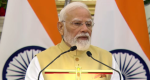
PM Modi inaugurates Bhogapuram Greenfield International Airport
Visakhapatnam: Prime Minister Narendra Modi inaugurated the Alluri Sitarama Raju International Airport at Bhogapuram in Vizianagaram district, near here, on Saturday. After landing at the runway of the Greenfield...

POMCs cut commercial LPG cylinder prices by over Rs 200
New Delhi: State-owned oil marketing companies (OMCs) on Saturday reduced the price of 19-kg commercial LPG cylinders by over Rs 200 across major cities, providing relief to restaurants, hotels and...

Delhi riots: Tahir Hussain, four others get life imprisonment in Ankit Sharma murder case
New Delhi: A Delhi court on Friday sentenced former Aam Aadmi Party (AAP) councillor Tahir Hussain and four others to life imprisonment in the murder case of Intelligence Bureau...

Preliminary UNSC poll shows UNCTAD head front-runner in secretary-general race
United Nations: UNCTAD head Rebecca Grynspan led the first informal Security Council poll to become the next secretary-general, while former Guyana Foreign Minister Carolyn Rodrigues-Birkett surprisingly emerged as the...
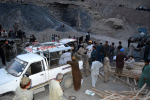
Pakistan: Death toll from Balochistan coal mine explosion rises to 34
Quetta, July 31 (IANS) The death toll from the methane gas explosion at a coal mine in the Sorange area of Pakistan's Balochistan has climbed to 34 while rescue...
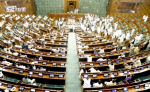
Lok Sabha adjourned till Monday; Registration of Births and Deaths (Amendment) Bill cleared
New Delhi: The Lok Sabha cleared the Registration of Births and Deaths (Amendment) Bill on Friday, amid noisy protests and constant sloganeering by the Opposition. The Bill, presented by...

RS adjourned till Monday amid Oppn ruckus after Chairman rejects Kharge’s Rule 267 notice
New Delhi: Amid continuous sloganeering by Opposition members, the Rajya Sabha proceedings were cut short on Friday and the House was adjourned till August 3. Congress President and Leader...
SC to examine use of metallic pellet guns on protesters, orders treatment for injured
New Delhi:The Supreme Court on Thursday asked the petitioners seeking a ban on the use of metallic pellet guns for dispersing civilian assemblies to amend their plea to specifically...

Bengaluru has water reserves for only 5-6 months if rain fails: BWSSB chief
Bengaluru: The state capital could face a drinking water shortage within the next five to six months if Karnataka does not receive adequate rainfall, Bengaluru Water Supply and Sewerage...


