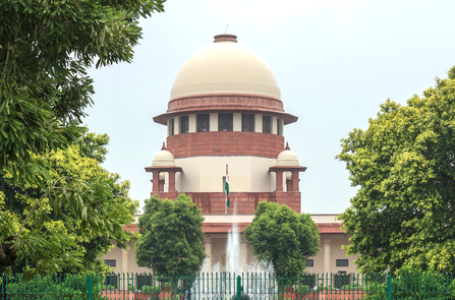



United Nations: While opposing a discriminatory, two-tier permanent membership level in the Security Council, India has agreed to a G4 proposal that would defer veto powers for 15 years in a reformed body.
“Expanding the permanent category with veto is critical to real reform of the Security Council”, India’s Permanent Representative P. Harish said on Tuesday.
“A new category under the framework of UNSC (Security Council) reform with or without veto would complicate an already existing discussion that involves wide-ranging views”, he said at a meeting of the Intergovernmental Negotiations (IGN) for Council reforms.
But he also said that India was in agreement with the position of the G4 put forward on its behalf by Brazil’s Deputy Permanent Representative Norberto Moretti for a 15-year delay before new permanent members added to the Council in a reform use their veto.
India is a member, along with Brazil, Germany and Japan, of the group known as G4 that jointly advocates for Council reform and mutually support each other for permanent seats on a reformed Council.
Moretti said, “In order to show openness and flexibility on this issue (of permanent membership), so as to foster constructive negotiations, the G4 proposes that new permanent members would not exercise the veto until a decision on the matter is reached during a 15-year review”.
Explaining the group’s offer, he said the veto issues and their impact “on the Council’s ability to act must not serve as a pretext to perpetuate its obsolete composition and to suggest proposals that would further entrench existing inequities favouring the (current) permanent members”, he said.
In their campaign against adding permanent members, some countries, notably Italy and Pakistan, have claimed that more countries wielding veto powers would further incapacitate the Council.
Increasing the number of permanent members, Moretti said, would alter the power dynamics in the Council, making it more democratic, even if the veto rights are deferred till a review after 15 years.
Harish said that the only reform of the Council in 1965, which added four non-permanent members, in fact, gave a “relative advantage” to the five veto-wielding permanent members.
It skewed the ratio of permanent members to non-permanent from 5-6 to 5-10, and reform without adding permanent members “with veto would deteriorate this ratio further and thereby perpetuate the existing imbalance and inequities,” he said.
“It’s important to limit the scope of reforms to the existing framework in order to streamline and fast-track the path to reforms”, he added.
Members of the Africa group, who are at the forefront of the reform movement to right the historic injustice to the continent that was shut out of permanent membership when the UN was formed and when most of them were under the yoke of colonialism, have demanded that new members should have veto powers.
IANS
In call with Trump, PM Modi stresses on keeping Strait of Hormuz ‘open and secure’
New Delhi: Prime Minister Narendra Modi on Tuesday received a call from US President Donald Trump with both leaders discussing the current situation in West Asia as well as ways...
EAM Jaishankar and Israeli counterpart discuss West Asia situation, Strait of Hormuz
Tel Aviv/New Delhi: External Affairs Minister (EAM) S Jaishankar held a telephonic conversation with his Israeli counterpart Gideon Sa'ar on Tuesday, discussing West Asia situation and the Strait of Hormuz....
India rejects China’s attempt to rename places, reaffirms Arunachal Pradesh an ‘integral and inalienable part’
New Delhi: India on Sunday rejected China's "mischievous attempts" to assign "fictitious names" to places which are part of the country, reiterating that territories, including Arunachal Pradesh, remain an "integral...

Sergio Gor meets FS Misri, says India, US ready to work together in trade, defence, energy
Florida: US Ambassador to India Sergio Gor on Saturday said that Washington and New Delhi will closely work together across key sectors, including trade, defence and energy. Taking to...
India concerned over civilian casualties in Lebanon, calls for adherence to international law
New Delhi: India on Friday expressed its concern over the reports of civilian casualties in Lebanon, emphasising that the direction of recent events is very disturbing. While addressing an inter-ministerial...
Centre responsible for prominence Pak has regained on global map for US-Iran ceasefire: Sanjay Raut
Mumbai: In a scathing attack on the BJP-led government at the Centre, the Shiv Sena (UBT) MP, Sanjay Raut on Wednesday said that while Pakistan has regained prominence on the...
Indian envoy meets Bangladesh PM, stresses forward-looking approach based on mutual interest
Dhaka: Indian High Commissioner to Bangladesh Pranay Verma on Monday called on Prime Minister Tarique Rahman, where both sides discussed ways to enhance bilateral engagement and cooperation across key sectors....
India supports ongoing efforts to stop war: Iran after EAM Jaishankar-Araghchi talks
Tehran: India has stressed the importance of restoring stability and security in West Asia, and expressed support for ongoing efforts aimed at stopping the war, the Iranian Foreign Ministry has...
Unfair to say India follows US: Syed Akbaruddin
New Delhi: India's former Permanent Representative to the United Nations, Syed Akbaruddin, on Friday noted that claims that India follows the United States are "unfair" and "not reflective of reality"....
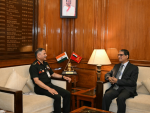
Indian Army Chief, Bangladesh envoy discuss enhancing Defence cooperation
New Delhi: Bangladesh's High Commissioner to India, M Riaz Hamidullah, held a meeting with Chief of Army Staff, General Upendra Dwivedi, in New Delhi on Thursday, discussing enhancing Defence cooperation,...

Beijing ready to strengthen strategic alignment, cooperation with India: Chinese envoy
New Delhi: China's Ambassador Xu Feihong on Wednesday expressed Beijing's readiness to strengthen strategic alignment, deepen practical cooperation and enhance people-to-people exchanges with India as both countries marked the 76th...
We reject US ‘pressure’ on Indian oil market, Delhi follows independent foreign policy: Russian envoy
New Delhi: Denis Alipov, Russia’s Ambassador to India, has said that Russia firmly rejects what he described as US “pressure” in international politics, particularly concerning India’s oil market, while emphasising...